


























Govt–NGO Collaboration Vital to Curb Iatrogenic Fistula Cases
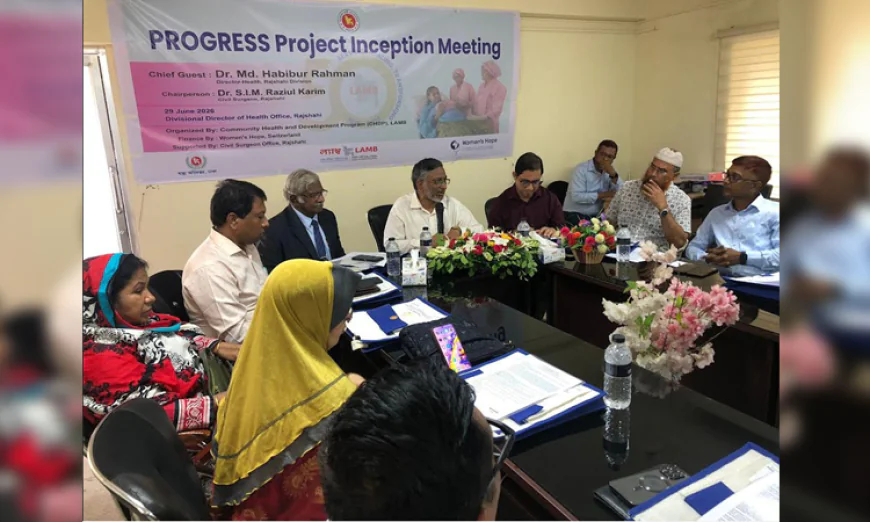
Experts at a meeting here today said close coordination between the government and non-government organizations concerned could be a crucial means of reducing the gradually increasing number of patients suffering from iatrogenic fistula.
They defined iatrogenic fistula as an abnormal, tube-like connection between two body organs or vessels that is unintentionally caused by a medical procedure, such as surgery or catheterization. It is a complication arising from a medical intervention rather than a natural disease or injury.
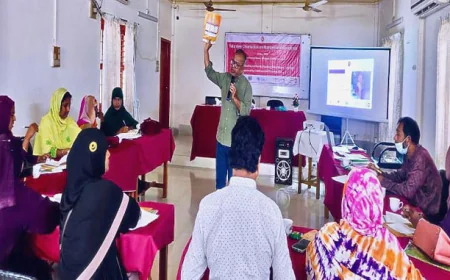
The experts made the observation while addressing an inception meeting of the ‘Preventing and Rehabilitating Obstetric and Surgical Fistula through Gender Responsive Reproductive Health Education and Strengthened Services (PROGRESS) project’.
LAMB organized the meeting at the conference hall of the Divisional Director of Health’s office, presenting an overview of the project along with its aims, objectives and implementation strategy.
Divisional Director of Health Dr Habibur Rahman and LAMB Executive Director David Chandran addressed the meeting as the chief and special guests respectively, while Civil Surgeon Dr SIM Raziul Karim chaired it.
Sharing her expertise, Prof Shahela Jeshmin of Barind Medical College said the rising trend of iatrogenic fistula—a hole that develops between the birth canal and the bladder or rectum due to surgical trauma—is becoming a growing public health concern.
She said the number of obstetric fistula cases is now declining due to the increasing number of institutional deliveries.
However, she regretted that iatrogenic cases have increased significantly due to caesarean sections performed by unskilled and untrained doctors.
In this context, she stressed the need for enhancing the surgical skills of obstetric surgeons to ensure safe caesarean surgeries and prevent the increasing number of new iatrogenic fistula cases.
LAMB Liaison Manager Mahatab Liton and Project Manager Tabssum Jahan highlighted their institutional activities.
The project aims to increase awareness about fistula prevention, referral and treatment among health service providers and other stakeholders.
In his remarks, Dr Habibur Rahman said screening and diagnosis could play a crucial role in the early recovery and proper rehabilitation of patients suffering from iatrogenic fistula.
He also mentioned that identifying patients is very important, as many government and non-government organizations are working in this field.
He stressed that the highest priority should be given to disseminating information about free treatment and rehabilitation facilities to patients, particularly those living in remote and hard-to-reach areas, so they can access existing services.
The meeting was informed that iatrogenic fistula is one of the most serious and tragic childbirth injuries. A lack of specialized urogynecological training among general surgeons often leads to poor surgical precision and accidental tissue damage.