









‘Metamorphosis’: Bishwajit Goswami explores art, memory and transformation
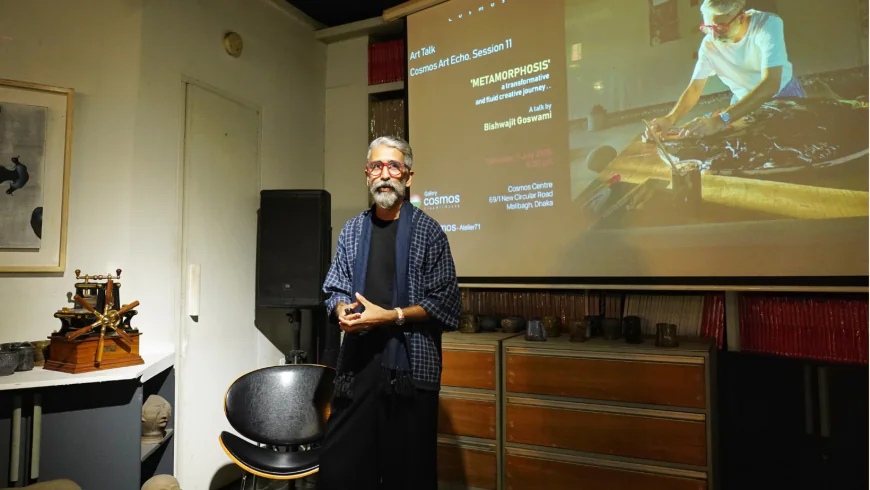
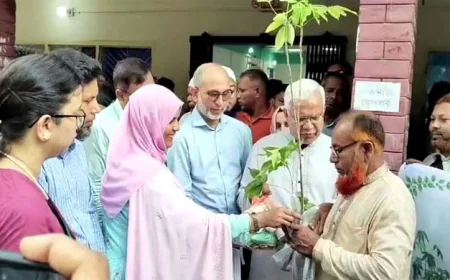
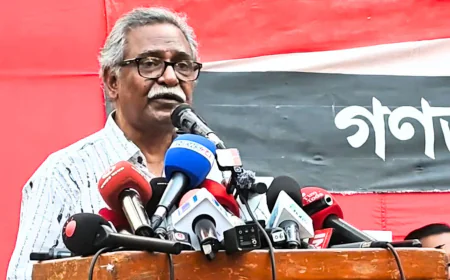
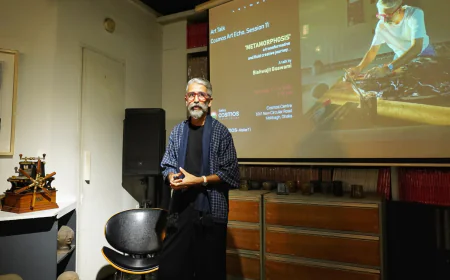
At Cosmos Atelier71 Studio in Dhaka’s Malibagh on July 11, “Metamorphosis” unfolded as a reflective account of how an artist evolves through memory, place, adversity and sustained inquiry. Presented as the 11th session of Cosmos Art Echo by Gallery Cosmos and Cosmos Atelier71, the talk brought together artists, students, educators and cultural enthusiasts to hear Bishwajit Goswami trace the ideas that have shaped his practice and his understanding of creative growth.
Goswami, born in Netrakona in 1981, is a Bangladeshi visual artist, educator, curator and researcher. He studied drawing and painting at the Faculty of Fine Art, University of Dhaka, before completing a master’s degree in painting at Kala Bhavana, Visva-Bharati University in Santiniketan. He currently teaches in the Department of Drawing and Painting at the University of Dhaka and is a co-founder of Brihatta, a research-based arts platform centred on collaboration, community and artistic exchange.
Throughout the conversation, transformation emerged as a human capacity grounded in our relationship with nature. “We live within bodies that can absorb difficult circumstances and reshape them into possibilities,” Goswami said. “This ability to respond, adapt and create is part of what makes us human, and it is also what growing alongside nature teaches us.” His observation situated metamorphosis within everyday survival, where change develops gradually through resilience, patience and awareness.
That philosophy also informed his involvement with Cosmos Atelier71 Studio. The studio opened in 2009 and was renovated under Goswami’s direction in 2018, as its activities expanded beyond printmaking into a broader range of artistic practices. Goswami recalled envisioning a space where a filmmaker could discover a scene, a photographer could find an image, a performance artist could engage with the architecture, and a painter could work without feeling confined by conventional gallery expectations. The result was a multidisciplinary environment designed to encourage diverse forms of artistic expression.
He compared this adaptability to the agricultural soil of Bangladesh. After one season ends, farmers do not simply leave the land unused. Instead, they sow new seeds in the same soil, which gradually adjusts to another cycle of growth. For Goswami, an art space should possess similar openness, embracing changing methods, materials and communities while remaining rooted in its cultural landscape. This approach reflects his wider practice, which is shaped by research and a persistent effort to uncover the historical, social and material foundations of an idea.
Childhood remains central to that search. According to Goswami, before children learn to classify the world, they encounter ordinary experiences with wonder, curiosity and imagination. He recalled discovering elements of performance, circus and magic in his surroundings—experiences that later guided him towards Charukola and a deeper exploration of the self. His early self-portraits became tools of inquiry through which he examined identity, personal voice and spirituality.
Gallery Cosmos, the institution behind the programme, is a contemporary art space at Cosmos Centre that supports exhibitions, workshops, talks, residencies, art camps, publishing initiatives and exchange programmes. Working alongside Atelier71, it provides a platform for both emerging and established artists while maintaining an extensive collection of modern and contemporary works. Cosmos Art Echo is one of its regular initiatives aimed at fostering dialogue and engagement within the arts.
By the close of “Metamorphosis”, Goswami’s journey had emerged as an ongoing process of cultivation. His artistic practice grows through observation, returns repeatedly to memory and soil, and treats transformation not as a singular event but as a disciplined practice of becoming more attentive to the world.