



























Opinion / FIFA Football World Cup 2026
Expanded World Cup Delivers a New Global Order
From established giants to fearless newcomers, the tournament has become a celebration of competitive balance, tactical innovation and football’s growing universality.
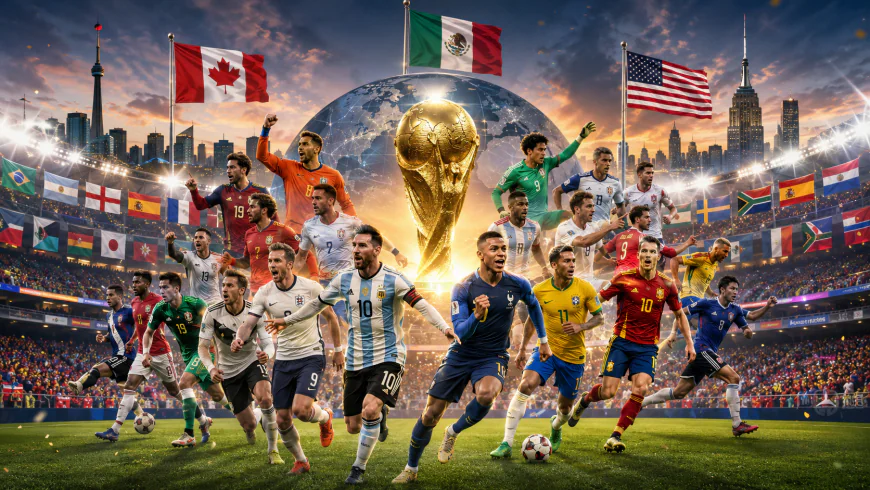

The FIFA Football World Cup has always represented the pinnacle of international football, but the 2026 edition has elevated the tournament into an entirely new era. Hosted jointly by Canada, Mexico and the United States, the first forty-eight-team FIFA World Cup has become more than a sporting competition. It has evolved into a global showcase of football’s remarkable expansion, proving that excellence is no longer confined to a select group of traditional powers.
As the competition progresses through the knockout stage in early July 2026, the tournament has already rewritten expectations. The enlarged format has not diluted the quality of football. Instead, it has produced one of the most competitive and unpredictable World Cups in modern history. Nations from every confederation have demonstrated technical maturity, tactical intelligence and psychological resilience, confirming that international football has entered an era of unprecedented competitive parity.
The Success of the Expanded Format
When FIFA announced the expansion from thirty-two to forty-eight participating nations, opinions across the football community were divided. Some feared that a larger tournament would reduce competitive quality, while others believed it would accelerate football’s global development.
The first weeks of the 2026 FIFA World Cup have strongly supported the latter view. The expanded competition has introduced new footballing cultures, created fresh tactical contests and allowed emerging nations to demonstrate that they can compete confidently with established powers.
The conclusion of the group stage revealed a tournament rich in diversity. Traditional giants progressed as expected in many groups, yet numerous developing football nations also earned knockout places through disciplined performances rather than isolated moments of fortune. The overall standard has remained exceptionally high, reinforcing the belief that football’s global development has reached a new level.
The Group Stage: Competition Without Comfortable Certainties
The group phase produced a fascinating mixture of dominance, resilience and surprise. Argentina completed Group J with a perfect record, collecting nine points while displaying the composure and tactical intelligence expected from one of football’s elite nations. France achieved a similarly flawless campaign in Group I, combining attacking efficiency with defensive stability despite suffering a final-match defeat to Norway after already securing qualification. Brazil finished unbeaten at the top of Group C, once again demonstrating the technical quality and balanced structure that continue to define South American football.
Mexico emerged as one of the most impressive teams of the opening stage. The host nation won all three group matches, scoring six goals without conceding, reflecting exceptional defensive organization and growing confidence. Playing before passionate home support, Mexico has combined tactical discipline with emotional intensity, qualities that make it one of the tournament’s most dangerous sides.
England also progressed comfortably from Group L, remaining unbeaten through controlled performances built upon defensive discipline and attacking efficiency. Spain topped Group H without defeat, while Colombia produced another composed campaign to finish first in Group K. Belgium, despite drawing two of its three matches, displayed sufficient quality to secure top position in Group G before producing a convincing victory in the knockout phase.
Germany’s group campaign illustrated both the brilliance and vulnerability of tournament football. An emphatic opening victory showcased extraordinary attacking power, yet a closing defeat to Ecuador exposed defensive weaknesses that would later prove costly. Even so, Germany advanced as group winners, reminding observers that football’s greatest powers are often judged not by perfection but by their ability to recover from adversity.
Among the tournament’s most encouraging stories has been Canada’s continued progress. Supported by enthusiastic home crowds, Canada advanced from a demanding group before defeating South Africa in the Round of 32. The victory represents another important milestone in the country’s footballing evolution and confirms the growing strength of the game across North America.
Tactical Chemistry of the Leading Contenders
One of the defining characteristics of the 2026 FIFA World Cup has been the diversity of footballing philosophies among the tournament’s strongest teams. Argentina continue to embody controlled intelligence. Their football is based upon patient possession, positional flexibility and collective understanding. Rather than relying exclusively on individual brilliance, they have demonstrated the importance of coordinated movement, disciplined defending and efficient finishing. Their perfect group-stage record reflects a team capable of managing both the rhythm and emotional pressure of elite competition.
France have perhaps displayed the tournament’s most complete balance between physical strength and technical quality. Their attacking transitions remain among the fastest in international football, while their midfield structure allows them to dominate possession without sacrificing defensive security. Even after losing to Norway in the final group match, France responded convincingly by defeating Sweden in the Round of 32, reaffirming their status among the strongest contenders.
Brazil continue to represent football’s enduring combination of creativity and structure. The traditional flair associated with Brazilian football now exists alongside greater tactical discipline. Their victory over Japan demonstrated patience, adaptability and maturity against one of the tournament’s most organized opponents.
England have approached the tournament with measured confidence. Their defensive organization has limited opponents’ opportunities, while experienced leadership has provided composure during challenging moments. Harry Kane’s decisive contribution against DR Congo highlighted England’s ability to rely upon experienced players without becoming dependent upon individual performances.
Spain have remained faithful to their philosophy of intelligent possession and positional control. Their ability to dictate tempo, circulate the ball efficiently and gradually create space continues to make them one of the competition’s most technically sophisticated teams.
Mexico have emerged as one of the tournament’s most cohesive units. Defensive discipline, collective pressing and intelligent transitions have combined with the emotional energy generated by home support. Their victory over Ecuador confirmed that they possess both tactical quality and the psychological resilience required to challenge football’s traditional giants.
Belgium have quietly developed into one of the tournament’s most efficient teams. Their ability to remain composed during tightly contested matches before overcoming Senegal after extra time demonstrates both tactical patience and mental resilience.
Colombia have impressed through organization, defensive stability and disciplined midfield play. Their unbeaten group campaign reflected a team comfortable controlling matches without unnecessary risk, qualities that become increasingly valuable during the knockout phase.
Portugal have displayed flashes of exceptional attacking football while continuing to refine their defensive balance. Their upcoming meeting with Croatia represents one of the most tactically intriguing fixtures of the Round of 32.
The Surprise Stories Reshaping the Tournament
Every World Cup produces unforgettable surprises, and the 2026 edition has already delivered several remarkable moments. Perhaps the greatest shock came when Paraguay eliminated Germany on penalties after an intense draw, proving once again that tournament football often rewards resilience as much as reputation.
Morocco continued the extraordinary progress that has characterized its recent international development by overcoming the Netherlands in another dramatic penalty shootout. The victory reinforced Morocco’s reputation as one of world football’s most disciplined and tactically intelligent emerging powers.
Norway’s impressive performances throughout the tournament have also attracted widespread admiration. After qualifying from a demanding group alongside France, the Norwegians defeated Ivory Coast to reach the Round of 16, demonstrating tactical maturity and attacking confidence.
Cape Verde’s qualification from Group H represents another historic achievement. Remaining unbeaten throughout the group stage reflects the nation’s exceptional defensive organization and growing confidence against established international opponents.
Bosnia and Herzegovina likewise deserve recognition for advancing beyond the group stage, underlining the increasingly competitive nature of international football in the expanded tournament.
These achievements illustrate the central story of the 2026 FIFA World Cup. Football’s traditional hierarchy remains influential, but it is no longer absolute. Careful planning, disciplined coaching and collective belief have enabled emerging nations to compete on genuinely equal terms with many of the sport’s historic powers.
Continental Performances: A World Cup That Truly Belongs to the World
One of the most remarkable achievements of the FIFA Football World Cup 2026 has been its demonstration that football excellence is now more widely distributed than at any previous stage in the sport’s history. The expanded tournament has not merely increased participation; it has strengthened competition by providing a global stage for nations whose footballing progress has often been underestimated.
South America has once again justified its reputation as one of football’s strongest regions. Argentina completed a flawless group campaign before progressing confidently into the knockout stage, while Brazil remained unbeaten and demonstrated the balance between technical brilliance and tactical maturity that has become a hallmark of modern Brazilian football. Colombia also produced an outstanding campaign, finishing at the top of its group through disciplined defensive organization and intelligent midfield control.
Europe has continued to provide the tournament with considerable depth. France, England, Spain, Belgium, Portugal and Switzerland all progressed to the knockout rounds, reflecting the strength of European football’s professional structures and coaching systems. At the same time, the tournament reminded observers that reputation alone guarantees nothing. Germany’s elimination on penalties against Paraguay and the Netherlands’ defeat to Morocco illustrated the increasing competitiveness of international football, where every opponent possesses the tactical and technical quality to challenge traditional powers.
Africa has enjoyed one of its strongest collective World Cup performances. Morocco once again confirmed its position among the world’s most disciplined and tactically sophisticated teams by eliminating the Netherlands after a dramatic penalty shootout. South Africa advanced from a competitive group before narrowly losing to Canada, while Egypt progressed to the knockout stage through composed and organized football. Ivory Coast also reached the Round of 32 after an impressive group campaign. These performances reflect decades of sustained investment in coaching, youth development and professional football across the African continent.
Asian football has continued its steady evolution. Japan advanced from a difficult group before producing a highly competitive performance against Brazil, while South Korea remained in contention until the final group match. Australia, competing through the Asian Football Confederation, reached the knockout stage through disciplined organization and resilient defending. These performances reinforce the growing tactical maturity of Asian football.
North and Central America have experienced one of their most successful World Cups. Mexico completed a perfect group campaign and advanced comfortably into the Round of 16, supported by passionate home crowds and impressive tactical consistency. Canada reached the last sixteen with a historic victory over South Africa, highlighting the country’s rapid football development. The United States also progressed beyond the group stage despite a challenging final group match, reflecting the increasing competitiveness of football across the host nations.
The expanded qualification places also enabled smaller footballing nations to leave a lasting impression. Cape Verde’s unbeaten group campaign and Bosnia and Herzegovina’s advancement to the knockout phase demonstrated that football’s competitive landscape has become broader, more inclusive and considerably less predictable.
The Race for the World Cup Trophy
As the Round of 16 approaches, the competition for the FIFA World Cup Trophy remains exceptionally open. Unlike previous tournaments dominated by one or two overwhelming favourites, the 2026 edition presents a remarkably balanced field of genuine contenders.
Argentina continue to display the confidence, tactical discipline and tournament experience expected from defending world champions. Their ability to control possession, manage pressure and maintain consistency makes them one of the strongest candidates for another deep run.
France remain equally formidable. Their victory over Sweden reaffirmed the exceptional balance between physical intensity, technical quality and tactical flexibility that has defined French football in recent years. Few teams possess greater squad depth or adaptability.
Brazil continue to evolve beyond traditional perceptions of expressive football alone. Their combination of creativity, defensive organization and strategic maturity has produced one of the tournament’s most complete teams.
England have quietly established themselves among the leading contenders through disciplined defending, experienced leadership and clinical finishing. Their ability to remain composed during difficult moments reflects growing tournament maturity.
Spain remain one of the competition’s most technically refined teams, capable of controlling matches through intelligent possession and positional excellence. Belgium, Mexico, Colombia and Portugal also possess sufficient quality to challenge any opponent on their day.
Meanwhile, Morocco, Paraguay, Norway and Canada have demonstrated that confidence and collective organization can significantly reduce the traditional gap separating established champions from ambitious challengers.
The Human Story Behind the Competition
While statistics, tactics and results dominate headlines, the World Cup’s greatest strength remains its ability to tell profoundly human stories. Every participating nation carries the aspirations of millions of supporters whose emotional investment extends far beyond football itself.
Throughout the tournament, players have demonstrated extraordinary resilience under immense pressure. Every victory reflects years of sacrifice, disciplined preparation and unwavering commitment, while every defeat reminds the footballing world of the emotional demands placed upon elite athletes.
The emergence of smaller football nations has also inspired millions of young footballers worldwide. Their success demonstrates that sustained investment, effective coaching and collective belief can transform ambition into achievement regardless of historical reputation.
Technology and the Modern Game
The FIFA World Cup 2026 has further illustrated the growing influence of technology upon elite football. Goal-line technology, the Video Assistant Referee system and semi-automated offside technology continue to improve decision-making accuracy while preserving the integrity of competition.
Equally influential has been the increasing role of sports science and performance analysis. Modern national teams rely upon sophisticated data to evaluate player movement, tactical efficiency, physical workload and recovery. These innovations have enhanced coaching without diminishing football’s essential unpredictability, ensuring that technology serves the game rather than replacing its human character.
A Lasting Legacy
Regardless of the eventual champion, the FIFA Football World Cup 2026 has already secured a distinguished place in football history. The expanded forty-eight-team format has demonstrated that greater inclusion can coexist with elite competition. Rather than weakening the tournament, expansion has enriched it by introducing new tactical ideas, broader geographical representation and compelling new rivalries.
The successful collaboration between Canada, Mexico and the United States has established a new benchmark for multinational sporting events. Their combined organizational capacity has shown that international partnership can successfully deliver an event of unprecedented scale while celebrating the distinct football cultures of each host nation.
The tournament has also accelerated football’s growth throughout North America while inspiring millions of young people across every continent. Many future international players will trace their earliest football memories to the drama, emotion and excellence displayed during the summer of 2026.
Reflection
As the FIFA Football World Cup 2026 moves deeper into its knockout phase, it has already become one of the most influential tournaments in the history of the beautiful game. It has celebrated football’s expanding global reach without compromising competitive quality. It has rewarded tactical intelligence as much as technical brilliance, collective organization as much as individual talent and resilience as much as reputation.
The performances of Argentina, France, Brazil, England, Spain, Mexico, Belgium, Colombia and several emerging nations have created one of the most balanced World Cups ever witnessed. Surprise results involving Paraguay, Morocco, Canada, Norway and Cape Verde have reinforced football’s timeless capacity to defy expectation and inspire belief.
More importantly, the tournament has reaffirmed football’s unique ability to unite humanity. Across continents, cultures and languages, billions of people have shared the same moments of anticipation, celebration and disappointment, reminding the world that sport remains one of the most powerful expressions of our common humanity.
As the journey toward the final at MetLife Stadium on 19 July continues, one certainty has already emerged. The FIFA Football World Cup 2026 will be remembered not only for its champion but also for transforming the global landscape of football, demonstrating that the beautiful game has entered a new era defined by broader opportunity, deeper competition and an enduring spirit of unity through excellence.
“The greatest World Cups do not merely crown champions; they redefine possibilities. The FIFA World Cup 2026 has shown that when talent, discipline and belief converge, football becomes more than a gameit becomes humanity’s finest celebration of unity in competition.”
Md. Kafi Khan





 Sponsored by