






































When Journalism Becomes Entertainment
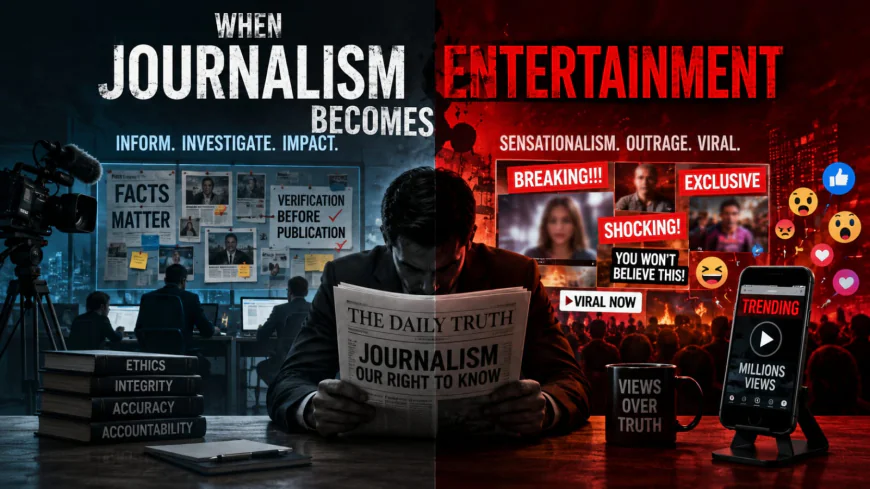

In recent years, journalism has slowly begun transforming into something far more dangerous than biased reporting, it is becoming entertainment. News is no longer judged by its accuracy, depth, or public importance; instead, it is increasingly measured by its ability to go viral, provoke outrage, trigger emotion, and generate engagement. The line between journalism and performance is disappearing, and society may not yet understand the cost of that transformation.
Today, headlines are often written not to inform people, but to emotionally manipulate them within seconds. Newsrooms compete for attention in a battlefield controlled by algorithms, where the loudest headline wins and the fastest publisher survives. In this race, truth frequently becomes secondary. Context disappears. Verification becomes optional. Human lives become content.
Social media has accelerated this crisis. A tragedy is now treated like a trending topic. Personal conflicts become “breaking news.” Rumors spread faster than facts, while public humiliation becomes a form of digital entertainment. Many audiences no longer consume news to understand society, they consume it for excitement, conflict, and emotional stimulation. As a result, journalism itself has adapted to survive inside this attention economy.
The problem is not only with media institutions; it is also with the audience culture we have collectively created. People reward sensationalism with clicks and ignore depth because serious reporting requires patience. Investigative journalism takes months, sometimes years, but a controversial Facebook post can dominate national conversation within minutes. The market naturally begins prioritizing speed over substance.
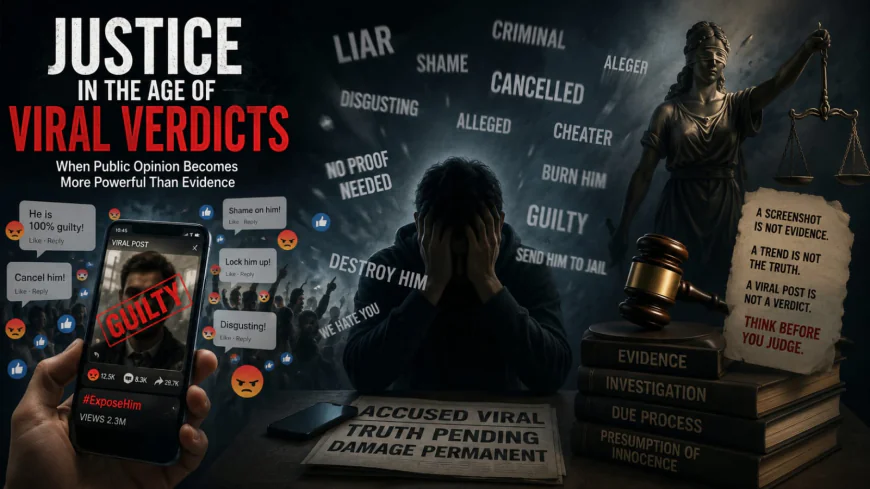
This shift is especially dangerous because journalism holds immense power. A single misleading headline can destroy reputations, create social unrest, manipulate public opinion, or emotionally damage innocent people. Yet accountability often disappears once the public has already consumed the spectacle. Corrections rarely travel as far as accusations.
Even more concerning is the growing trend where journalists themselves are pressured to become personalities rather than professionals. The industry increasingly rewards visibility over credibility. Reporters are expected to entertain, provoke, and maintain online relevance. The camera angle, dramatic tone, emotional wording, and viral clip sometimes become more important than the actual story itself.
Real journalism was never supposed to comfort power, manipulate emotions, or entertain the masses like a reality show. Its purpose was to question authority, protect truth, inform citizens, and preserve accountability. But when journalism becomes dependent on outrage for survival, it risks losing its moral foundation entirely.
A society that treats news as entertainment eventually becomes unable to distinguish performance from reality. In such an environment, truth becomes negotiable, ethics become inconvenient, and public trust collapses. Once people stop believing journalism, they also stop believing institutions, facts, and sometimes even each other.
The future of journalism will not be decided only inside newsrooms. It will also be decided by audiences. As long as society rewards sensationalism more than truth, media organizations will continue producing spectacle over substance. The question is no longer whether journalism is changing. The real question is whether truth can survive in a system that profits more from emotion than accuracy.





 Sponsored by