


























Global Markets React to Rising Tensions in Key Oil Corridor
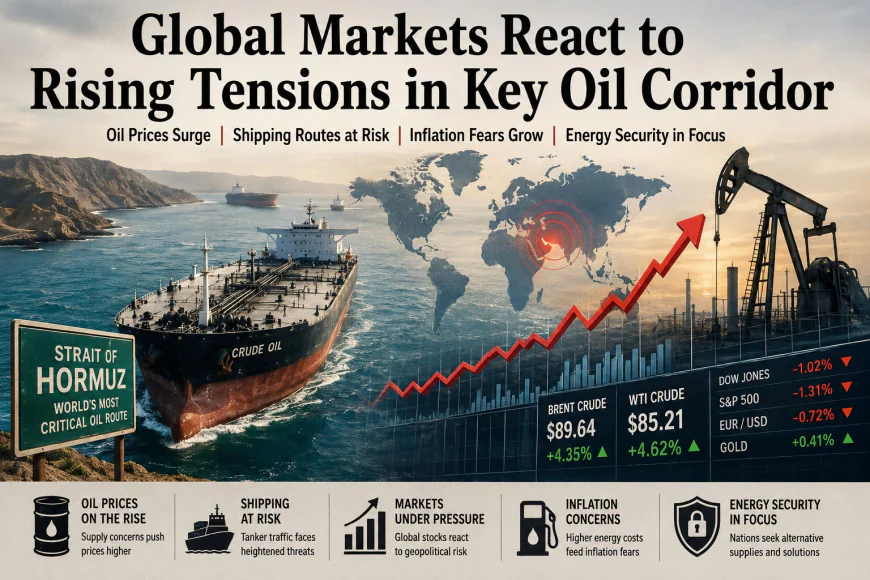

The world economy has always depended on a handful of strategic arteries through which energy, trade, and commerce move every day. Few of these arteries are more important than the Strait of Hormuz the narrow maritime passage connecting the Persian Gulf to the Arabian Sea. Nearly one-fifth of the world’s oil supply travels through this corridor, making it one of the most consequential waterways on Earth. When tensions rise in this region, global markets do not merely react; they convulse. Recent exchanges of military fire involving the United States and Iran, combined with fears of renewed disruption to shipping in the Strait of Hormuz, have sent a wave of uncertainty through international financial systems.
Oil prices have surged, investors have shifted toward safer assets, shipping insurance costs have climbed sharply, and governments across Asia, Europe, and beyond are preparing for possible long-term economic consequences. The reaction of global markets is not simply a matter of temporary panic. It reflects a deeper reality about the modern world economy: despite decades of technological advancement, diversification efforts, and geopolitical maneuvering, the global system remains dangerously dependent on a small number of strategic energy corridors.
The latest tensions in the Gulf region have exposed vulnerabilities that many governments had hoped were behind them. The current crisis is not merely about oil. It is about inflation, food prices, transportation, industrial production, currency stability, political confidence, and the future direction of global economic growth. It is also about the growing inability of the international community to establish stable diplomatic mechanisms capable of preventing regional conflicts from becoming global economic emergencies. For many countries, particularly developing economies already struggling with debt, inflation, and weak currencies, the stakes could not be higher.
To understand why markets react so dramatically to developments in the Strait of Hormuz, one must understand its extraordinary strategic significance. The Strait is geographically narrow, but economically immense. Every day, millions of barrels of crude oil and liquefied natural gas pass through the waterway from major producers such as Saudi Arabia, Iraq, Kuwait, the United Arab Emirates, Qatar, and Iran. Much of this energy supply flows toward Asia, where industrial giants including China, India, Japan, and South Korea depend heavily on Gulf oil. A disruption in the Strait therefore threatens not just one region, but the entire global economic chain.
Manufacturing costs rise in Asia. Shipping prices increase in Europe. Fuel becomes more expensive in the United States. Food transportation costs rise in Africa and Latin America. Airlines, shipping firms, factories, and logistics companies all face mounting pressure. This interconnectedness explains why even rumors of conflict can move markets within minutes. When military clashes intensify near the Strait, traders immediately begin calculating the risks.
Will oil tankers continue sailing? Will insurance premiums become unaffordable? Could sanctions intensify? Will naval blockades emerge? Could infrastructure be targeted? Even if no actual closure occurs, uncertainty itself becomes economically damaging. Markets dislike uncertainty more than almost anything else. The latest confrontation has revived memories of earlier crises in the Gulf, from the Iran-Iraq War in the 1980s to the tanker wars and the more recent episodes involving attacks on oil facilities and commercial shipping. Each incident has reinforced the same lesson: the world economy remains highly vulnerable to instability in the region.
Oil prices react not only to current supply disruptions but also to anticipated future risks. The present tensions have once again demonstrated how market psychology can amplify economic shocks. In recent trading sessions, crude oil prices experienced sharp volatility as reports emerged of exchanges of fire between U.S. and Iranian forces near the Strait. Traders feared that even a limited escalation could threaten shipping lanes or trigger retaliatory measures affecting regional production. The rise in prices reflects more than physical supply concerns.
It also reflects speculative behavior. Hedge funds, commodity traders, and institutional investors often move aggressively during geopolitical crises, betting on future shortages or price spikes. This speculative activity can intensify market volatility far beyond what immediate supply conditions would otherwise justify. At the same time, energy companies are forced to reassess operational risks. Shipping firms reconsider routes. Insurance providers increase premiums. Refineries scramble to secure alternative supplies. Governments begin discussing strategic petroleum reserves. The result is a feedback loop of anxiety.
This dynamic illustrates an important truth about the modern economy: confidence is itself a form of economic infrastructure. Once confidence weakens, markets become vulnerable to rapid swings, even before physical shortages emerge. The current crisis has also revealed how energy markets have changed in recent years. In earlier decades, major oil-producing nations often maintained substantial spare production capacity that could cushion shocks. Today, however, tighter global inventories, geopolitical fragmentation, underinvestment in some energy sectors, and growing pressure from climate transition policies have reduced flexibility. As a result, markets now react more sharply to geopolitical risk because there is less room for error.
One of the most troubling consequences of rising oil prices is the renewed threat of inflation. After years of struggling with pandemic-related supply chain disruptions, high food prices, labor shortages, and rising borrowing costs, many economies had only recently begun to stabilize. Central banks across the world had hoped inflation was gradually returning to manageable levels.
Now, energy market instability threatens to reverse that progress. Oil prices affect nearly every sector of the economy. Transportation becomes more expensive. Manufacturing costs rise. Electricity generation costs increase in many countries. Agricultural production becomes more costly because fertilizers, machinery, and transportation all depend heavily on fuel.
Ultimately, consumers pay the price. Higher fuel prices lead to more expensive food, more expensive airline tickets, higher shipping charges, and increased household costs. In poorer countries, where many people already struggle with basic living expenses, the consequences can be severe. Developing nations are especially vulnerable because many depend heavily on imported fuel while also carrying substantial external debt. Rising oil prices weaken their trade balances and put pressure on local currencies. This often forces central banks to raise interest rates, slowing economic growth further. The situation becomes even more dangerous when inflation and weak growth occur simultaneously a phenomenon economists describe as stagflation. Memories of the 1970s oil crises continue to haunt policymakers for precisely this reason. Those crises demonstrated how energy shocks can destabilize entire economic systems, fuel political unrest, and trigger prolonged periods of weak growth. Although today’s global economy differs significantly from that era, the underlying vulnerability remains.
No region is watching developments in the Strait of Hormuz more nervously than Asia. Asian economies are among the largest consumers of Gulf energy exports. China imports vast quantities of crude oil from the Middle East. India relies heavily on Gulf producers to meet its growing energy demand. Japan and South Korea also remain deeply dependent on imported oil and liquefied natural gas. For these countries, disruptions in the Strait represent not just an economic challenge but a strategic threat. China, despite its efforts to diversify supply routes and expand renewable energy, remains highly exposed to Gulf instability. Rising energy costs could weaken industrial output, reduce export competitiveness, and complicate Beijing’s broader economic recovery efforts.
India faces equally serious concerns. Higher oil prices widen its current account deficit, pressure the rupee, and increase inflation risks. Because fuel prices affect transportation and food costs directly, ordinary citizens quickly feel the impact. Japan and South Korea, both major industrial economies with limited domestic energy resources, are also vulnerable. Any prolonged instability in the Strait could force governments to release strategic reserves or seek alternative suppliers at significantly higher costs. The broader Asian economy could therefore experience slower growth if tensions persist. This is particularly concerning because Asia has been expected to drive much of the world’s future economic expansion. If the region slows down, the effects will ripple globally.
Europe faces a different but equally difficult challenge. The continent has spent recent years attempting to reduce its dependence on Russian energy following the war in Ukraine. In doing so, many European nations increased reliance on alternative suppliers, including Gulf producers. Now, instability in the Middle East threatens another major energy shock. European industries already face high production costs compared to competitors in some other regions. Additional increases in energy prices could weaken manufacturing further, particularly in energy-intensive sectors such as chemicals, steel, transportation, and heavy industry. European governments also face political pressure from citizens weary of rising living costs. Inflation linked to energy prices has already contributed to public dissatisfaction, labor unrest, and political polarization in several countries.
Another energy-driven inflation surge could strengthen populist movements and deepen political divisions. At the same time, Europe’s commitment to green transition policies complicates the situation. Governments seeking to reduce fossil fuel dependence must now balance long-term climate goals with short-term energy security concerns. The latest crisis demonstrates that while renewable energy investments are essential, the transition away from oil and gas remains incomplete. Until alternative systems are fully capable of replacing traditional energy sources, geopolitical instability in oil-producing regions will continue to shape global economics.
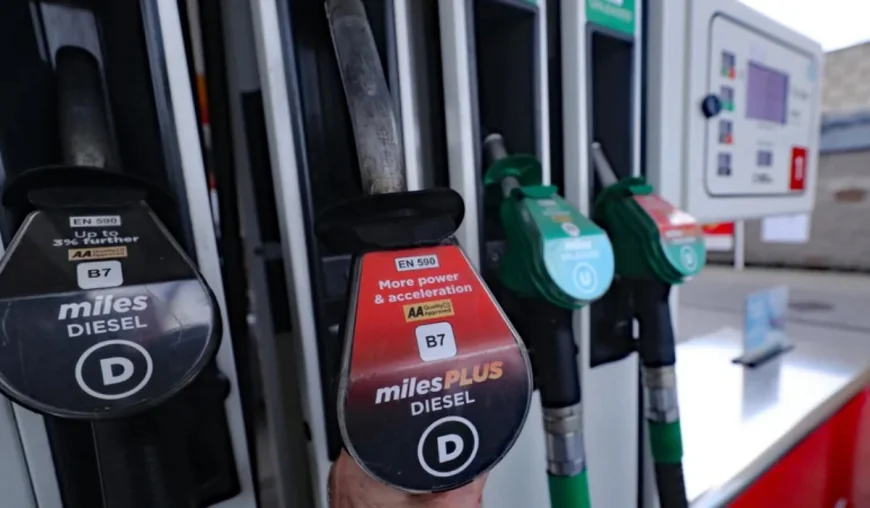
The United States has often presented itself as more energy secure in recent years due to increased domestic oil and gas production. The shale revolution transformed America into one of the world’s largest energy producers. Yet the current crisis illustrates an important reality: no major economy is truly insulated from global energy markets. Even if the United States produces substantial quantities of oil domestically, global oil prices still affect American consumers. Fuel prices at gas stations rise when international crude prices increase. Airlines, shipping firms, manufacturers, and agricultural producers all face higher costs. Moreover, financial markets in the United States are highly sensitive to geopolitical uncertainty. Investors react quickly to signs of instability, often moving capital into safer assets such as gold or government bonds.
The Federal Reserve also faces a difficult balancing act. If oil-driven inflation accelerates again, policymakers may be forced to maintain higher interest rates for longer than previously expected. That could slow investment, weaken housing markets, and reduce overall economic momentum. Politically, rising fuel prices are always dangerous in the United States. Energy costs directly affect household budgets, and public frustration can quickly become a major political issue. Thus, despite its domestic production strength, America remains deeply connected to the stability of the global energy system.
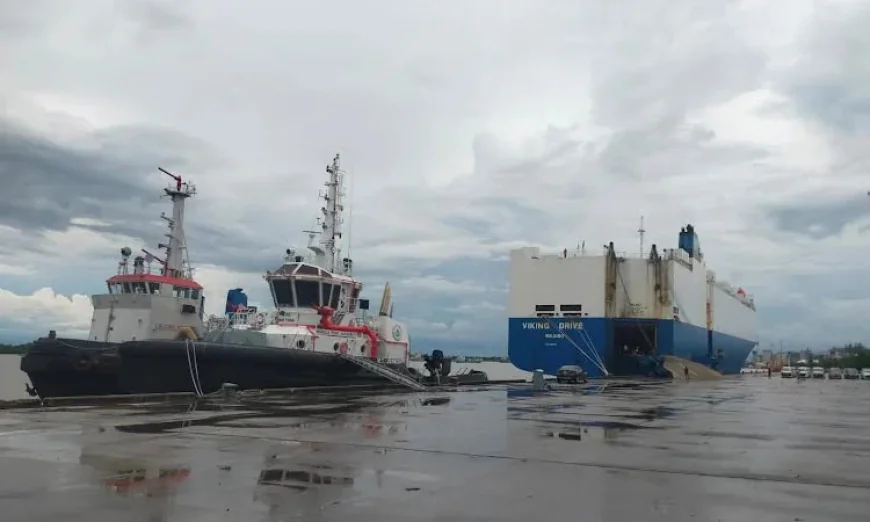
One of the less visible but highly significant consequences of Gulf tensions is the impact on shipping and insurance. Commercial shipping depends heavily on predictable and secure maritime routes. When military tensions escalate, shipping companies face enormous operational risks. Insurance premiums for vessels traveling through high-risk zones often rise dramatically during crises. Some insurers may refuse coverage altogether unless governments provide guarantees. This increases transportation costs for energy shipments and other goods. Shipping companies may also reroute vessels to avoid danger zones, increasing travel times and fuel consumption. The effects extend far beyond oil. Global trade depends on maritime transport. Rising shipping costs affect consumer goods, industrial components, agricultural exports, and raw materials. Supply chains that are already strained by previous disruptions become even more fragile. The world learned during the pandemic how vulnerable modern supply chains can be. The current tensions threaten to create another layer of disruption. Countries heavily dependent on imports are particularly exposed. Rising transportation costs eventually feed into domestic inflation, weakening purchasing power and slowing economic activity.
Whenever geopolitical tensions intensify, global investors begin searching for safety. This pattern has repeated itself throughout modern economic history. During periods of uncertainty, investors often move money away from risky assets such as emerging market equities and toward traditional safe havens including gold, the U.S. dollar, and government bonds. The latest Gulf tensions have followed the same pattern. Gold prices have risen as investors seek protection from inflation and geopolitical instability. Currency markets have experienced increased volatility.
Emerging market currencies in particular have come under pressure as investors worry about capital flight and rising import costs. Stock markets have also shown signs of nervousness. Energy companies may benefit from higher oil prices in the short term, but broader market sentiment often weakens during geopolitical crises. Technology firms, transportation companies, airlines, tourism industries, and manufacturing sectors all face potential headwinds from rising energy costs and weaker consumer confidence. Financial markets today are highly interconnected and increasingly reactive. News spreads instantly across trading platforms, social media, and financial networks. This accelerates market reactions and can intensify volatility. The psychological dimension of modern finance cannot be underestimated. Fear itself becomes a market force.
Although wealthy nations possess greater financial resources to absorb economic shocks, the developing world often suffers the most severe consequences. Many developing countries rely heavily on imported fuel while lacking strong foreign currency reserves. Rising oil prices therefore place immediate pressure on government finances. Countries already facing debt problems may find themselves forced to spend more on energy imports while simultaneously struggling to repay international loans. Currency depreciation can worsen the problem further. Food insecurity also becomes a major concern. Higher fuel and transportation costs increase food prices, particularly in import-dependent nations. For millions of families already living close to poverty, even modest increases in food prices can create serious hardship.
Governments may attempt to subsidize fuel or food prices to prevent social unrest, but such subsidies are expensive and often unsustainable. History shows that rising food and fuel costs can trigger political instability. Protests, strikes, and unrest have frequently followed major economic shocks. The international community therefore cannot treat Gulf tensions as merely a regional security issue. The economic consequences extend into humanitarian and political spheres across the developing world.
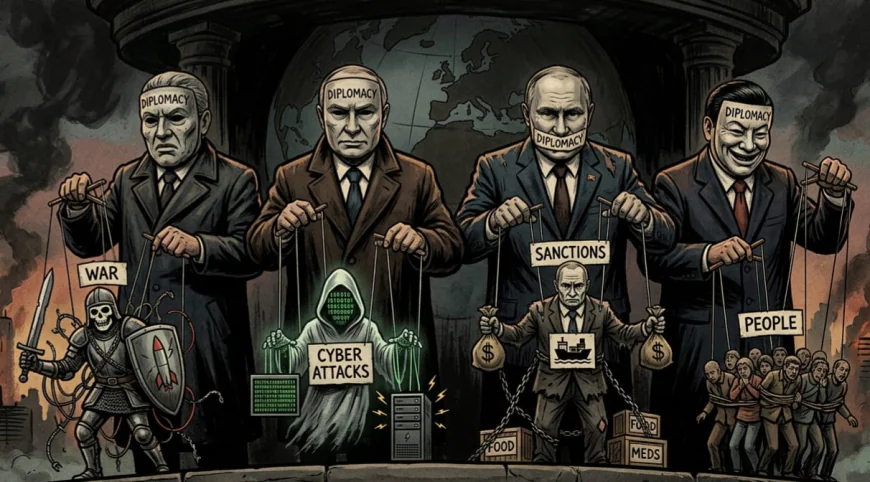
Perhaps the most troubling aspect of the current crisis is what it reveals about the weakness of global diplomacy. Despite decades of international dialogue, military alliances, sanctions regimes, and diplomatic initiatives, the world remains unable to establish lasting stability in one of its most strategically important regions. The recurring cycle of confrontation in the Gulf reflects deeper failures. Regional rivalries remain unresolved. Great power competition continues to intensify. Diplomatic trust has eroded. International institutions appear increasingly ineffective in preventing escalation. The result is a world in which markets constantly price in geopolitical risk.
This environment discourages long-term investment, increases uncertainty, and weakens economic stability. The latest tensions also demonstrate the limitations of relying primarily on military deterrence. While military power may prevent some forms of escalation, it cannot create lasting political solutions. Economic stability ultimately depends on political stability. Without meaningful diplomatic engagement and regional security arrangements, the world may continue experiencing repeated cycles of crisis in critical energy corridors.
The current crisis has reignited debates about renewable energy and the global transition away from fossil fuels. Supporters of accelerated renewable investment argue that repeated oil market shocks demonstrate the urgent need to reduce dependence on geopolitically vulnerable energy sources. There is considerable merit to this argument. Solar, wind, nuclear, and other alternative energy systems can reduce exposure to oil price volatility over time. Electrification of transportation may eventually weaken the strategic dominance of oil-exporting regions. However, the present crisis also reveals the complexity of the transition.
The global economy still relies heavily on oil and gas. Aviation, shipping, heavy industry, and many transportation systems remain dependent on fossil fuels. Renewable infrastructure itself often requires substantial industrial and mineral inputs. Moreover, energy transitions take time. Governments face the difficult challenge of balancing long-term climate objectives with short-term economic realities. Abrupt reductions in fossil fuel investment without sufficient alternative capacity can create supply shortages and price instability.
The lesson from the current crisis is not that renewable energy is unrealistic. Rather, it is that the transition must be managed carefully, strategically, and internationally. Energy security and climate policy cannot be treated as separate issues.
As tensions rise, many governments are once again considering the use of strategic petroleum reserves. These reserves were created precisely for moments like this. By releasing stored oil into the market, governments hope to reduce panic, stabilize prices, and reassure consumers. However, strategic reserves are not a permanent solution. They can buy time, but they cannot replace sustained global supply if major disruptions continue. The effectiveness of reserve releases also depends heavily on market confidence.
If traders believe the crisis will worsen, temporary reserve releases may have limited impact. Furthermore, repeated reliance on strategic reserves can weaken future preparedness. Governments therefore face difficult decisions about how aggressively to intervene in markets. International coordination becomes crucial. Major economies may need to cooperate through institutions such as the International Energy Agency to ensure orderly responses. Without coordination, unilateral actions could intensify market instability.
Ironically, oil-producing nations themselves are not immune from the consequences of instability. While higher oil prices can increase revenues in the short term, prolonged conflict creates enormous economic risks for producers. Infrastructure may become vulnerable to attack. Shipping routes may become unreliable. Foreign investment may decline. Insurance and transportation costs rise. Even wealthy Gulf states recognize that sustained instability threatens long-term economic diversification plans. Many Gulf economies have invested heavily in tourism, finance, technology, and infrastructure projects designed to reduce dependence on oil revenues. These ambitions require stability and investor confidence. Repeated geopolitical crises undermine those goals. The region therefore faces a paradox. It benefits from global energy demand, yet its economic future depends increasingly on reducing perceptions of geopolitical risk.
Modern financial systems react to information at extraordinary speed. Television broadcasts, online media, social platforms, and algorithm-driven trading systems can transform isolated incidents into global market events within minutes. This creates both transparency and danger. On one hand, rapid information flow allows markets to respond efficiently to developments. On the other hand, incomplete or exaggerated information can fuel panic. Headlines about military clashes, tanker attacks, or diplomatic breakdowns often trigger immediate reactions even before facts are fully verified. The politics of fear therefore becomes economically significant.
Governments, media organizations, and financial institutions all carry responsibility during crises. Reckless rhetoric or inflammatory reporting can intensify instability. At the same time, transparency remains essential. Concealing risks can damage public trust and create even greater panic later. The challenge lies in balancing accuracy, responsibility, and restraint.
The current tensions are part of a much longer historical pattern. The world has repeatedly experienced economic shocks linked to energy insecurity and geopolitical conflict. The oil crises of the 1970s transformed global economics and politics. The Gulf War in the early 1990s triggered major energy market concerns. More recent attacks on oil infrastructure and shipping have repeatedly demonstrated the vulnerability of global supply systems. Each crisis has produced similar warnings. Governments pledge diversification. Economists advocate energy security reforms.
International leaders call for diplomacy. Yet structural vulnerabilities remain. Part of the reason is simple: the global economy evolved around concentrated energy resources. Oil-producing regions became deeply integrated into international trade systems. Replacing or bypassing these systems requires enormous investment and political coordination. Another reason is political fragmentation. International cooperation has become increasingly difficult in an era marked by strategic rivalry, nationalism, and declining trust between major powers. As a result, the world often reacts to crises rather than preventing them.
Amid discussions about oil prices, markets, and geopolitics, it is easy to overlook the human dimension of these crises. Rising fuel prices affect ordinary families. Inflation reduces purchasing power. Food costs increase. Transportation becomes more expensive. Businesses struggle. Jobs may disappear. In conflict zones themselves, civilians face even greater dangers. Regional instability disrupts livelihoods, damages infrastructure, and creates humanitarian suffering.
The economic language of markets can sometimes obscure these realities. When investors discuss “volatility” or “supply risk,” the underlying consequences often involve real hardship for millions of people. Responsible policymaking therefore requires more than protecting financial systems. It requires protecting human welfare.
The latest crisis should serve as a warning to the international community. The world cannot afford endless cycles of confrontation in critical energy corridors. Diplomatic engagement is not a sign of weakness. It is an economic necessity. Major powers, regional governments, and international institutions must recognize that military escalation in the Gulf threatens global stability far beyond the immediate conflict zone. The challenge is not simply preventing war.
It is building durable mechanisms capable of reducing mistrust, protecting shipping routes, and ensuring predictable energy flows. Such efforts will not be easy. The political divisions involved are deep and longstanding. Strategic rivalries are intensifying globally. Domestic politics often reward confrontation more than compromise. Yet the costs of failure are becoming increasingly clear. Every new crisis weakens confidence in the international system. Every escalation raises economic risks. Every disruption reminds the world how fragile global stability remains.
The reaction of global markets to rising tensions in the Strait of Hormuz reveals a central truth about the modern world economy: globalization has created extraordinary interconnectedness, but not necessarily resilience. A military confrontation in one strategic corridor can influence inflation in distant countries, alter interest rate expectations, destabilize currencies, disrupt supply chains, and reshape political debates across continents. The latest tensions have exposed vulnerabilities in energy security, international diplomacy, financial systems, and global supply networks.
They have also reminded policymakers that economic stability cannot be separated from geopolitical stability. The world economy today stands at a delicate moment. Growth remains uneven. Debt levels are high. Inflation pressures persist. Political divisions are widening in many societies. Against this backdrop, another prolonged energy crisis could produce consequences far beyond fuel prices alone. Governments therefore face urgent responsibilities.
They must strengthen energy resilience, diversify supply chains, invest in sustainable alternatives, support vulnerable populations, and pursue serious diplomatic engagement. Most importantly, they must recognize that the stability of the global economy depends not merely on markets or military strength, but on cooperation, foresight, and political wisdom. The Strait of Hormuz may be a narrow waterway, but the consequences of instability there are global. In an interconnected world, no nation remains untouched when one of the world’s vital economic arteries begins to tremble.






 Sponsored by