











When Elections Speak but Power Rules
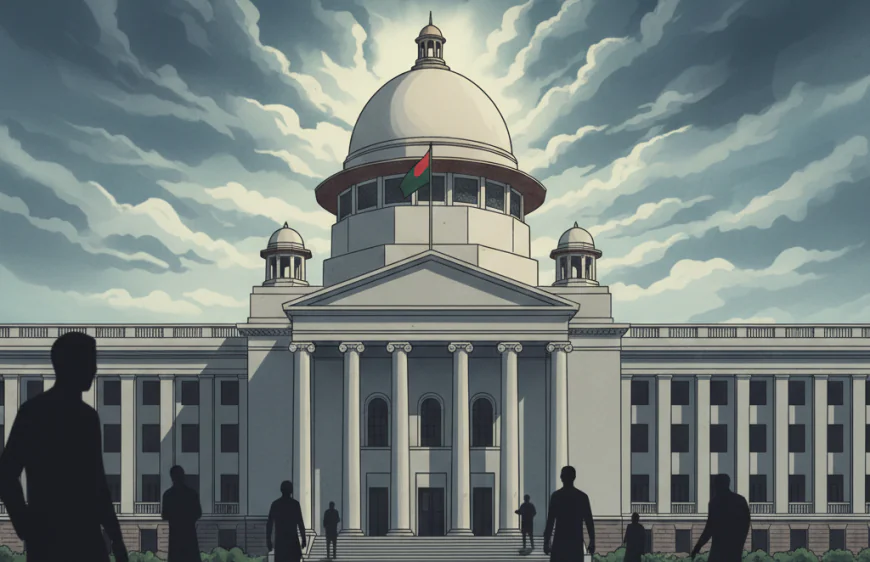
In the contemporary developing world, democracy often exists in a state of contradiction. Constitutions remain intact, elections are held at regular intervals, political parties compete for office, and governments derive their legitimacy from the ballot box. Yet beneath this visible democratic framework lies another reality, one that is seldom acknowledged openly but frequently shapes the direction of national affairs. The coexistence of limited democracy and entrenched deep-state structures has become one of the defining political realities of many nations across Asia, Africa, Latin America and the Middle East.
The promise of democracy rests on a simple principle: the people govern themselves through institutions that are accountable to them. However, when electoral systems function within boundaries established by unelected centres of power, democracy gradually transforms into a managed process rather than an expression of popular sovereignty. Elections continue, governments change, and political rhetoric flourishes, yet the fundamental architecture of power often remains remarkably stable.
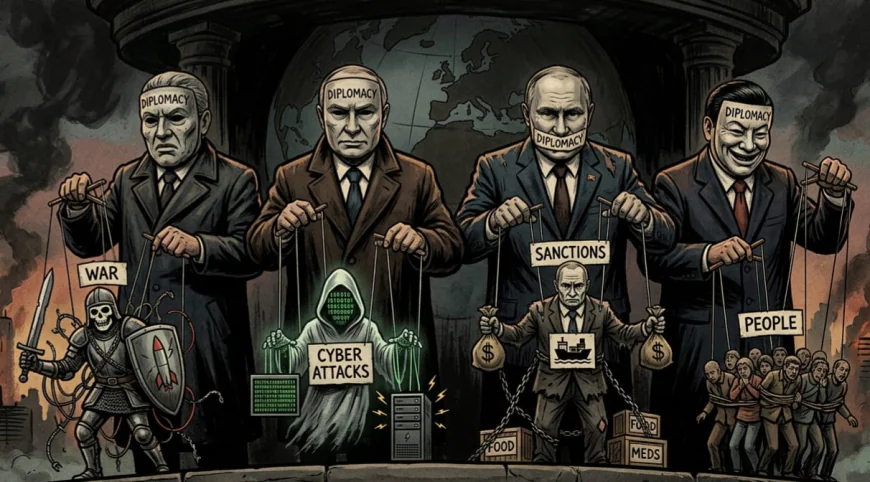
This phenomenon is commonly described as limited democracy. It is not outright authoritarianism, nor is it a fully functioning liberal democracy. Instead, it occupies a grey zone where democratic institutions operate but their capacity to influence the deeper structures of power remains restricted. Alongside this reality stands the concept of the deep state, an informal network of military establishments, intelligence agencies, bureaucratic elites, economic interests and institutional actors whose influence frequently extends beyond electoral cycles and partisan politics.
The relationship between these two forces has profound implications for politics, society and culture. While supporters argue that strong unelected institutions provide continuity and stability in fragile states, critics contend that they weaken democratic development and erode public trust. The consequences of this tension are visible across nearly every aspect of public life.
Politically, limited democracy creates an environment in which citizens participate in elections while simultaneously suspecting that electoral outcomes may not significantly alter the direction of governance. This contradiction gradually undermines confidence in democratic institutions. Voters begin to question whether their participation genuinely influences policy or merely legitimises decisions that have already been shaped elsewhere.
As faith in institutions declines, politics increasingly becomes a contest for access to power rather than a competition of ideas. Political parties devote considerable energy to maintaining relationships with influential actors outside the electoral process. Parliamentary debate loses significance, public policy becomes less responsive to citizen demands, and democratic accountability weakens. Over time, the distinction between formal authority and actual authority becomes increasingly blurred.
The effects are particularly visible during periods of political crisis. In mature democracies, institutional mechanisms generally provide pathways for resolving disputes through constitutional procedures. In limited democracies, uncertainty regarding the true location of power often complicates conflict resolution. Political actors may seek support from unelected institutions rather than relying solely on democratic processes. This tendency reinforces public perceptions that power ultimately resides beyond the reach of ordinary citizens.
Yet the influence of limited democracy extends far beyond the political arena. It shapes social behaviour in subtle but profound ways. When citizens observe that official rules and actual outcomes do not always align, they adapt accordingly. Informal relationships become more valuable than formal procedures. Personal connections often appear more effective than institutional channels. Patronage networks emerge as practical alternatives to impartial systems of governance.
This adaptation creates a culture in which access frequently matters more than merit. Opportunities in education, employment and business may become linked to networks of influence rather than transparent standards. Young people entering public life learn quickly that success often depends not only on talent and effort but also on understanding the informal mechanisms through which power operates.
Such realities inevitably affect public trust. Citizens become increasingly sceptical of institutions while placing greater confidence in personal relationships and informal arrangements. Although these networks may provide short-term security, they weaken the foundations of equal citizenship and the rule of law. Trust shifts away from the state and towards private circles of influence.
Perhaps the most damaging consequence is the gradual normalisation of political cynicism. Over time, citizens lower their expectations of democratic governance. Transparency is viewed as unrealistic, accountability as selective, and reform as temporary. Political participation continues, but optimism diminishes. Democracy becomes something people tolerate rather than something they genuinely believe in.
This cynicism inevitably shapes civic culture. Independent organisations, professional associations and civil society groups struggle to maintain influence in environments where power is concentrated elsewhere. Public debate becomes increasingly polarised because politics is perceived as a struggle for control rather than a shared search for solutions. Compromise is often interpreted as weakness, while confrontation becomes a measure of strength.
The media landscape also reflects these dynamics. In many developing countries, journalists operate within systems where direct censorship may be limited, yet indirect pressures remain substantial. Sensitive topics often encounter resistance. Investigative reporting faces obstacles. Self-censorship emerges not necessarily because it is imposed, but because it becomes understood as prudent.
The result is an information environment characterised by uncertainty and distrust. Citizens consume news while simultaneously questioning its credibility. Rumours and conspiracy theories thrive in spaces where transparency is insufficient and public confidence remains fragile. A society that cannot agree on basic facts inevitably struggles to build consensus regarding its future.
Cultural life offers perhaps the most revealing mirror of these tensions. Literature, cinema, music and the arts frequently become arenas where societies attempt to understand the contradictions surrounding them. In environments shaped by visible governments and invisible power structures, artists often explore themes of identity, authority, resistance and freedom.
Many of the most compelling cultural works emerging from the developing world reflect precisely this struggle. They speak of institutions that appear powerful yet fragile, of citizens who are simultaneously hopeful and disillusioned, and of societies searching for authenticity amid competing narratives of authority. Art becomes both a reflection of political reality and a form of resistance against intellectual conformity.
Educational institutions are equally affected. Universities are expected to cultivate critical thinking and independent inquiry. However, where entrenched power structures exert significant influence, intellectual freedom may encounter subtle constraints. Academic debates become cautious. Research priorities may be shaped by political sensitivities. As a result, societies risk limiting their capacity for innovation and self-correction.
Defenders of strong institutional guardianship often point to the challenges faced by developing nations. Economic instability, ethnic tensions, security concerns and weak governance structures can create vulnerabilities that threaten democratic order. From this perspective, powerful institutions provide continuity where elected governments may struggle to do so.
There is validity in acknowledging these concerns. History contains numerous examples of fragile democracies collapsing under the weight of instability and political fragmentation. Yet stability alone cannot serve as the ultimate measure of political success. Stability without accountability may produce order, but it rarely generates legitimacy. Stability without participation may create calm, but it seldom inspires trust.
The long-term health of any nation depends not merely on effective governance but on governance that is perceived as legitimate by its citizens. Economic growth, infrastructure development and administrative efficiency are undeniably important. Yet sustainable national progress ultimately requires institutions that command public confidence because they are transparent, accountable and responsive.
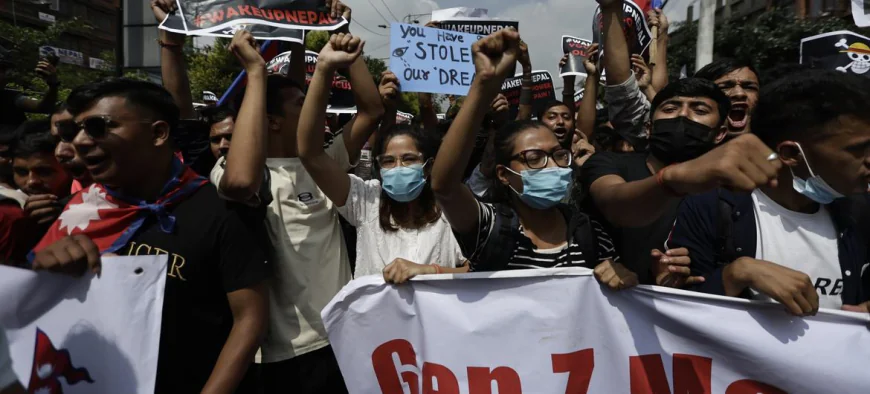
The digital age has intensified these demands. Information now travels across borders with unprecedented speed. Citizens compare their experiences with those of other societies. Younger generations are increasingly informed, connected and politically aware. They seek systems that combine stability with freedom, authority with accountability and governance with genuine representation.
The challenge facing the developing world is therefore not simply a choice between democracy and stability. It is the far more complex task of creating political systems capable of delivering both. Nations prosper when citizens believe that institutions belong to them rather than to hidden networks of influence. They flourish when public authority derives its strength from legitimacy rather than opacity.
The persistence of limited democracy and deep-state influence reflects historical legacies, institutional realities and contemporary challenges. Yet history also demonstrates that political systems are not immutable. Societies evolve. Institutions adapt. Expectations change. Democratic maturity is rarely achieved through sudden transformation. More often, it emerges through a gradual expansion of accountability, transparency and public participation.
Ultimately, the future of the developing world will be shaped not by the existence of power, but by the question of who controls it and in whose name it is exercised. The strength of a nation is measured not merely by the stability of its institutions, but by the confidence of its citizens that those institutions genuinely serve the public good. When that confidence exists, democracy becomes more than a procedure. It becomes a living expression of national purpose and collective aspiration.
The defining challenge of the twenty-first century will not be whether developing nations can hold elections, but whether they can build institutions that ensure power remains accountable to the citizens from whom legitimacy ultimately derives. Until that balance is achieved, the tension between democratic aspiration and invisible authority will continue to shape politics, society and culture across much of the developing world.
 Sponsored by