




























Grey-Zone Diplomacy
War Without Declaration, Law Without Reach
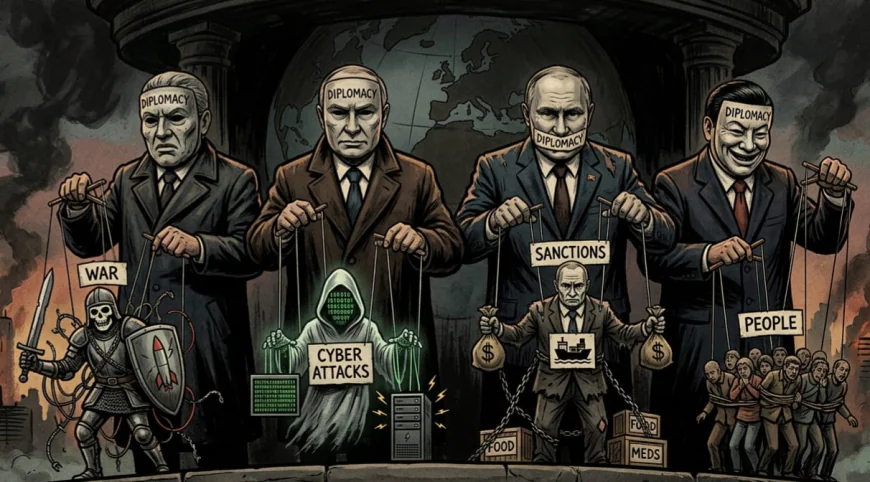

In the traditional architecture of international relations, the line between war and peace was both visible and legally defined. States either entered into armed conflict or engaged in diplomacy through treaties, negotiations, and multilateral institutions. That clarity, however, is rapidly eroding. In its place, a more ambiguous and calculated form of statecraft has emerged, one that avoids formal declarations of war while achieving many of its objectives. This phenomenon, widely described as “grey-zone diplomacy,” represents not merely a tactical shift, but a structural challenge to the global legal order.
At the center of this crisis lies a tension between evolving state behavior and a largely static legal framework. The United Nations Charter, particularly Article 2(4), establishes a near-universal prohibition on the threat or use of force against the territorial integrity or political independence of any state. Complementing this, customary international law, principles of state sovereignty, and the doctrines governing armed conflict including the broader framework of International Humanitarian Law were designed to regulate clearly identifiable acts of aggression.
Yet grey-zone operations deliberately operate below these thresholds.
Cyber intrusions that disable critical infrastructure, economic sanctions that exert systemic pressure on civilian populations, covert support for non-state actors, targeted disinformation campaigns, and strategic coercion through financial or technological dominance; these are not anomalies. They are increasingly normalized instruments of modern diplomacy. Crucially, they are structured in ways that avoid triggering the formal legal definitions of “use of force” or “armed attack,” thereby evading the legal consequences that would otherwise follow.
This strategic ambiguity creates a profound accountability gap. Under the current framework, the right of self-defense, as articulated in Article 51 of the United Nations Charter, is activated only in response to an “armed attack.” But what constitutes an armed attack in the digital age? Does a cyber operation that shuts down a national power grid qualify? Do sustained economic measures that cripple a nation’s economy amount to coercion under international law, or are they permissible tools of state policy? The absence of consensus on these questions has allowed states to exploit legal grey areas with increasing sophistication.
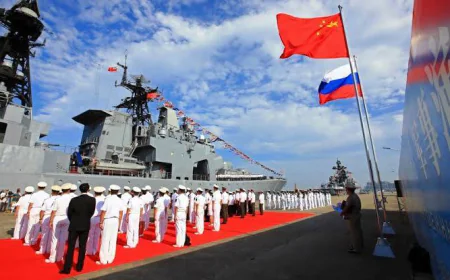
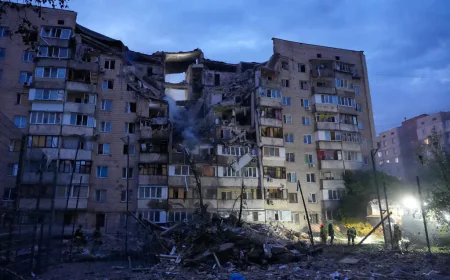
Recent geopolitical patterns illustrate this transformation with striking clarity. The prolonged tensions between Russia and Ukraine have demonstrated how cyber warfare, information manipulation, and proxy engagements can precede and accompany conventional military operations. The relationship between the United States and Iran remains defined by sanctions, covert actions, and strategic deterrence without formal war. Meanwhile, China’s calibrated pressure on Taiwan, through military signaling, economic leverage, and political isolation, illustrates how influence can be exerted persistently without crossing the legal threshold of armed conflict.
From a legal standpoint, this raises a fundamental dilemma: if actions produce consequences equivalent to war, yet fall outside its formal definition, does the law retain its relevance? The answer is increasingly uncertain. International law, in its current form, was constructed to address overt and attributable conduct. Grey-zone strategies, by contrast, thrive on deniability, fragmentation, and gradual escalation; conditions under which legal attribution becomes difficult and enforcement even more so.
Equally significant is the erosion of normative principles that underpin the global order. The doctrine of sovereignty, the principle of non-intervention, and the prohibition of coercion are not merely legal rules; they are foundational to stable interstate relations. Grey-zone diplomacy does not always violate these principles outright, but it systematically undermines them. It transforms the spirit of the law into a technicality; something to be navigated rather than respected.
There is also a broader systemic risk. By normalizing grey-zone conduct, the international community risks institutionalizing a permanent state of low-intensity conflict. Unlike conventional wars, which at least allow for decisive outcomes or negotiated settlements, grey-zone conflicts are inherently open-ended. They persist in a state of strategic ambiguity, eroding trust among states, destabilizing regions, and weakening the authority of international institutions.
Perhaps the most striking paradox is that many of these practices are employed by states that publicly champion a “rules-based international order.” This contradiction reveals an uncomfortable truth: the crisis is not simply one of compliance, but of design. The rules themselves are increasingly misaligned with the realities they are meant to govern.
Addressing this challenge requires more than rhetorical commitment. It demands a substantive evolution of international law. Clearer definitions of “use of force” in the context of cyber operations, stronger mechanisms for attribution and accountability, and renewed consensus on the limits of economic coercion are essential. Without such reforms, the gap between legal norms and state practice will continue to widen, rendering the system progressively ineffective.
In the final analysis, grey-zone diplomacy represents more than a shift in tactics; it signals a transformation in the nature of conflict itself. It is war without declaration, coercion without responsibility, and competition without clear boundaries. If left unchecked, it will not simply challenge the existing legal order, it may ultimately render it obsolete.
And in that quiet transformation lies the most profound danger: a world where power operates freely in the shadows, while law struggles to keep up in the light.