































What Science Cannot Afford to Overlook: Samia Hossain Swarnali on the Global Cost of Financial Blind Spots
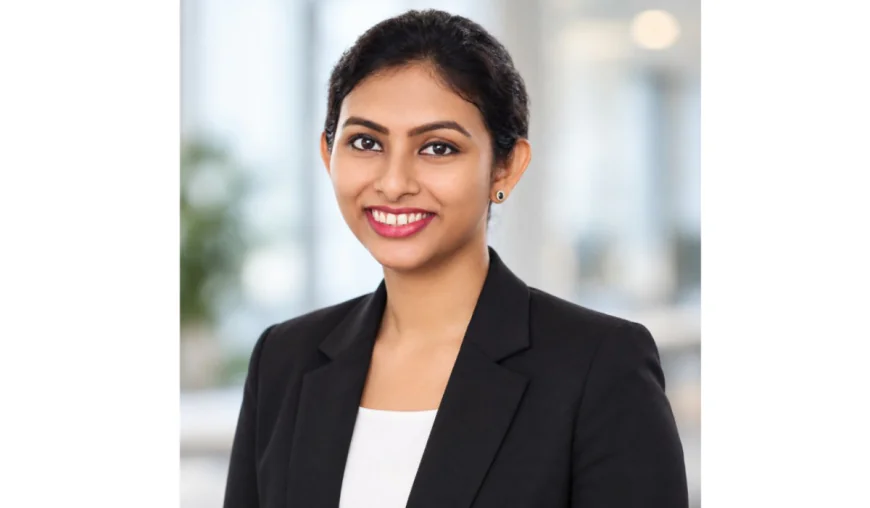
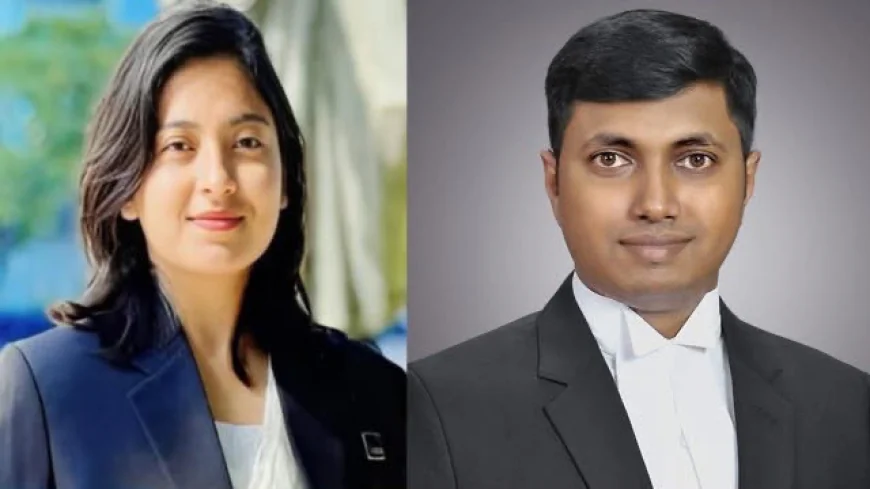
Samia Hossain Swarnali confronts this challenge through finance and information systems. She holds finance degrees from East West University and an MS in Management Information Systems from Lamar University. Her research examines predictive cash flows, data-driven accounting, AI-assisted enterprise systems, and public-sector budget optimization.
Q: What global problem do you most want to solve?
Swarnali: Financial decisions often rely on information that arrives too late. A report may show unspent money while salaries, equipment, and subawards are already committed. This blind spot can delay research and waste scarce resources. I want institutions to move from retrospective accounting to timely decisions.
Q: What has working with biomedical research budgets taught you?
Swarnali: Scientific progress depends on operational details. At the University of New Mexico, I support roughly $28 million in departmental funding and $2.2 million for the AIM biomedical research center. I reconcile accounts, track grants, prepare projections, and discuss spending plans with investigators. The question is not just, “What is the balance?” but “What can we commit while protecting the next research milestone?”
Q: Can you describe your problem-solving approach?
Swarnali: I verify transactions and funding restrictions, then identify obligations that may not yet appear in the ledger, including planned staffing and purchases. Shadow tracking files and what-if scenarios help test choices against available funds. Finally, I translate numbers into clear options for researchers. Reliable decisions require financial controls and conversations with the people doing the work.
Q: Why should institutions in other countries care about these details?
Swarnali: Limited budgets are universal, but poor visibility hurts resource-constrained institutions hardest. Delayed procurement can interrupt laboratories; unclear education allocations can postpone student support. Countries have different rules, but the need is shared: trustworthy data, transparent commitments, and warnings before small errors become major problems.
Q: Does artificial intelligence offer a realistic solution?
Swarnali: Yes, when it solves a defined problem. My publications examine deep-learning cash-flow forecasting, ERP-based intelligence, and machine-learning analysis of financial volatility. Such tools can flag anomalies and model funding shortfalls. But algorithms cannot independently verify grant restrictions or flawed source data. Human review and auditability remain essential.
Q: What would you implement first in a low-resource public institution?
Swarnali: Not an expensive platform. I would start with consistent categories, monthly reconciliation, a commitment register, and a simple dashboard comparing spending with projections. Forecasting can follow once the numbers are dependable. A modest system people maintain is better than sophisticated software built on unreliable records.
Q: How could a local solution scale internationally?
Swarnali: The method can travel; the rules cannot be copied blindly. I would pilot it in one program, measure forecast errors and reporting delays, and adapt it to each institution’s capacity. Global usefulness means repeatable principles with local accountability.
Q: How did your experience in public education broaden your perspective?
Swarnali: At New Mexico’s Public Education Department, I worked with expenditure reviews, maintenance-of-effort calculations, and IDEA-B funding. That experience reinforced a principle: compliance has a human purpose. Accuracy helps protect resources intended for students. The same applies to research and healthcare—reporting decisions affect people beyond the accounting office.
Q: Your research also addresses privacy in healthcare finance. Why is that important globally?
Swarnali: Institutions need better predictions, but sensitive records cannot be pooled carelessly. My research addresses differential privacy and federated learning for collaborative modeling. Their usefulness depends on data quality, governance, and institutional capacity. The goal is better decisions without sacrificing trust.
Q: How should we measure whether these solutions work?
Swarnali: Measure outcomes, not dashboard usage. Are forecasts more accurate? Are variances identified sooner? Does reconciliation take less time? Can investigators decide earlier? My research on data-driven accounting and financial error rates reinforces the need to test results, not assume every digital upgrade is progress.
Q: What is your longer-term vision?
Swarnali: I want financial intelligence to become practical infrastructure for research and public services, including institutions with small technology budgets. Reusable reporting methods, transparent predictive tools, and staff training could help. Success would mean fewer preventable funding interruptions and more resources reaching the discoveries and services they were intended to support.
Biography
Samia Hossain Swarnali is an Accountant II at the University of New Mexico with professional experience in financial analysis, public education funding, and research-grant administration. Email: shossain.samia@gmail.com
 Sponsored by