

























BB sets short-, medium- and long-term plans to reduce bad loans
The Bangladesh Bank has undertaken short, medium and long-term measures to reduce non-performing loans (NPLs) alongside strengthening credit discipline and improving governance in the country's banking sector.
The central bank has taken a number of measures to accelerate recovery of classified loans, strengthen banks' credit risk management and establish a more disciplined lending culture, according to a report presented at the fourth meeting of the Parliamentary Standing Committee on the Ministry of Finance.
The committee, at its fourth meeting recently held at the Jatiya Sangsad Bhaban with its chairman Mushfiqur Rahman, MP, in the chair, stressed ensuring transparency, accountability and economic stability in the country's financial institutions, particularly banks.
As part of its short-term plan covering one year, Bangladesh Bank will hold quarterly discussions with the senior management of banks where the classified loan ratio exceeds 10 percent. The discussions will identify obstacles to loan recovery and require the concerned banks to prepare action plans to address those problems.
The central bank will also review the recovery progress of the top 20 defaulted or classified borrowers at every bankers' meeting.
It plans to formulate guidelines on NPL resolution strategy for banks with high classified-loan ratios and update the Credit Risk Management Guideline.
The central bank also plans to implement loan classification and provisioning based on Expected Credit Loss (ECL) in line with IFRS 9. The measure aims to improve governance in banks' loan management and mitigate credit risks.
The legal aspects of publishing lists of defaulted and willful defaulters are also under review.
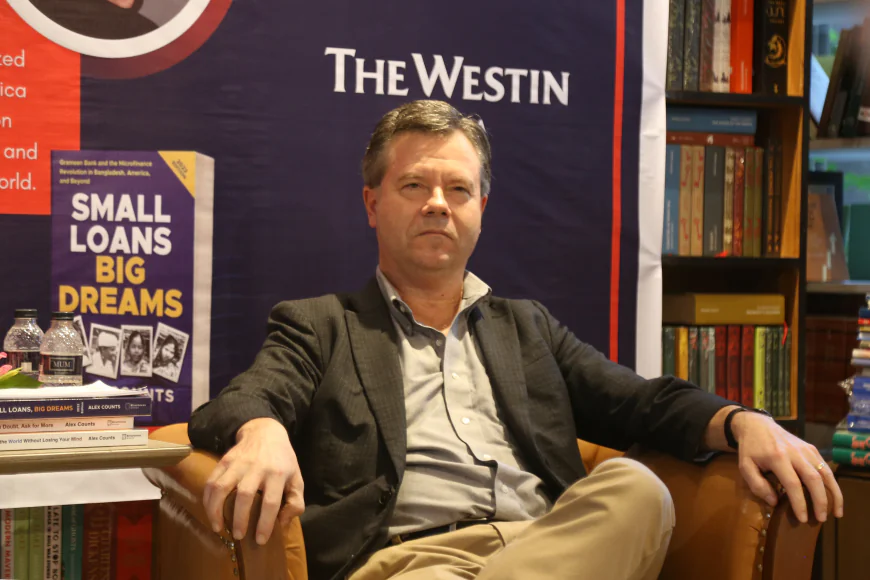
When sought comments, World Bank Division Director for Bangladesh and Bhutan Jean Pesme said the discussion aims to encourage the progressive exit of forbearance. "We think that more needs to be done on the NPL to accelerate the NPL resolution mechanism by creating more incentives for the banks and the debtors to find out solution."
Under the medium-term plan ranging between two to three years, Bangladesh Bank will formulate a policy to provide special allowances to officials who work to recover classified loans and encourage them to intensify recovery efforts.
It will also review and update the existing policy for identifying and providing incentives to good borrowers - those who regularly repay their loans - with the aim of developing a sound credit culture in the country.
Under its long-term strategy ranging four to five years to contain the rising volume of defaulted loans, Bangladesh Bank plans to strengthen the overall credit management framework of banks and ensure greater discipline in loan sanctioning, monitoring, recovery and classification.
The long-term measures focus on addressing the structural weaknesses that contribute to the accumulation of non-performing loans rather than relying only on recovery drives after loans become classified.
The need for such long-term reforms has become more urgent as defaulted loans reached Tk 5,81,237.56 crore, or 31.41 percent of total loans, as of June 30, 2026, up from Tk 5,64,105.64 crore, or 30.92 percent, on March 31, 2026. The amount increased by Tk 17,131.92 crore, while the ratio rose by 0.49 percentage point during the three-month period.
In essence, the long-term strategy seeks to shift the banking sector from reactive recovery of already-defaulted loans toward preventive credit risk management, stronger governance, effective recovery mechanisms and greater accountability in lending.
The presentation also outlined progress in amending and modernising laws considered necessary for strengthening banking governance and recovering defaulted loans.
The draft Bank Companies (Amendment) Act, 2026 seeks to strengthen governance in the banking sector. A revised draft was sent to the Financial Institutions Division on August 24, 2026, following decisions taken at an inter-ministerial/stakeholder meeting on April 22 and instructions issued by the division on April 26.
The latest inter-ministerial/stakeholder meeting was held on September 20, 2026.
The authorities are also working to enact the Artha Rin Adalat (Amendment) Act, 2026, to improve loan recovery and related activities in the banking sector.
An inter-ministerial meeting was held at the Law and Justice Division of the Ministry of Law, Justice and Parliamentary Affairs on January 7, 2026, to discuss the modernisation of the law.
Earlier, the Financial Institutions Division formed a committee headed by an additional secretary on January 19, 2026 to review the draft. The committee prepared a draft proposal and sent it to the Law and Justice Division on January 26, 2026 for necessary action.
A separate committee headed by an additional secretary of the Financial Institutions Division is currently working on preparation of the draft of the amended law.
The authorities are also working on the Distressed Asset Management Act (DAMA), 2026 to improve the recovery of defaulted loans in the banking sector.
In addition, the proposed Insolvency and Bankruptcy Act, 2026 seeks to modernise the existing Insolvency Act, 1997, align the insolvency regime with international best practices, strengthen the overall bankruptcy framework and support financial institutions in managing credit risks.
With assistance from the International Finance Corporation (IFC) of the World Bank Group, the English draft of the new insolvency law has been finalised in a modern format.
The authorities have requested IFC's assistance in translating the draft into Bangla. After finalisation of the Bangla version, it will be sent to the Financial Institutions Division for further action.





 Sponsored by