




















BB Launches Major Reforms to Stabilize Banking Sector: Dr. Mansur

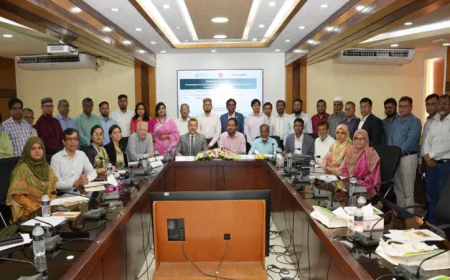
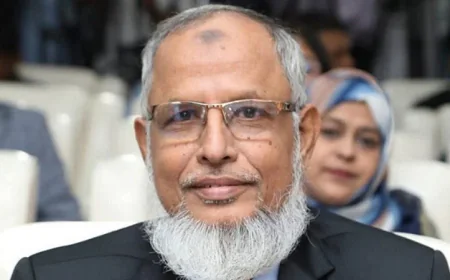
Bangladesh Bank (BB) Governor Dr Ahsan H Mansur today said that the central bank has already undertaken extensive reforms to restore stability in the banking sector, curb inflation, and stabilize the exchange rate despite facing multifaceted challenges. "Despite the difficulties, the financial sector is moving toward a more sustainable footing with visible progress," he emphasized. The governor was addressing the dissemination seminar on the publication of the Bangladesh State of the Economy 2025 and Sustainable Development Goals Bangladesh Progress Report 2025 as the special guest held at the NEC Conference Room in the city's Sher-e-Bangla Nagar area.
The General Economics Division (GED) of the Planning Commission organised the event. The governor noted that when he assumed office, the country was battling rapidly depreciating currency, declining reserves, rising non-performing loans, liquidity stress and disrupted trade flows. "I was always convinced that without stabilizing the exchange rate, we would never win the fight against inflation," he said, adding that the exchange rate-around 120 taka per dollar when he took office-has since stabilized under a fully market-based system.
Dr Mansur stated that Bangladesh's external position has now turned positive. The current account is in surplus, the financial account is positive, and the overall balance of payments is in a surplus. "Reserves that had dropped to around US$17 billion have increased by around US$10 billion in one year," he said. The governor made it clear that there is no scope for an immediate reduction in interest rates. Despite inflation falling from 12.5 percent to just over eight percent, he stressed the need to maintain a slightly positive real policy rate.
"Monetary policy will remain fully market-driven. Administrative control over interest rates is not an option," he said. Dr Ahsan also pointed out that the government's borrowing requirements have put pressure on the money market, but Bangladesh Bank has strictly avoided money printing. The governor acknowledged that the actual non-performing loan (NPL) situation had long been understated. "We brought transparency. The real NPL figure is more than 35 percent-uncomfortable but truthful," he said.
The BB governor expressed confidence that a significant reduction would be visible by December. The Bangladesh Bank has already restructured the leadership of 14 banks, initiated processes for five banks into one bank and resolution of nine non-bank financial institutions, and advanced key legal reforms, including the Deposit Insurance Act, Bank Resolution Ordinance, and amendments to the Bank Company Act, he mentioned.
The Bangladesh Bank Order is also under review to reinforce central bank autonomy and accountability. Dr Mansur added that new merged banks may turn profitable within the first or second year, based on initial assessments. Strict governance rules-such as "no dividend and no bonus" for loss-making institutions-remain in force. Officers responsible for loans that immediately default will also be held accountable.
The governor reaffirmed that no industry has been shut down due to lack of financing-even those associated with major defaulters. Large power and industrial projects facing abrupt shutdown risks have been kept operational through coordinated intervention. The governor emphasized that the external sector is fully under control."But, restoring financial sector stability will take time. The structural and legal reforms we have initiated must continue, and we hope the next government will uphold them," he added.