






















Power Beneath the Scraps
Cut-Piece and the Invisible Machinery of Society
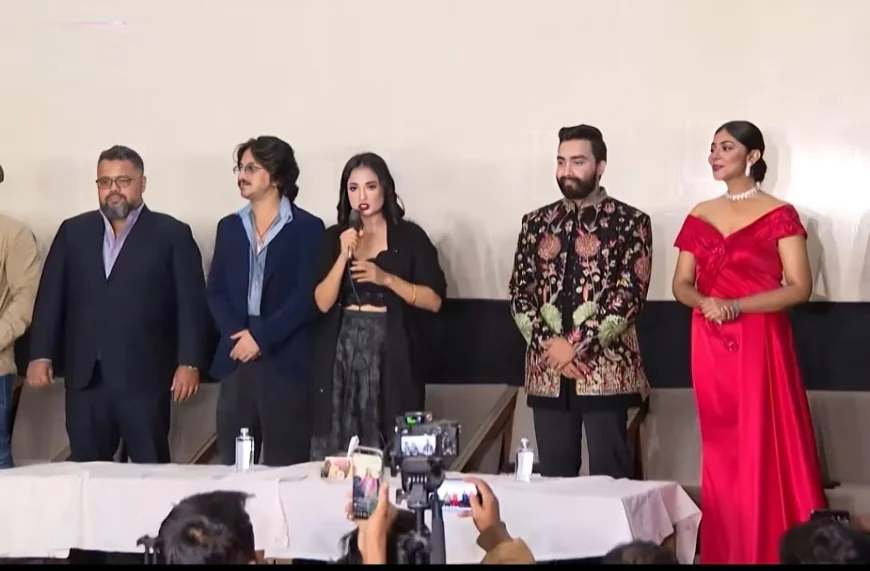

Bangladeshi cinema has long returned to familiar terrains—romance, revenge, aspiration. Yet beyond the illuminated screens and scripted dreams lies another Bangladesh: one shaped by informal economies, silent struggles, and people who survive far from the spotlight. Director Iffat Jahan Momo’s upcoming feature film Cut-Piece seeks to bring that unseen world into focus.
At first glance, Cut-Piece appears to be a story about the jhut (garment waste) trade—an industry often overlooked despite its deep entanglement with the country’s textile economy. But according to the filmmaker, the film is far more than a depiction of a specific sector. It is, instead, a metaphor for a broader social structure defined by power imbalance, exploitation, and systemic inequality.
“The world of jhut business is a reflection of a larger social framework,” Momo explains. “It’s a space where power is always concentrated in the hands of a few, while the majority struggle every day just to survive. This is not limited to one industry—it exists across many layers of our society.”
In Cut-Piece, the jhut market becomes a microcosm of that reality. Decisions are made at the top; consequences are borne at the bottom. The film examines how invisible power networks operate quietly, shaping lives without ever announcing themselves. By bringing these dynamics to the screen, Momo aims to make the unseen visible.
For a first full-length feature, selecting such a raw and underexplored subject is a deliberate risk—one the director is fully aware of. She describes the choice as both a conscious attempt to challenge audience comfort and a response to what she sees as a creative gap in mainstream Bangladeshi cinema.
“Real life is not always glamorous or comfortable,” she says. “But cinema often avoids that discomfort. I believe art has a responsibility—not just to entertain, but sometimes to confront.”
At the same time, Momo argues that the mainstream film landscape still leaves little room for grounded, socially rooted narratives. Cut-Piece is her attempt to step into that empty space—to tell a story that resists embellishment and instead embraces lived reality.
Central to the film’s philosophy is a belief that audiences are evolving. According to the director, today’s viewers are increasingly interested in stories that reflect their surroundings—stories that ask questions rather than provide easy answers.
“The audience is changing,” she says. “They are no longer satisfied with spectacle alone. They want to see reality, to question it, to locate themselves within it. Cut-Piece is an attempt to begin that conversation.”
Rather than offering clear moral resolutions, the film invites reflection: Who holds power? Why do the most vulnerable always pay the highest price? And where do we, as viewers, stand within this structure?
In that sense, Cut-Piece functions not only as a film but also as a social document—capturing a moment, a system, and a set of lives often absent from cinematic narratives. By centering an informal economy and the people who sustain it, the film challenges the boundaries of what mainstream cinema considers worthy of attention.
Whether Cut-Piece ultimately reshapes audience expectations remains to be seen. But its ambition is clear: to move beyond comfort, beyond convention, and toward a cinema that reflects society not as it wishes to be seen—but as it is.



 Sponsored by