








Guinea’s Supreme Court Confirms Mamady Doumbouya’s Election Win
Guinea's Supreme Court on Sunday validated an overwhelming presidential election victory for junta chief Mamady Doumbouya, crediting him with 86.72 percent of votes. This confirms provisional results announced on Tuesday, following the December 28 election that excluded opposition heavyweights from the ballot.
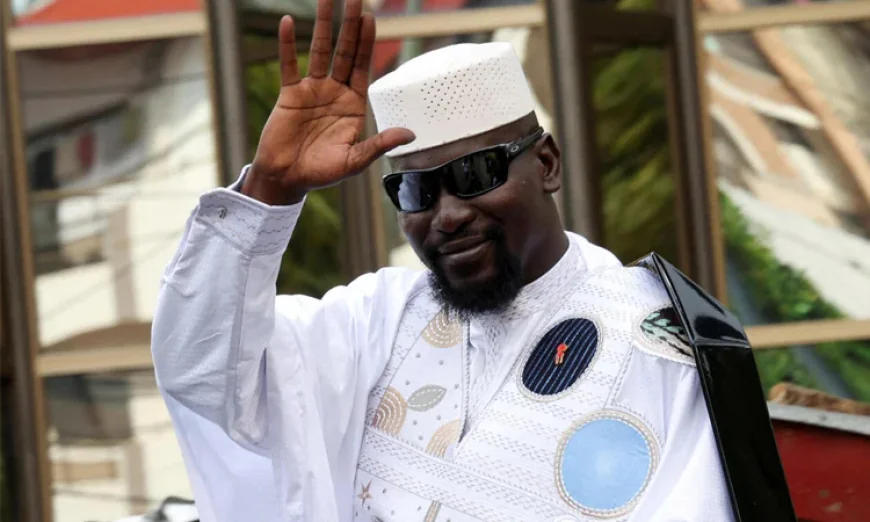
Doumbouya, 41, who had pledged not to run for office after seizing power four years ago, aced eight rivals for the presidency -- but the main opposition leaders were barred from running and had urged a boycott of the vote. After the court's announcement, Doumbouya made an address to the nation in which he called for building a Guinea of "political and economic sovereignty" and "shared prosperity".
Doumbouya, "running as an independent candidate, won 86.72 percent of the votes," the Court's first president, Fode Bangoura, said as he announced the final election tally. Bangoura then declared Doumbouya "president of the Republic of Guinea for a seven-year mandate". The runner-up, Abdoulaye Yero Balde, won 6.59 percent of the vote, also unchanged from the provisional result.
Balde, who had challenged the election result in a filing with the Supreme Court, had since "voluntarily withdrawn" the complaint, Fode Bangoura said. In September 2021, Doumbouya led a coup to topple Guinea's first freely elected president, Alpha Conde. He has cracked down on civil liberties and banned protests, while opponents have been arrested, put on trial or driven into exile. In late September, Guineans approved a new constitution in a referendum that permitted junta members to run for office, paving the way for Doumbouya's candidacy.
It also lengthened presidential terms from five to seven years, renewable once. As the vote approached, Doumbouya's usual camouflage fatigues and red beret gave way to civilian clothes for his rare public appearances, always surrounded by men from the Special Forces Group, the military unit from which he hails.
It was as head of these forces that then-colonel Doumbouya stormed the presidential palace in 2021 and ousted Conde, who had been in power for some 11 years. The government seizure by the career soldier was initially welcomed by Guineans after protests were violently repressed amid Conde's win of a third term.
The new strongman promised that no member of the junta would run for office in elections meant to return power to civilians, which were to be held at the end of a transition period. Since then, Doumbouya has promoted himself to general and reneged on that promise, while silencing dissent. Under Doumbouya, several political parties and media outlets have been suspended, demonstrations were banned in 2022 and repressed, and numerous opposition and civil society leaders have been arrested, convicted or forced into exile.