























Bangladesh Increases LNG Import Outlay
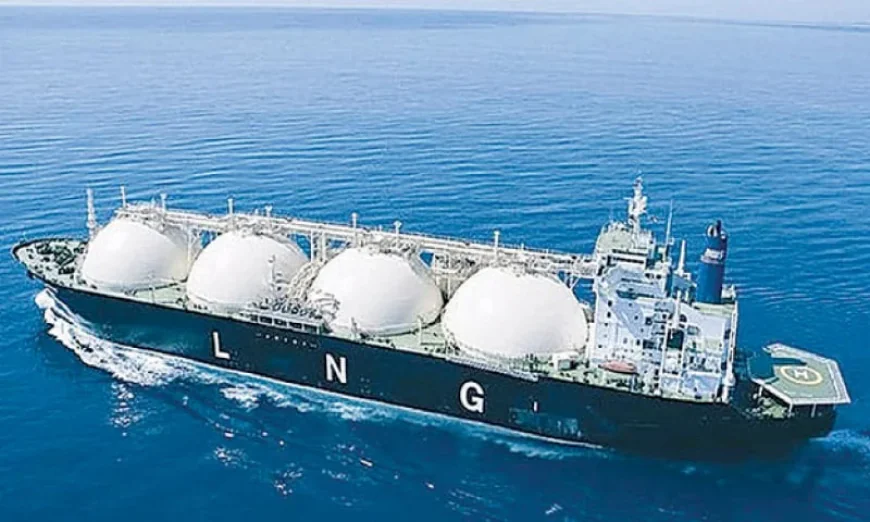
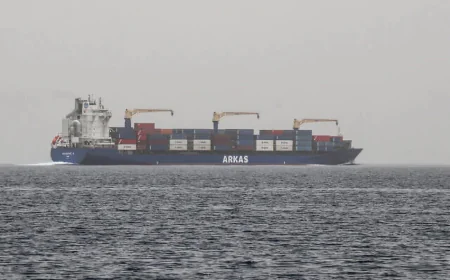
Bangladesh’s interim government in 2025 paid around US$3,877.74 million to import 109 LNG-filled cargoes against an amount of $3,022.32 million for 86 cargos in 2024 amid increased demand for the liquefied gas in industries amid plans to import more in current year. “We spent US$ 855.42 million more for the LNG import in then outgoing year compared to the previous 2024 to meet increased demand,” an official of Bangladesh Oil, Gas & Mineral Corporation (Petrobangla) said.
He said some US$3,877.74 million was required to import 350,766,440 MMBtu (Million British Thermal Units). “The LNG import appeared essential since the gas availability from domestic sources appeared inadequate,” an official of state-run Rupantaroto Prakritik Gas Company Ltd (RPGCL) said. Bangladesh, however, started importing LNG in 2018, with the first consignment coming from Qatar under a long-term agreement. “We import LNG regularly under long-term, short-term agreements as well as spot markets to meet the growing energy demand in the country,” Petrobangla director AKM Mizanur Rahman said.
He said the last year’s imported LNG also came under long-term, short term agreements and spot market procurement process. The Planning Commission officials, meanwhile, said government initially planned to import 115 LNG cargoes in 2025-2026 fiscal under long-term contracts and spot procurements.
RPGCL officials said each LNG-filled cargo contain nearly 33.60 lakh MMBTu gas while under long-term contracts the price stands at $9.5 per MMBTu. RPGCL is responsible for LNG conversion and supply.
Patrobangla’s deputy general manager and spokesman Tariqul Islam Khan said Bangladesh received LNG cargos every month to meet energy demand in the country. He said the country’s 24-hour gas production from at am on January 5, 2026 to 8 am next day including LNG was 2594.7 mmcfd against the demand for 3,800 mmcfd. Petrobangla officials said against the backdrop of declining domestic gas extraction, the projected per day demand is to reach 6,240 million cubic feet by 2030. QatarEnergy received around $1,204.49 million and supplied 40 cargos of LNG having 127,391,359 MMBTu, while Oman's OQ Trading (OQT) got around $44.45 million for 16 cargos of LNG with 51,014,884 MMBTu under long term deal in 2025.
The officials said OQT also supplied five cargos of LNG with 15,995,972 MMBTu under short term deal, while the government procured 48 cargos of LNG having 156,364,225 MMBTu from spot markets. They said the government procures LNG from spot market through various energy supplying companies including petroChina International, TotalEnergies Gas and Power, M/S Posco International Corporation. The planning commission officials said Bangladesh also signed a deal with US-based Excelerate Energy for LNNG import.
They said when the Russia-Ukraine war broke out in 2022, the average LNG price rose to $18.43 per MMBTu while it dropped to $12.84 in 2024 and $13.52 per MMBTu in June last year and $11.02 in November, 2025. Gas demand is projected to reach 6,240 million cubic feet per day (mmcfd) by 2030, according to the Integrated Energy and Power Master Plan 2023, which maps out the energy sector through to 2050. By the end of 2023, domestic gas production stood at about 2.08 billion cubic feet per day from all fields, including those operated by international oil companies while the volume is lower than the 2012 average of around 2.20 billion cubic feet per day.