




























Bangladesh to formulate national traceability strategy to ease EU markets access
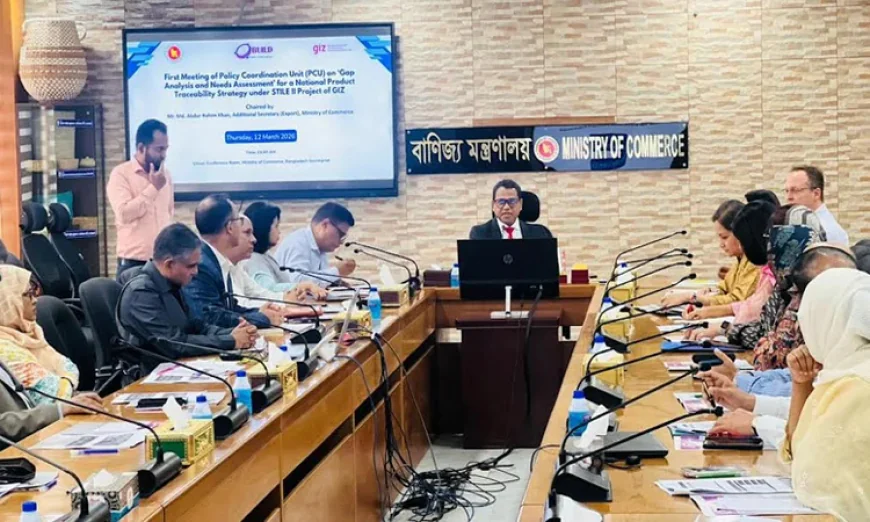
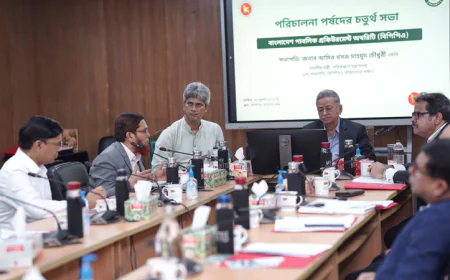
Bangladesh is moving decisively to fortify its multi-billion dollar export trade against tightening European regulations, initiating the development of a comprehensive 'National Traceability Strategy'. At the first meeting of the Policy Coordination Unit (PCU) held on Thursday at the Ministry of Commerce, senior officials and trade leaders emphasized that establishing a strategic roadmap is now a matter of national economic security to meet the European Union's (EU) Ecodesign for Sustainable Products Regulation (ESPR), said a press release here today.
The session, chaired by Md. Abdur Rahim Khan, additional secretary (Export), focused on a Gap Analysis and Needs Assessment conducted by Business Initiative Leading Development (BUILD) in collaboration with the Ministry of Commerce and the Deutsche Gesellschaft für Internationale Zusammenarbeit (GIZ) GmbH under the STILE-II Project. Dr. Wasel Bin Shadat, research director at BUILD, informed the unit that the ESPR represents a fundamental structural shift in global market access.
The regulation transitions the industry from voluntary environmental standards to legally binding requirements for nearly all physical goods entering the EU, he added. Md. Abdur Rahim Khan clarified that while the ESPR is a mandatory regulatory requirement for market access, the DPP serves as the essential tool to comply. To maintain access to the European market, he said, Bangladeshi exporters must be prepared to provide machine-readable data accessible at the border, comprehensive information on material composition and granular data regarding carbon footprints and environmental impact.
The economic stakes of non-compliance are severe, particularly as Bangladesh prepares for its LDC graduation and seeks to maintain its global competitiveness. Research presented at the meeting quantified the immediate threat to the national exchequer: Failure to adapt to these traceability requirements could put an estimated US$ 0.36 billion to $ 1.20 billion of annual export revenue at risk. The "Gap Analysis and Needs Assessment" identified 62 specific readiness gaps across six compliance domains.
Of these, 15 "Tier 1" gaps were classified as requiring immediate national intervention to prevent substantial losses in export earnings. To bridge these gaps, the PCU recommended a Federated Architecture for the national traceability platform. Ferdaus Ara Begum, CEO of BUILD, stressed that a "deep dive" into these evolving rules is now a necessity for the private sector to survive the regulatory shift. She specifically identified the Registered Exporter (REX) system, currently managed and operated by the Export Promotion Bureau (EPB), as the foundational framework for this initiative.
Because the REX system already functions as a verified database for exporters, it provides the established "data rails" necessary to anchor a robust national traceability platform, allowing the government to integrate current export processes with the high-level digital requirements of the EU. The meeting highlighted a sharp disparity in readiness across different export sectors. Vidiya Amrit Khan, vice president of BGMEA, noted that the apparel sector is already navigating increased demands for verifiable evidence of sustainable sourcing.
She emphasized that the ESPR is designed to strictly monitor production to ensure it is free from child labor, unfair labor practices, and environmental degradation, affirming that compliance is "mandatory and non-negotiable". Conversely, Major Rafiqul Islam, secretary general of LFMEAB, reported significant awareness gaps within the leather and footwear sectors. He noted that many association members remain largely unfamiliar with ESPR requirements and called for immediate, organised awareness campaigns. He also suggested that the government explore potential avenues for timeline flexibility to prevent these sectors from being sidelined.
Md. Towhidul Islam, additional director of the Sustainable Finance Department at Bangladesh Bank, informed the PCU that a fund of Taka 2,500 crore is available to facilitate industries in adopting green and compliant practices. This fund is intended to help manufacturers modernize operations to meet the environmental standards demanded by European regulators, he added. Michael Klode, project head for GIZ (STILE-II), provided a critical technical clarification: the current collaboration between the Ministry of Commerce and BUILD is focused on developing the National Strategy, not the physical creation of Digital Product Passports for individual companies.
This strategic roadmap is intended to provide the policy framework and guidance, while the actual implementation of DPPs remains an industry-level responsibility. A B M Fakhrul Alam, group sustainability lead at Urmi Group, issued a stern warning that any delay in implementing traceability systems would result in an "unmanageable compliance burden" in the near future. He advocated for the swift development of a simplified national platform to assist manufacturers in data management. In response, the Ministry of Commerce decided to form a specialized Task Team to lead sector-specific dialogues to ensure every industry is prepared for the transition.
The meeting saw broad-based participation from the public sector, including the Ministry of Industries, MoEFCC, Planning Division, Ministry of Textiles and Jute, ICT Division, Ministry of Labour and Employment, BEZA, EPB, SREDA, BSTI, DoE, and SMEF. Private sector stakeholders included representatives from DCCI, BGMEA, BKMEA, LFMEAB, BPGMEA, BTMA, BGBA, BTGWPEA, and BAFFA.