








Creative Hubs Across Country Planned to Drive Growth, Jobs
The government has unveiled an plan to develop a nationwide network of creative hubs and promote region-specific creative economy products under a "One-Village, One-Product" initiative, aiming to increase the creative economy's contribution to 1.5 percent of the country's Gross Domestic Product (GDP) and generate 500,000 new jobs. The initiative was outlined in the Fiscal Year 2026-27 budget, which proposed an initial allocation of Tk 300 crore for the development of the creative economy sector. An additional Tk 500 crore is expected to be mobilised from the Corporate Social Responsibility (CSR) sector of Bangladesh Bank.
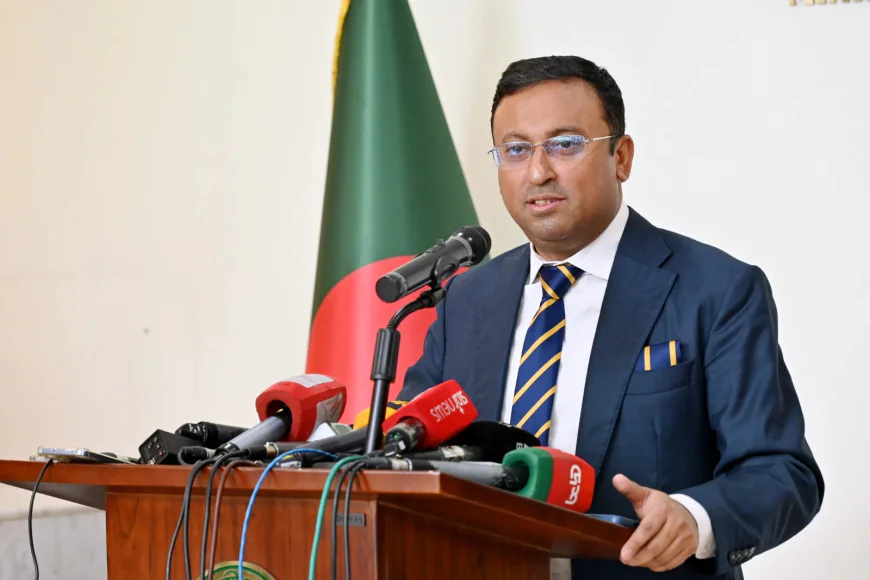
Presenting the budget in parliament on June 11, Finance Minister Amir Khosru Mahmud Chowdhury said, "Our goal is to unlock the vast economic potential of the country's creative industries and integrate them into the mainstream economy.” He added, “We believe that this promising sector can make a significant contribution as an investment in human resource development, national branding, and future welfare."
Under the "One-Village, One-Product" initiative, the government plans to identify and promote a wide range of creative economy products unique to different regions of the country. These include handloom and weaving products, pottery, terracotta items, traditional crafts such as shital pati, shataranji and wooden toys, handmade jewellery and other regional specialties. To strengthen product development and enhance competitiveness, the government will establish a "National Pool of Designers" and modernise the Bangladesh Small and Cottage Industries Corporation (BSCIC) Design Centre to international standards and global benchmarks.
The budget identified the establishment of Creative Hubs at national and regional levels as a key component of efforts to develop the creative economy. According to the plan, the hubs will serve as both cultural and commercial spaces featuring cultural venues, bookstores with reading facilities, cineplexes, cafeterias and dedicated facilities for displaying, promoting and marketing regional products identified under the "One-Village, One-Product" programme. As part of the initiative, a 10-year investment strategy and a time-bound action plan are being formulated for the development of regional creative hubs across the country.
The government has already initiated feasibility assessments for several potential locations. A world-class central Creative Hub is proposed on 160 acres of land in Purbachal under a Public-Private Partnership (PPP) model. Feasibility studies are also underway for establishing hubs on unused land in Karwan Bazar, Tejgaon adjacent to the Office of the Survey General, and vacant industrial plots under the BSCIC. The expansion plan extends beyond the capital, with initiatives being taken to establish Creative Hubs at divisional, district and upazila levels. Similar facilities are also planned within the premises of Bangladesh Shishu Academy and Bangladesh Shilpakala Academy.
The budget document said the government considers the development of creative hubs essential for building a vibrant creative economy ecosystem and creating opportunities for cultural and economic activities across the country. Alongside the Creative Hub programme, Innovation Hubs have already been established in engineering and technology universities. A roadmap is being prepared to expand these facilities to other universities and undergraduate colleges nationwide. The proposed measures are aimed at strengthening the production, promotion and marketing of creative economy products while creating opportunities for entrepreneurship, cultural activities and employment generation.
In his budget speech, the finance minister said the government seeks to democratise economic opportunities across society by creating new avenues for investment, innovation and employment. We seek to democratise economic opportunities across society, enabling us to harness the Demographic Dividend and the Longevity Dividend and translate them into a Democratic Dividend," he said. Referring to the country's long-term economic vision, the finance minister said, "Going forward, we aim to transform Bangladesh into a one-trillion-dollar economy by 2034, driven by investment, productivity and job creation."
Through the combined implementation of the "One-Village, One-Product" programme, Creative Hubs, Innovation Hubs and design support initiatives, the government expects to expand the contribution of the creative economy sector to national development while creating 500,000 new jobs and raising the sector's contribution to 1.5 percent of GDP.
 Sponsored by