
























Govt Keen to Resolve Problems Facing Media, Journalists: Swapon
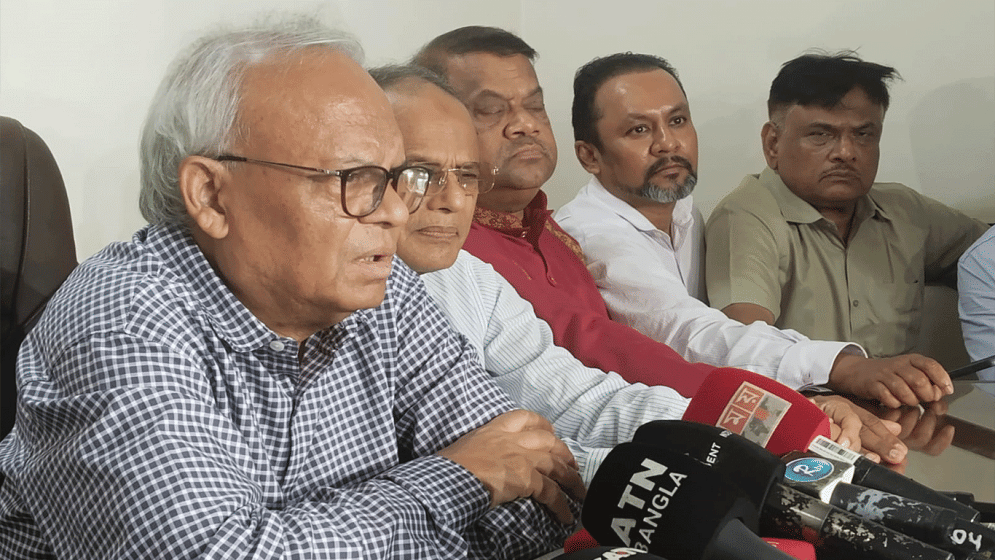
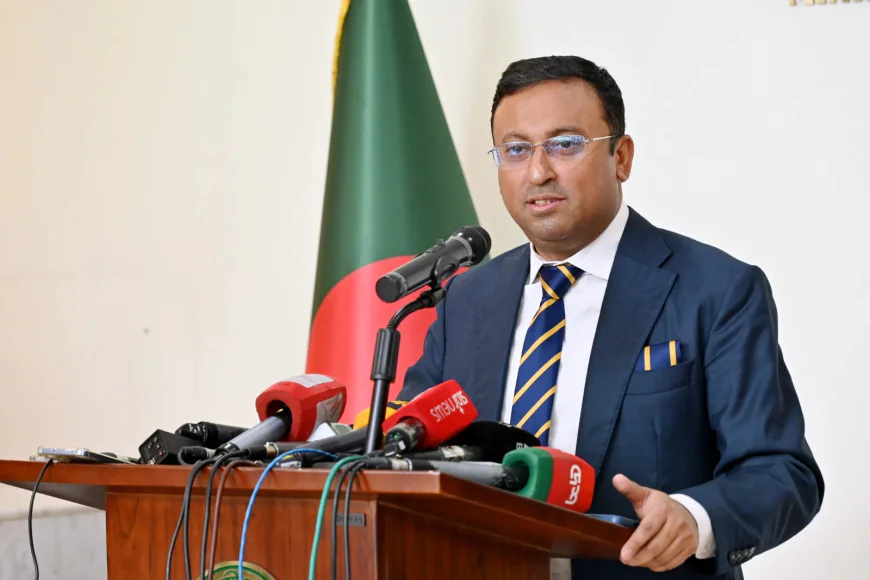
Information and Broadcasting Minister Zahir Uddin Swapon today said in the past, during the fascist regime, the state used to turn a blind eye to the media but the incumbent democratic government now wants to work as a real 'collaborator' in solving problems of media and journalists. “The June 16 is the black day of newspapers. The crisis of the media and the black environment of the journalism profession have now become one. Therefore, instead of getting stuck in the discussion of problems of 50 years, we need to understand the new challenges of artificial intelligence (AI) and digital media and find innovative solutions to those,” he said.
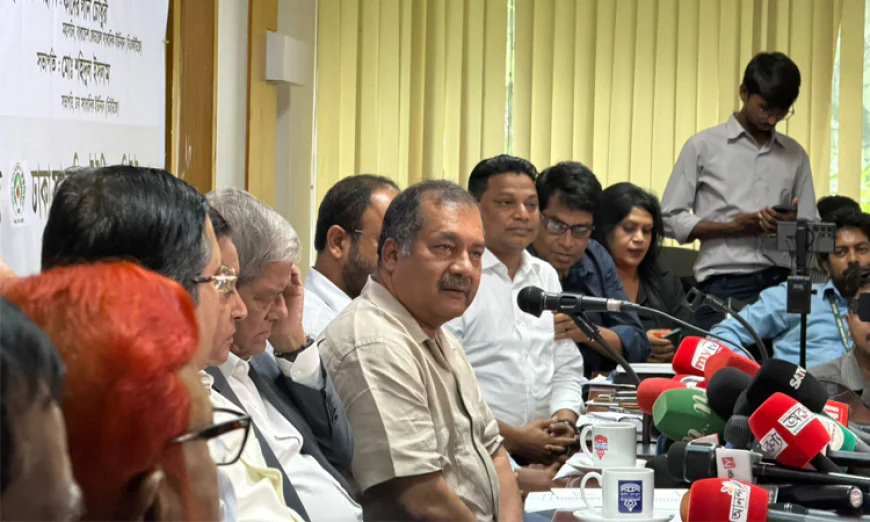
The information minister made the remarks while speaking as a special speaker at a discussion titled ‘Black Day of Newspapers’ organised at Jatiya Press Club in the capital. Bangladesh Federal Union of Journalists (BFUJ) and Dhaka Union of Journalists (DUJ) organised the discussion.
Local Government, Rural Development and Cooperatives Minister Mirza Fakhrul Islam Alamgir spoke at the meeting as the chief guest with DUJ President Md Shahidul Islam in the chair. DUJ Acting General Secretary Didarul Alam Didar moderated the event, and BFUJ Secretary General Quader Gani Chowdhury presented the keynote address. Drawing on the historical context, Swapon said by incorporating the Fourth Amendment to the Constitution in January 1975, the original spirit of the great War of Liberation was destroyed and a one-party rule was established.
He said the dictatorial rulers understood that to prevent the voice and anger of the people, the media would have to be strangled; otherwise, they would not be saved and that is why they officially killed the voice of the newspapers on June 16, 1975. "We need to read the biography of this virus of fascism that escaped in the past well, which will act as an 'antivirus' against any dictatorial mentality hidden in our own minds," he said.
Highlighting the current character of information technology, Swapon said 50 years ago, there was only the printed media but now artificial intelligence (AI) is constantly producing distorted information from home and it is being spread 24 hours a day through social media. Giving examples of the misuse of current technology, he said: "We need to understand and solve the technological crisis of artificial intelligence. Beyond this, there is no room for denying the reality of 'citizen journalism' spreading around the world, but rather it needs to be structured."
He also mentioned that Australia, the United Kingdom and the European Union (EU) have already enacted new laws to this end. The minister said no matter how much freedom the government provides, if media owners do not provide freedom and proper salaries and allowances and do not provide a dignified environment, journalists will not be able to be independent.
The state must ensure the professional financial security and social status of journalists, he said. Swapon warned that the media that claims to be an 'industrial institution' must be operated according to the existing laws of the country. “At the same time, 100 percent security of employees must be ensured. However, the state will provide special incentives and cooperation to media that are only engaged in public welfare outside the profit-based industry,” he said.
The information minister said the government has already exchanged views with all stakeholders, including the Editors Council and the Television Association. “Very soon, a strong 'Media Commission' with quasi-judicial powers will be formed, which will be the most powerful institution in post-fascist Bangladesh,” he said. Swapon said to implement the promise of media freedom, it is necessary to have a high-level important 'policy-making forum' within the government, which will guide the Ministry of Information regularly.
He said if the media can always keep the state facing questions through the right policy, then the state and the government will not be able to make any mistakes and the country will move forward on the right path. Among others, the discussion was addressed by Jatiya Press Club President Hasan afiz, Television Editors Council Convener and Bangla Vision Editor-in-Chief Dr Abdul Hai Siddique, Pratidin Bangladesh Editor and prominent journalist Maruf Kamal Khan Sohel.
Besides, BFUJ Vice Presidents Khairul Bashar and AKM Mohsin, Assistant Secretary General Dr Sadiqul Islam, Publicity Secretary Shahjahan Saju, Organising Secretary Erfanul Haque Nahid and leaders of journalist organisations also spoke at the event.


 Sponsored by