




































National Port Strategy in the national interest says minister
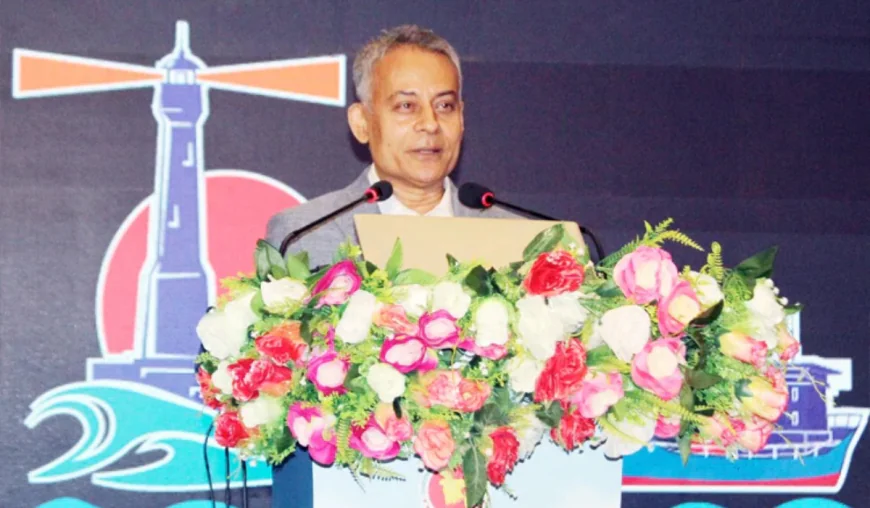
Shipping Minister Shaikh Rabiul Alam today said the 'National Port Strategy' is being formulated focusing on the nation's greater interest, economic advancement, and the expansion of international trade.
He said a significant portion of Bangladesh's import-export and economic activities is linked to the management of sea, river, and land ports.
So, he said, ensuring coordination, efficiency, and effective strategies in port management is the need of the hour.
The shipping minister made the remarks while speaking as the chief guest at a seminar, organised by the Ministry of Shipping, at a city hotel.
State Minister for Shipping Md Razib Ahsan, Chief Representative (Country Director) of JICA Bangladesh Office Junko Takahashi, chairmen of different port authorities, representatives from relevant ministries and departments, as well as university professors and experts, were present at the seminar.
In his speech, Rabiul said the formulation of the national port strategy should not undermine the authority or responsibilities of any specific agency or ministry.
Instead, he said, priority must be given to the country's broader economic interest based on the opinion of all relevant ministries, port authorities, government agencies, businesspeople, importers, exporters and experts.
Rabiul said an integrated port management strategy for Bangladesh should have been formulated much earlier.
With the progress of the economy and trade, it has become urgent to enhance port capacities, improve operational systems, and strengthen coordination among relevant authorities, he said.
To address this long-standing demand, he said, the government is now moving towards finalising the national port strategy.
The shipping minister said JICA and relevant experts are collaborating on this initiative.
Rabiul hoped that an effective strategy document could be created by leveraging the opinion and expertise of relevant local and international specialists.
He reiterated that prioritising the greater interest of the state is the most crucial aspect of formulating the national port strategy.
Everyone must remain vigilant to ensure that the authority, responsibilities, or institutional standing of any ministry or agency do not hinder coordinated initiatives, he said.
However, the minister said, this does not imply disregarding the legal obligations or operational scope of any authority; rather, mutual cooperation must be fostered within existing responsibilities and frameworks.
He said the country's sea, river, and land ports are managed by separate authorities.
Operations at these ports involve not only the Ministry of Shipping but also the Ministry of Commerce, the National Board of Revenue (NBR), and various other public and private entities linked to import-export activities, he said.
Consequently, it is essential to seek input from all parties when formulating a national port strategy, he added.
Rabiul said if the strategy document prioritises the interest of any single party, it could impede the achievement of desired outcomes.






 Sponsored by