





















Dr Salehuddin: Govt outlines long-term energy strategy
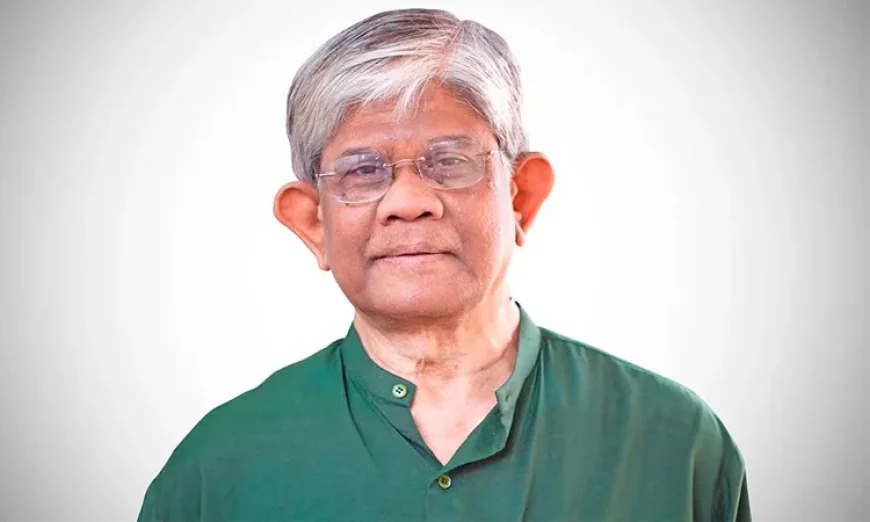
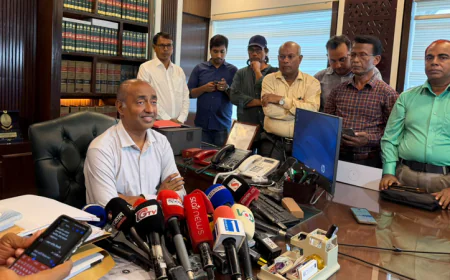
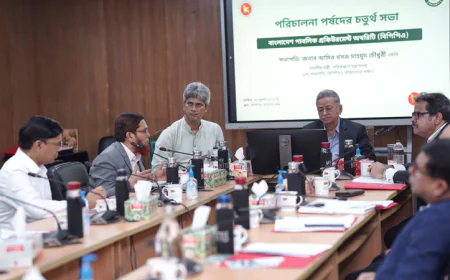
Finance Adviser Dr Salehuddin Ahmed today said that the government has prepared a long-term energy strategy as energy remains a critical issue for the economy. “Energy remains a critical issue for the economy as both power and energy sectors depend heavily on assured supply,” he said. The Finance Adviser was responding to the queries of reporters after chairing two separate meetings on the Advisers Council Committee on Economic Affairs and the Advisers Council Committee on Government Purchase held at the Cabinet Division Conference Room at Bangladesh Secretariat today.
He said, “We have recently prepared a long-term plan on energy. A presentation was made a few days ago, where I was also present. Energy is one of our major challenges. If we can’t ensure fuel, local production will be affected,” he said. Dr Salehuddin explained that the plan looks at the issue from multiple angles, including strengthening domestic sources. “There are two dimensions—power and energy. A comprehensive approach has been taken. This includes our own offshore drilling initiatives and how we use coal, including domestic coal resources. These issues have been consolidated into a single framework,” he said.
When asked what legacy the current interim government would leave for the next elected government, with about a month remaining before the national election, the Finance Adviser said it would be unfair to claim full success. “It’s not that everything has been done or that we’ve achieved 100 out of 100. Definitely, there were expectations that we couldn’t meet. There were limitations,” he said. He pointed to a range of challenges, including procedural rules, the need for inter-agency cooperation and coordination, the role of government officials, availability of skilled manpower and commitment.
“Without addressing these, it’s not possible to implement everything simply because we planned or wanted to,” he added. Responding to another question, he insisted that Bangladesh’s overall economic position remains stable. “Bangladesh is actually being looked at positively by many. For example, in terms of SDG financing, even the United Nations says that Bangladesh has the capacity to mobilise funds and that when Bangladesh agrees, other countries also follow,” he said. “Bangladesh is doing quite well. There may be occasional shocks—political or economic, but no country develops in a straight line. Economic progress is never linear anywhere in the world,” he added.
Regarding the high inflation trend, Dr Salehuddin said inflation cannot be controlled by monetary policy alone.
“High inflation is not just a matter of supply and demand, nor can it be solved simply by increasing the policy rate. Supply-side issues, market dynamics, people’s behaviour and cooperation, and above all governance play a major role,” he said. He stressed that inflation control goes beyond economics. “Political governance matters. You can’t control prices simply by sending inspectors or magistrates. That does not work in any country,” he said. When asked about the ongoing cylinder gas crisis related to a particular issue for which the Energy Ministry has reportedly written to the National Board of Revenue (NBR), the Finance Adviser confirmed that he had seen the letter.
“That is exactly what I am saying, these are complex and interconnected issues,” he noted. He also mentioned that steps are now being taken. “You may have seen measures taken the day before yesterday. Our efforts are now focused on addressing the sufferings of the people,” he added.