
























National Urban Policy to Ensure Sustainable Development: KCC Administrator
Khulna City Corporation (KCC) Administrator Nazrul Islam Manju today said the National Urban Policy-2025 would provide a strong foundation for building a more planned, sustainable and people-centred urban management system in Bangladesh. “Bangladesh is currently passing through a crucial phase of rapid urbanisation. Although urbanisation is accelerating economic growth, it is also creating new pressures on housing, infrastructure, the environment, urban services and social equity,” he said.
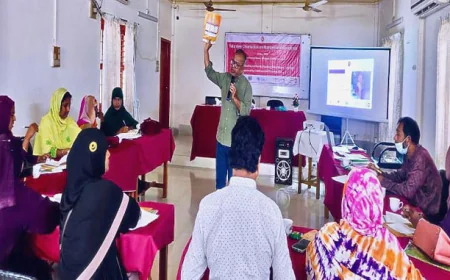
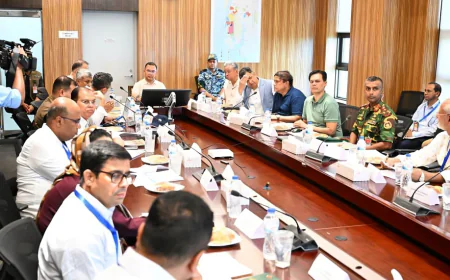
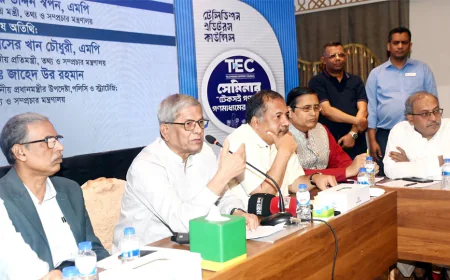
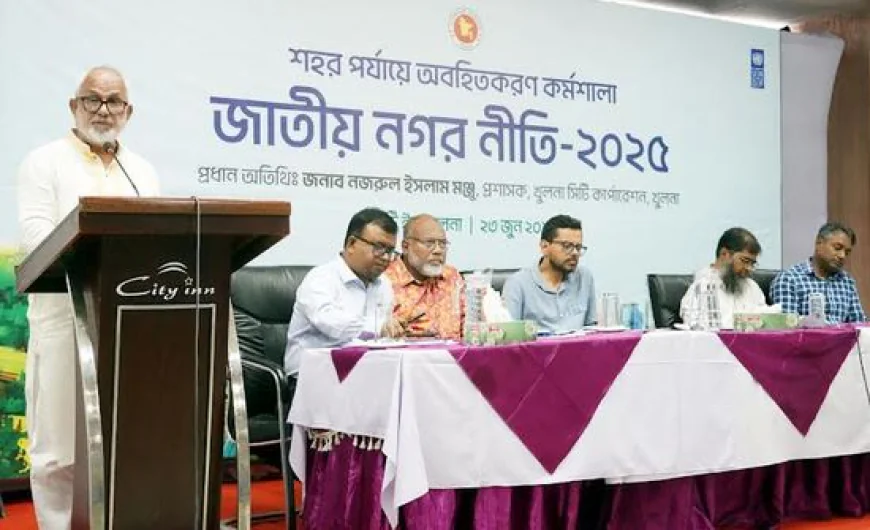
The KCC administrator made the remarks while addressing a city-level orientation workshop on the “National Urban Policy-2025” as the chief guest at a city hotel this morning. The workshop was organised by the Local Government Division with technical support from the United Nations Development Programme (UNDP).
Manju described the formulation of the National Urban Policy as a timely and landmark initiative, saying it would bring urban development under an integrated, inclusive and climate-resilient framework. The policy has been formulated to ensure sustainable, inclusive and climate-resilient urban development, considering Bangladesh’s rapid urbanisation, climate change impacts, infrastructural pressures, environmental degradation and social inequalities.
Referring to Khulna’s context, the administrator said the importance of the policy is particularly significant for the city as Khulna is both the economic and administrative hub of the country’s south-western region and one of the urban centres most vulnerable to climate change impacts. He stressed the need for coordinated and effective participation of all stakeholders at national and local levels for successful implementation of the policy.
Manju also emphasised integrated and sustainable urban planning to address challenges such as waterlogging, river erosion, increasing salinity, unplanned urbanisation and urban poverty in Khulna. Urban development experts from home and abroad at the workshop highlighted the importance of identifying local priorities, strengthening institutional capacity and preparing coordinated action plans for implementing the policy’s goals and strategies.
The speakers also noted that strengthening local government institutions, enhancing stakeholder coordination, identifying city-specific priority action plans and integrating the policy principles into local planning processes would be among the key expected outcomes of the initiative.
Among others, British High Commission Climate and Livelihood Adviser and Deputy Team Leader ABM Firoz Ahmed, KCC Chief Engineer Moshiuzzaman Khan, Head of the Urban and Rural Planning Discipline of Khulna University Professor Dr Md Zakir Hossain, and Professor Dr Morshed Monjur of the Urban and Regional Planning Department of Khulna University of Engineering and Technology addressed the workshop as special guests. UNDP Assistant Resident Representative Anwarul Haque delivered the welcome speech, while Professor Dr Shakil Akhtar of the Urban and Regional Planning Department of Bangladesh University of Engineering and Technology presented the keynote paper. UNDP Project Analyst S.M. Abdullah Al Masum presented a summary of the National Urban Policy-2025.