


















Tarique Rahman: A Remarkable Rise from the Ashes
From the very beginning of Bangladesh's Liberation War, Major Ziaur Rahman emerged as a prominent figure through his amazing leadership qualities. Many historians of the Liberation War failed to comprehend the significance of this rise. They couldn't realize why Ziaur Rahman's declaration of independence was crucially important in the social and political context of the then East Pakistan.
Within a few years of independence in 1947, Pakistan's state structure got a defining feature as the armed forces began to play important role in the country's decision-making process, especially during Ayub Khan's protract military rule. The society and politics of East Pakistan were particularly affected due to this dominant role. Thus, a key question emerged among public minds about Bangladesh's autonomy and independence movement.
Major Ziaur Rahman gave a timely and decisive answer through his declaration of independence after the Pakistan Army crackdown on March 25, which promptly awakened the people of Bangladesh. Ordinary people in 1971 clearly realized its connotation, although many historians later forgot the value of an independence declaration coming from within the military.
They realized that the Bengali-speaking section of the army had joined the Liberation War. They had rebelled and declared independence. Many tried to downplay this declaration, but in the context of 1971 its value was immense. A population devastated under attack by the Pakistan Army instantly knew that an armed, trained professional force stood with them. There was no longer any hesitation about starting the war.
Ziaur Rahman actively participated in the Liberation War, led Z Force, and received recognition for bravery for his role. After the war, like all professional soldiers and officers of Bangladesh, he returned to regular military service. Gradually he was promoted to Major General and became Chief of the Army.
Later, at another historic moment, he assumed the responsibility of head of state and rescued the country from chaos and near ruination.
He had very little time as head of state and government. He had to manage a chaotic political situation along with calming disorder within the military and establish it as a professional force.
As a politician, Ziaur Rahman's greatest challenge was to create a political ideology to counter the Awami League, which had grown through years of movements and to bring about the rise of a new political party based on that ideology. Coming from a military career into politics, this was not easy.
Yet within short period in power, he succeeded in building a new political party. Many can form political parties, but successfully creating a new political ideology capable of challenging the Awami League was an extremely difficult task, and he accomplished it.
Many believe that his talent, personal popularity, and inclusive approach opened his path in politics. He formed the Bangladesh Nationalist Party (BNP) and established a centrist democratic ideology. While creating a multiparty democratic system, he also initiated centrist and inclusive politics for his own party.
The fully developed BNP, however, we see today was not completed during Ziaur Rahman's lifetime. Even while he was alive, internal feud destabilized the party. He made tireless efforts to unite people of different opinions under one umbrella, but he could not complete the task. That unfinished task was carried out by Begum Khaleda Zia.
Khaleda Zia's rise from the role of a housewife is another notable event in Bangladesh's history. After President Ziaur Rahman's death, when the BNP was directionless due to intra-party feud, she took responsibility for the party and restored discipline in the party. She successfully built bridges among factions within the party. Within a couple of years, she emerged as an uncompromising leader.
Her firm stance against authoritarian rule gained immense popularity among the youth. Under her leadership, Chhatra Dal played a pivotal role in the anti-Ershad movement. Later, in Bangladesh's first democratic election, the BNP won by a landslide and Khaleda Zia was sworn in as Prime Minister.
Ziaur Rahman in his short time as President traveled across Bangladesh and took steps for development and the economy. Internationally, he established Bangladesh as a state with a centrist ideology. For these reasons, Ziaur Rahman emerged as a widely popular national leader.
Later, internal feud weakened the BNP, and many leaders aligned with Ershad. Many say the BNP turned into ruins. From these ruins, Begum Khaleda Zia pulled the party back up. Through the continued success of the anti-Ershad movement, the BNP returned to state power. This return surprised everyone. Even more surprising was that, despite people of diverse views and paths joining the BNP, Khaleda Zia, following Shaheed Zia's path, re-established the BNP as an inclusive political party. The large BNP we see today was rebuilt by Khaleda Zia. She also reconstructed the ideology by which the BNP is known today.
Under Khaleda Zia's leadership, the BNP established itself firmly as the Awami League's strongest opponent and rival. It gained the love of farmers, workers, and laboring people, earned the trust of the urban middle class, and established itself as a business- and investment-friendly party.
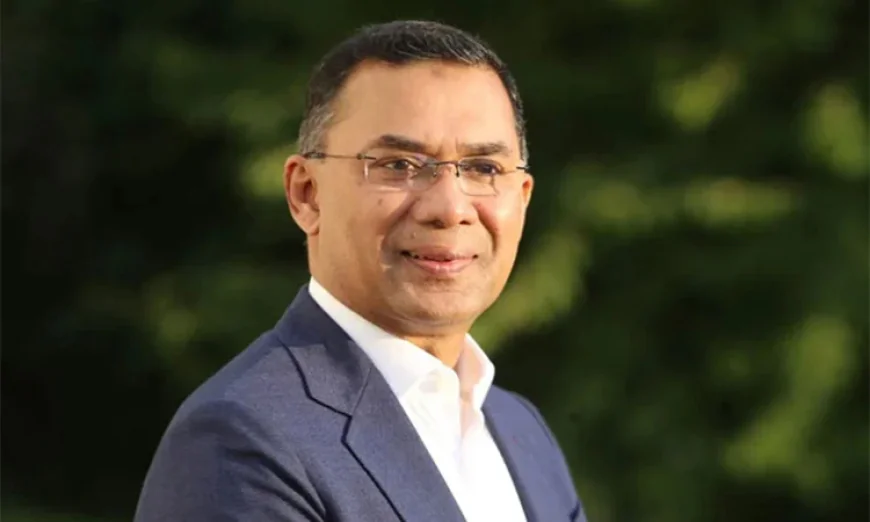
But after 1/11, the BNP again faced crisis. The process of destroying the BNP had begun long before 1/11. The party was subtly negatively branded in domestic and foreign media. A strong narrative was built against the BNP, especially targeting and victimizing Tarique Rahman, the successor of Ziaur Rahman and Khaleda Zia.
A conscious project to demoralize him was carried out. As a result, Tarique Rahman was arrested, imprisoned, tortured, and eventually forced to leave the country. However, not a single allegation of corruption and irregularities made against him by opponents could be proven during the Awami League's more than 15 years rule. The Awami League, with domestic and foreign allies, carried out three election robberies. In 2014, the BNP was forcibly kept out of the election, and the Awami League retained power through a farcical election with most seats won without votes. In 2018, despite promising a fair election with all parties, Sheikh Hasina came to power through unprecedented nighttime vote theft.
Beyond these three elections rigging, the Awami League government carried out awful repression against BNP leaders and activists. Thousands were imprisoned, many were disappeared, and many were killed openly or secretly. Even Begum Khaleda Zia was sent to prison in a critical condition.
For Tarique Rahman, this situation was extremely challenging. Many believed the BNP could not recover from this crisis. Questions arose about how Tarique Rahman, from distant London, could lead the party in Khaleda Zia's absence.
For Tarique Rahman, challenges were immense: The Awami League and its domestic and foreign allies took a hard stance against the BNP. Doubts existed whether party leaders and activists would accept Tarique Rahman's leadership in Khaleda Zia's absence due to her illness and imprisonment. Awami League-aligned narratives against Tarique Rahman were widely circulated.
His physical distance in London from Bangladesh raised fears of communication breakdown. Court restrictions on broadcasting his statements prevented his speeches or statements from reaching the public. Beyond these challenges, the Awami League used all means to create divisions within the BNP. Media bans were accompanied by increased cyber surveillance. As a result, establishing communication with leaders and activists through online platforms became not just difficult but almost impossible. Internal information of BNP leaked rapidly, and party programs and strategies were exposed.
Despite this hostile environment, Tarique Rahman faced every challenge with patience and resilience. He gradually dismantled the narrative built by opponents about his personality. They portrayed him as harsh, ill-tempered, and cruel. But through online interactions, party leaders and activists discovered him as tolerant, gentle, and sensitive. While opponents tried to depict him as a demonic force, the image that emerged was surprisingly humane and flexible. When his statements began to be publicly circulated, the wider people also came to know this aspect of his character.
His voice could not be heard publicly for a long time. Due to intense surveillance, he had to communicate cautiously with party members. Yet this communication brought remarkable change. He established direct contact with leaders and activists across the country and quickly filled the vacuum created by Khaleda Zia's illness, absence, and imprisonment.
This required day-and-night effort, coordinating meetings and calls across Bangladesh and London time zones. Not by inheritance, but through years of disciplined hard work, he established his leadership within the BNP and played a leading role in maintaining party unity and cohesion.
It's true that as a centrist and inclusive party, the BNP includes people of diverse views and paths, often contradictory even at the top. Tarique Rahman listened to all sides and ultimately guided the party toward a centrist position.
This process is now widely recognized both within and outside the BNP. Everyone knows that like his father Shaheed Ziaur Rahman, Tarique Rahman speaks less and works more. Like his mother Begum Khaleda Zia, he speaks little and listens carefully.
Ziaur Rahman was a hero of his time-a magnetic personality, a brave freedom fighter, decisive and swift. Despite rebelling against the Pakistan Army, he was not known as a protest figure in politics. Khaleda Zia transformed herself into a protest leader through her uncompromising stance. Ziaur Rahman had talent; Khaleda Zia has personality and quality. Tarique Rahman is sensitive, humble, and flexible. Through years of persistent effort, he built himself, established leadership over the BNP, restored unity, and lifted the party anew from the ruins.
Saner section noted his determination to ensure a distinct political position for the BNP-pro-Liberation War. His long exile gave him time for research and reflection, sharpening his vision. He has already developed a clear feature for Bangladesh's future, and his positive stance on reforms has begun to bring significant change in contemporary politics.
He has been outside the country for 17 years. The BNP or Jatiyatabadi Chhatra Dal activist who was 18 when he left is now 35; the one who was 40 is now 57; the leader who was 57 is now 74. Many activists have never seen him in person, nor has he seen them. Yet millions of young people, despite unimaginable repression, imprisonment, and torture, remained ready to fight for him.
Avoiding temptations, they did not defect or abandon ideology. Hundreds of leaders reached old age holding onto hope, waiting for his return, waiting for the fall of authoritarian, fascist Awami League rule, waiting for a government formed through an election based on the people's mandate.
In the aftermath of the July mass uprising, long regarded by supporters as a symbol of protest and resistance Begum Khaleda Zia has once again been embraced by many as a national leader. Even before his return to the country, Tarique Rahman has emerged as a figure of growing public confidence. For a significant segment of the population, years of propaganda have begun to fade, allowing a reassessment of his political role and leadership.
The inclusive, centrist political tradition associated with Ziaur Rahman and Khaleda Zia -- one that has shaped key chapters of Bangladesh's political history -- has, supporters argue, been further consolidated under Tarique Rahman's period of direct leadership. His approach is seen by many as a continuation of that legacy, emphasizing broad-based politics and institutional engagement.
Against this backdrop, Tarique Rahman's return is being viewed as more than a personal homecoming. To his followers, it represents a political moment -- an attempt to move from a period of rupture toward renewal, and to reintroduce a familiar and trusted political current into Bangladesh's national life.