






















DSCC Launches Tk 327cr Mega Programme for a Cleaner, Greener City

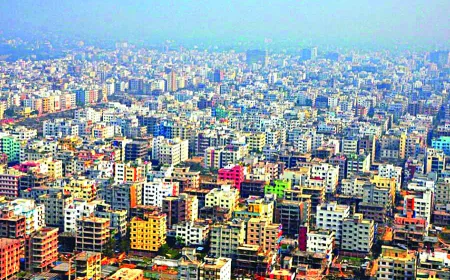
The Dhaka South City Corporation (DSCC) has launched one of its largest-ever sanitation and waste management programmes with a record allocation of Tk 327 crore in the 2026-27 fiscal year, aiming to transform the capital's southern part into a cleaner, greener and more sustainable city.
The allocation for the sanitation sector is nearly three-and-a-half times higher than the original Tk 90.23 crore earmarked in the previous fiscal year. The revised allocation for FY2025-26 stood at Tk 80.38 crore.
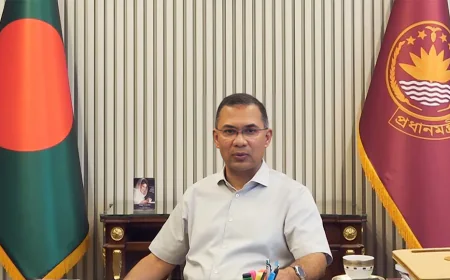
"The corporation has redesigned its entire sanitation management system, giving top priority to implementing the government's 'Clean City, Green City' initiative," DSCC Administrator and valiant freedom fighter Abdus Salam said in an interview.
He said shift-based cleaning operations have been introduced in all wards, with designated sanitation workers assigned to specific roads, while separate monitoring teams have been formed in each ward to ensure accountability and effective supervision.
With a view to promoting behavioural change in waste disposal, the DSCC has intensified public awareness campaigns in collaboration with BD Clean and Sajida Foundation.
Residents have been urged to dispose of waste only at designated places instead of littering, while a pilot initiative has been launched in Motijheel where city inspectors directly supervise sanitation activities.
The city corporation has also introduced the "Clean Care" mobile application and a hotline service to receive citizens' complaints and suggestions promptly. In addition, the first Saturday of every month is being observed as "Cleaning Day" to encourage public participation in keeping the city clean.
As part of the efforts to modernise waste management, six Secondary Transfer Stations (STS) have already been upgraded with improved sanitation facilities and environment-friendly designs. The remaining stations will be renovated in phases.
Special measures have also been taken at the Matuail landfill to prevent methane-induced fires and reduce environmental pollution.
The landfill has been covered with soil and is being developed into a modern "Resource Circulation Park", while an “Ultramodern Compost Plant” has been established to convert organic waste into useful resources.
The DSCC has implemented both short- and long-term measures, including pre-monsoon cleaning of drains, box culverts and canals to reduce monsoon waterloggin. It has identified 33 waterlogging-prone hotspots across its 75 wards for special monitoring.
Portable pumps and sucker machines have been set up to facilitate rapid drainage during heavy rainfall, while emergency response teams have been formed in every ward to keep drainage systems free from blockages.
Abdus Salam said the DSCC has undertaken a project to construct eight new drainage outlets. With government approval, it has already secured two major outlets, which are expected to significantly improve drainage in the central parts of the capital.
He said regular cleaning, dredging and rehabilitation of canals, including the Zia Sarani Canal and the Kutubkhali Canal, are continuing in coordination with the relevant agencies.
The administrator said the Institute of Water Modelling (IWM) has been tasked with preparing an integrated drainage master plan for the DSCC's 57 wards to provide a long-term solution to waterlogging, stormwater management and future urban expansion.
The record allocation for sanitation, coupled with technology-driven waste management, greater citizen participation and integrated drainage infrastructure development, would play a vital role in making southern Dhaka cleaner, more liveable and environmentally sustainable, he hoped.