













Health Budget Nearly Doubles, Focus Shifts to Grassroots Care
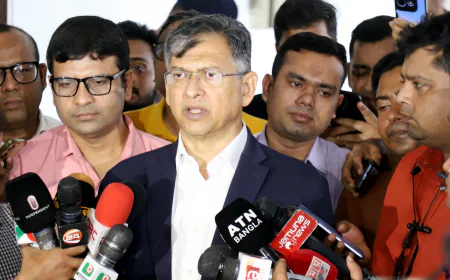
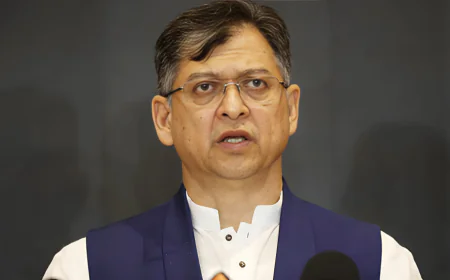
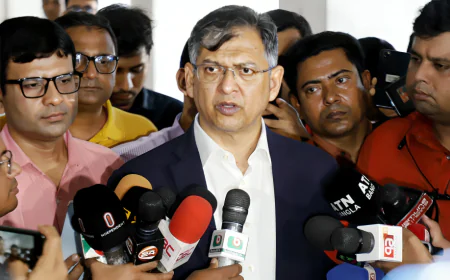
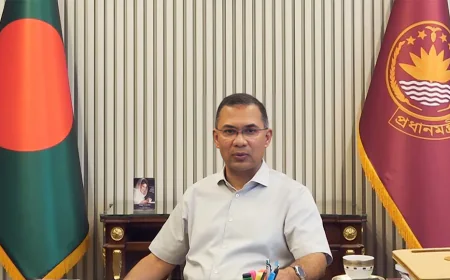
Finance Minister Amir Khosru Mahmud Chowdhury today proposed a record allocation of Tk 69,409 crore for the Health and Family Welfare Ministry in the fiscal year (FY) 2026-27, nearly doubling the revised allocation of Tk 35,477 crore in FY2025-26, as the BNP government moved to implement major health-sector pledges outlined in its election manifesto.
Placing the national budget in the parliament, the finance minister said the proposed health allocation would account for 1.01 percent of the country's Gross Domestic Product (GDP), up from 0.58 percent of GDP in the revised budget of the outgoing fiscal year.
“I propose an allocation of Tk 69 thousand and 409 crore for the Ministry of Health and Family Welfare in the fiscal year 2026-27, which is equivalent to 1.02 percent of GDP. In the revised budget for fiscal year 2025-26, the allocation for this sector was Tk 35 thousand and 477 crore, representing 0.58 percent of GDP,” he told parliament while unveiling a Tk 9.38 lakh crore national budget.
The minister described the increased allocation as the first major step towards fulfilling the BNP government's electoral commitment to gradually raise health spending to 5 percent of GDP within the next five years.
“Building a healthy nation is the prerequisite for sustainable development and a prosperous Bangladesh,” he said, adding that years of neglect, corruption, political interference and lack of accountability had weakened the country's healthcare system.
Outlining the government's policy direction, Khosru said the administration aims to transform Bangladesh's healthcare system from a treatment-centred model to a prevention-focused one by strengthening primary healthcare, expanding immunisation, improving maternal and child health services, enhancing nutrition programmes and ensuring early detection of non-communicable diseases.
A key feature of the government’s plan is the establishment of modern primary healthcare units in every union and urban ward, a commitment included in the BNP manifesto. The government has already begun implementing the initiative, with each unit to be supported by three community clinics providing preventive healthcare, maternal and child services, nutrition support and primary medical care at the grassroots level.
The minister also announced plans to introduce a nationwide Health Card system under universal health coverage. Linked to an Integrated Patient Management System and Referral System, the digital platform will allow healthcare providers across the country to instantly access patients' medical histories, prescriptions and diagnostic records.
To strengthen secondary healthcare, district hospitals and upazila health complexes will be integrated into comprehensive healthcare units, while complex surgeries and specialised treatment will be concentrated at district headquarters hospitals. A National Ambulance Pool and Emergency Services Network will also be established to improve patient transportation.
The minister said the government would continue strengthening immunisation programmes after successfully administering measles-rubella vaccines to nearly all eligible children within its first 100 days in office following a nationwide measles outbreak.
Significant emphasis was also placed on healthcare workforce expansion. The government has initiated the recruitment of 5,000 MBBS doctors to fill long-vacant positions and launched the process of hiring 100,000 additional health workers, around 80 percent of whom are planned to be women, to strengthen preventive and community healthcare services.
The budget also outlines reforms in medical education, including the introduction of a modern competency-based MBBS curriculum by 2030, enhanced use of artificial intelligence in medical training and expansion of nursing and midwifery education.
Alongside healthcare delivery reforms, the government announced support for pharmaceutical exports, development of an Active Pharmaceutical Ingredient (API) industrial park, expansion of vaccine and medicine supply networks and initiatives to develop a domestic medical equipment manufacturing industry.
Calling healthcare investment a cornerstone of human resource development, Khosru said the increased allocation marked “the beginning of a people-centred, accountable and future-oriented healthcare system”.
The proposed budget, he added, seeks not only to improve healthcare services but also to ensure that “no poor family is ruined by the cost of medical treatment”, reflecting one of the BNP government's central electoral commitments.