


















JU Professor Says Ethical Conviction Led to Removal of Hasina’s Portrait
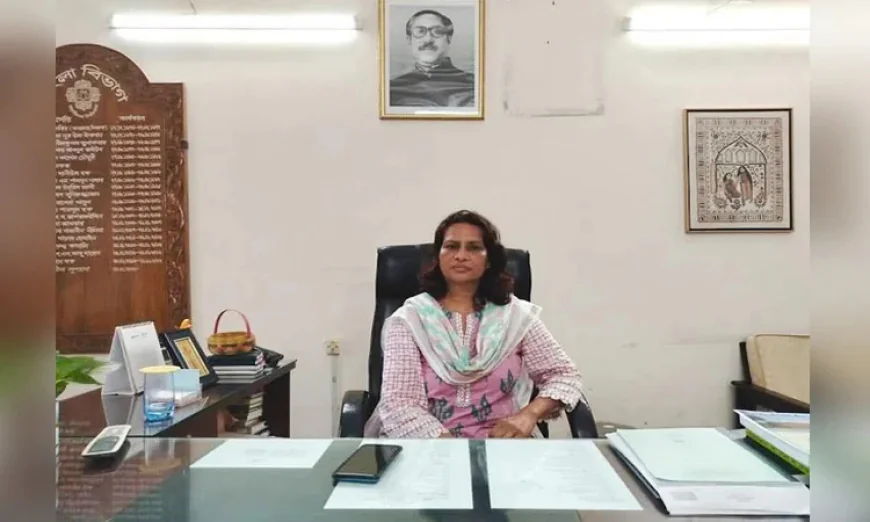
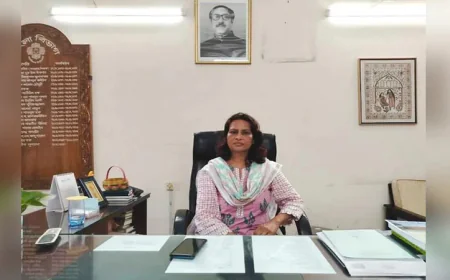
As the July Uprising reached its peak, a portrait of deposed prime minister Sheikh Hasina was hanging on the wall of the then Jahangirnagar University’s Bangla department chairperson’s office room part of the official formality.
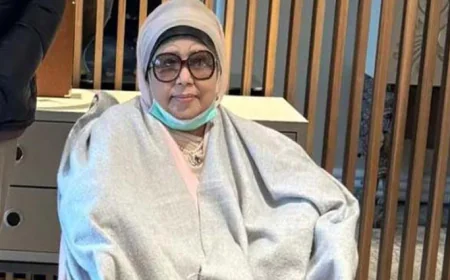
Professor Dr Shamima Sultana, the department chair during the uprising, said she removed it on August 1, 2024 being led by her conscience which told her the picture no longer deserved to be hung anymore at her office room.
“It was a personal act of my ethical protest, believing that the picture sould no longer remain hanging on my office wall," she said in an interview coinciding with the second anniversary of the uprising that eventually toppled the Awami League government.
Sultana said she joined the uprising being led by her long-held commitment to oppose injustice rather than any political motivation.
"My participation in the July Uprising was not an isolated or sudden decision. It was a continuation of the values I upheld since my student days," she said.
The professor said she had previously supported the 2018 Quota Reform Movement, the Safe Roads Movement and anti-graft protests on the university campus.
She said the night of July 15, 2024 appeared to her as a defining or turning point of the movement when the students were attacked at the Vice-Chancellor's residence when she felt “there was no room left for silence".
Sultana said she subsequently joined fellow teachers in symbolic protests and remained alongside students on the street until the movement ended.
The professor said she kept both her office and the department chair's room open to provide students with shelter during emergencies and facilitated protestors also to use the office’s Wi-Fi system to communicate with people across the country and abroad.
Sultana said Abu Sayeed’s killing at Rangpur’s Begum Rokeya University and subsequent reports of civilian deaths fundamentally changed her perception of the situation.
She said the removal of Hasina’s picture was “not an impulsive or emotional decision".
"I felt that a government which failed to protect its citizens and instead used state power against them had lost its moral legitimacy," the professor said.
Asked whether she feared any consequences, Sultana said the sense of “responsibility became stronger than fear” as she watched young people risking and losing their lives.
“The incident quickly gained nationwide attention after photographs of removal of the portrait spread widely on social media,” she said.
Recalling a deeply personal moment, Sultana said her son embraced her after she returned home and told her, "Mom, I'm proud of you".
She, however, said the decision also triggered strong reactions, including abusive phone calls, threatening messages, personal attacks and attempts to discredit her within the university.
“Leaflets were distributed against me on the day of the incident and the university Syndicate, the highest decision making body of the university, later decided to issue her a show-cause notice, although I never officially received it,” Sultana said.
She added that after the change in university administration following August 5, the decision was revoked by the new Vice-Chancellor.
Reflecting on the episode, the professor said she had never regretted her decision.
"I do not consider it a personal achievement . . . It was simply a symbolic act of protest while standing against injustice was my duty as a teacher," she said.