
































Pollution: five rivers in Rajshahi turned into waste-carrying canals
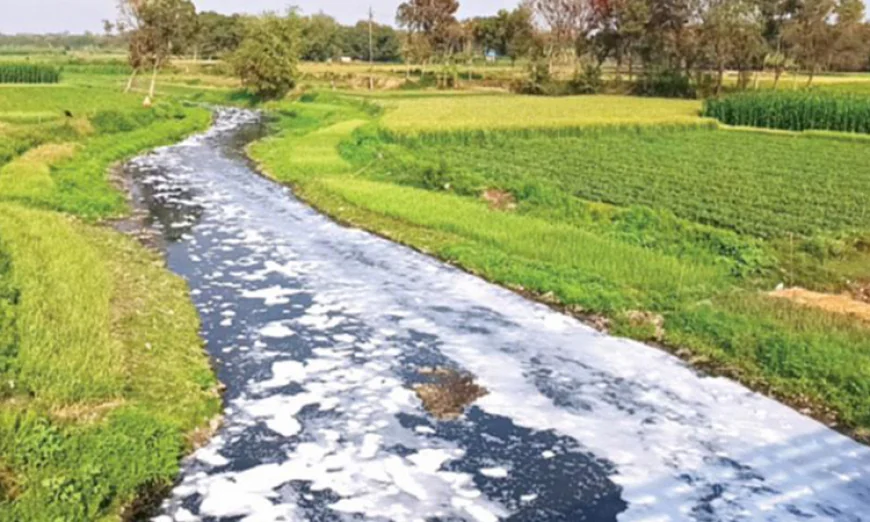
City waste, including toxic materials from factories and hospitals, is polluting at least five rivers across the district once flowed with clear water. Swaramangala, Barahi, Nabaganga, Barnai, and Hoja rivers, along with at least six adjacent wetlands, are now filled with black, waste-contaminated water. Besides affecting the livelihoods of local residents dependent on the rivers, the pollution poses serious health hazards. Many people are suffering from water-borne and skin diseases due to the impact of pollution, while its spread into agricultural land is also threatening food safety.
The Padma River, once known for its clear flowing water, has also turned dark as waste from Rajshahi city is being dumped into it. Relevant sources said the city's unplanned waste management system and widespread lack of awareness are the main reasons behind the river pollution. Except for the Padma, the other five rivers are gradually turning into waste-carrying canals as they flow through and around Rajshahi city.
The Barahi River originates from the Padma, passes through areas including Baya Bazar, and merges with the Barnai River. Waste from the Swaramangala and Nabaganga rivers also eventually flows into the Barnai River in the Baya area of Paba upazila. At the confluence, black water covered with floating plastic, polythene, and chemical foam can be seen. Locals claim the pollution is spreading as far as the Chalan Beel in Natore.
All the city's wastewater and medical waste flow into the Barnai River like a narrow canal. In 2023, the LGED referred to part of this channel as the Pakuria Canal and constructed a 24-metre bridge at Baya Afinepalpara. Under the bridge, black wastewater mixed with toxic chemicals and white foam was seen flowing into the Barnai River, emitting a strong foul odour. Researcher Mahbub Siddiqui said, "I used to cross the Barahi River for one paisa to go to school. Now it has become a drain carrying the city's waste."
Farmer Mozammel Haque said the river, once rich in fish and clean water, is now heavily polluted, causing the death of fish, snails, mussels, and even snakes. Not only the Barahi, but other rivers and wetlands are also being polluted. The Swaramangala River flows along the eastern side of the city, passing between RUET and Rajshahi University before merging into a beel and later becoming the Hoja River. Near the Barnai River in Paba upazila, wastewater is seen entering beside the Nowhata cremation ground. Children are often seen playing in the polluted water.
Local fisherman Suman Halder said contact with the river water causes diseases such as ringworm and eczema. Rizia Bibi from Puthiapara developed skin disease after using the water. Her family members also suffered from itching after exposure. Mustafa Sarkar Bijli, president of the cultural organisation "Bachar Asha", said these rivers must be protected as the livelihoods of hundreds of thousands of people depend on them. He warned that farmers are irrigating crops with toxic water, which may also harm consumers.
River researcher Mahbub Siddiqui said the rivers were once vibrant and navigable but have turned into canals carrying urban waste into the Barnai River, eventually affecting the Chalan Beel and aquatic ecosystems. Dr Md Asaduzzaman, Health and Family Planning Officer of Paba upazila, said many people using the river water are suffering from skin diseases, with thousands of cases reported in the area. District Civil Surgeon SIM Raziul Karim said awareness campaigns are being conducted to discourage the use of polluted river water.
Sheikh Mohammad Mamun Dollar, Chief Conservancy Officer of Rajshahi City Corporation, said wastewater-not solid waste-is entering the rivers, and a treatment plant is urgently needed. Dr A N M Bazlur Rashid, Commissioner of Rajshahi Division, said a proposal has been sent to the ministry to install a water treatment plant, and work will begin once it is approved.



 Sponsored by