



































Crab harvesting resumes in Satkhira Range of Sundarbans after two-month ban
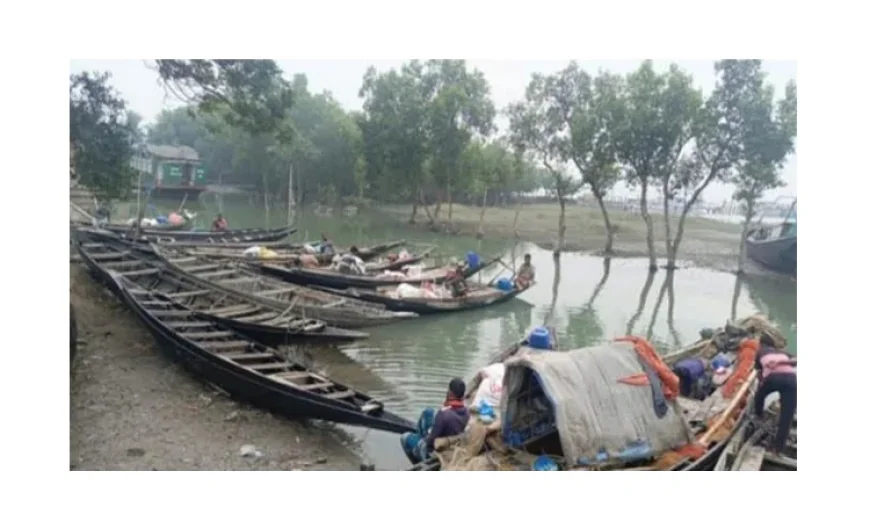
Crab harvesting has resumed in Satkhira Range of the Sundarbans after a two-month closure imposed to protect breeding and biodiversity, bringing renewed activity and hope to thousands of forest-dependent families. Fishermen began entering the mangrove forest from Sunday morning with permission from the Forest Department. The seasonal ban, enforced during the peak breeding period, had halted crab collection across permitted rivers and canals, leaving many coastal families struggling financially.
A visit to Harinagar fishing village, adjacent to the Sundarbans, showed fishermen busy preparing for their return. Boats were being loaded with crab-catching equipment along the banks of the Chunkuri River. Crews stocked essential supplies, repaired ropes and hooks, and fixed minor mechanical faults before setting off for the forest. Arun Mondal, a fisherman from the village, said his five-member family depends entirely on crab harvesting. “I am not accustomed to any other profession, and there is no alternative work here,” he said.
During the two-month ban, he took a loan of Taka 20,000 from a local moneylender to support his family. “Now that the ban has been lifted, I hope to repay the loan by catching crabs,” he added. Another fisherman, Nityaranjan Mondal, described the hardship faced by poor families during the closure. “We went through extremely difficult times. There is no government allowance during the ban period. Only the poor risk their lives in the Sundarbans to catch crabs,” he said. According to the Satkhira Range Office of the Western Sundarbans, 2,900 boats have valid permits to enter the forest under the Burigoalini, Kadamtala, Koikhali and Kobadak forest stations. Of these, 1,600 are registered crab-fishing boats.
The Forest Department said that Pushpakati, Mandarbaria, Notabeki and Haldebunia areas under the four forest stations have been declared wildlife sanctuaries. Additionally, 52 percent of Dobeki and Kanchikata areas are designated as sanctuaries. Crab fishing remains prohibited year-round in specific canals, including Chhota Keyakhali Canal, Baro Keyakhali Canal, Kholshibunia Canal and Sapkhali Canal, as well as in waterways less than 25 feet wide. In the remaining rivers and canals, around 15,000 fishermen with valid passes and permits rely solely on crab harvesting for their livelihoods. Since the formulation of the crab export policy in 1998, the government has enforced an annual two-month closure of crab-catching passes and permits to ensure sustainable breeding.
Assistant Conservator of Forests (ACF) for the West Sundarbans Satkhira Range, Md. Mashiur Rahman, said the temporary ban was necessary to increase crab populations during the breeding season. “From Sunday, fishermen are allowed to catch crabs in rivers and canals outside the designated sanctuaries with proper permission,” he said. He added that forest guards have been instructed to strengthen patrols to prevent illegal activities. However, the transport of crabs in engine-powered boats or trawlers remains prohibited. The resumption of crab harvesting has brought a sense of relief to coastal communities, who now look forward to recovering from recent financial hardships while complying with conservation measures aimed at preserving the fragile ecosystem of the Sundarbans.



 Sponsored by