
















Historic Boro Mosque in Chuadanga marks 250-year of heritage
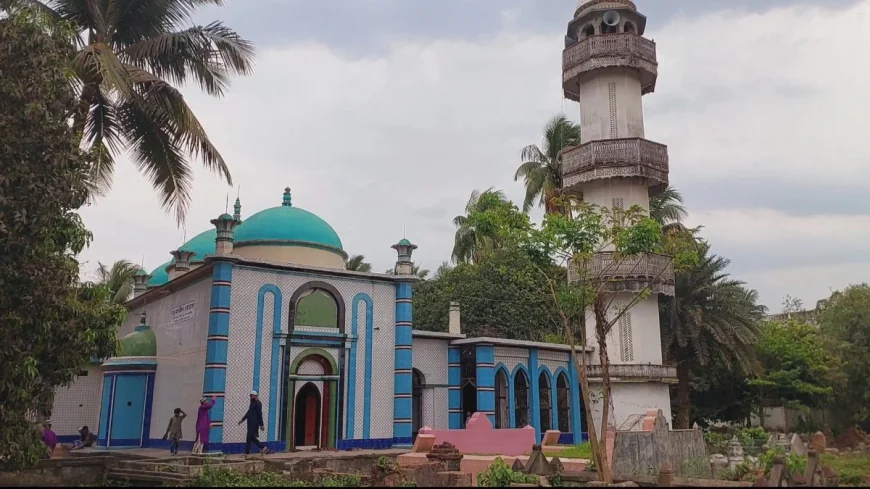
The historic three-domed Boro Mosque of Chuadanga, widely regarded as a symbol of religious heritage and architectural legacy, continues to stand as a proud testament to nearly 250 years of history. Established in 1208 AH (approximately 1786 AD), the mosque has long served not only as a place of worship but also as a vibrant center for social and religious activities in the district town. Known locally as the Boro Mosque or Minaret Mosque, it was the first mosque built in Chuadanga town and the first call to prayer in the area was heard from its premises.
Historical accounts and local folklore attribute the construction of the mosque to a philanthropic and pious woman named Kusum Bibi, who built it with her own funds on 73 decimal of personal land. Her name is still remembered with deep respect by worshippers and residents. According to local narratives, Kusum Bibi discovered several pitchers of gold coins while constructing her house. Rather than spending the newfound wealth on personal comfort, she consulted community elders. On their advice that building a mosque would serve as a source of ongoing charity (Sadaqah Jariyah), she dedicated the wealth and her land to constructing the house of Allah.
The mosque was built using traditional construction techniques of the time, including a mixture of egg yolk and surki (powdered brick) to strengthen the foundation and walls, an architectural practice characteristic of the era. Initially, the mosque could accommodate around 70 worshippers in three rows-- two inside the main prayer hall and one on the veranda. With the passage of time and a growing Muslim population, expansion became necessary. The mosque underwent major renovations in 2000 and again in 2014 (1435 AH) while preserving its original architectural structure. Through these renovations, prayer space was significantly expanded, infrastructure modernized, and aesthetic features enhanced.
Today, the mosque can accommodate approximately 700 worshippers at a time and functions as a large Jame Mosque equipped with modern facilities. Located near Academy Intersection, the heart of Chuadanga town, the mosque has lent its name to the surrounding neighborhood "Masjid Para". Worshippers from Railpara, Academy More, Joaddar Para, Bagan Para, Majher Para, and Mallik Para regularly gather here for five daily prayers and the weekly Friday congregation. The mosque premises remain lively with religious programmes, Milad-Mahfil, Quran recitation, and community events.
A graveyard adjacent to the mosque further reflects its long-standing historical and spiritual significance. Despite modernization efforts, some parts of the structure now require attention. The balcony section of the third-floor minaret has reportedly deteriorated, prompting local worshippers to demand urgent renovation. Committee members have acknowledged the need for further infrastructural improvements, including development of the minaret, modernization of ablution facilities, and renovation of the boundary wall. Mosque Committee leaders have expressed optimism that with continued support from worshippers and residents, the remaining works will be completed in phases.
For more than two centuries, the Boro Mosque of Chuadanga has survived the British colonial period, the Pakistan era, and independent Bangladesh. Beyond its architectural beauty, it remains a living monument to faith, community solidarity, and the charitable spirit of Kusum Bibi. As it approaches its 250th year, the mosque continues to embody the religious devotion and historical legacy of Chuadanga-standing tall as both a spiritual sanctuary and a witness to history.