



































Urgent Need for a Conservation
St. Martin's Island: Bangladesh's Fragile Marine Treasure
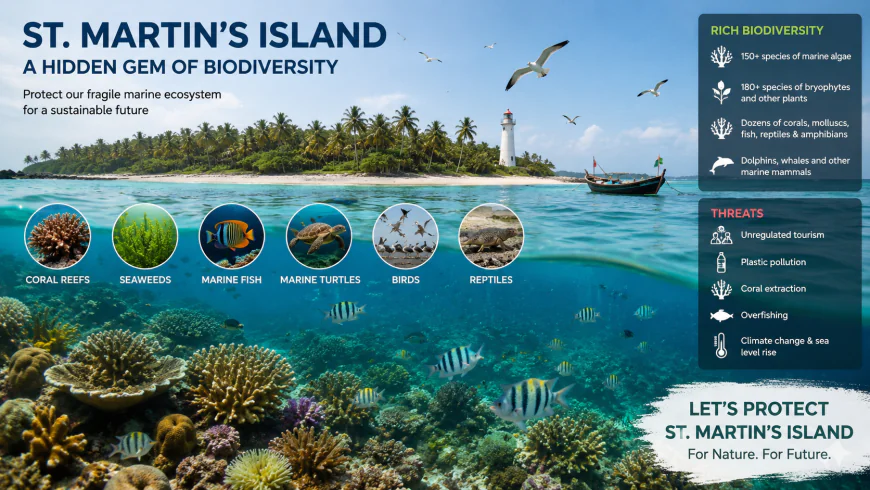

Nestled in the northeastern Bay of Bengal, St. Martin's Island remains Bangladesh's only coral island and one of the country's richest marine biodiversity hotspots. Home to hundreds of species of marine plants and animals, the tiny island represents an irreplaceable natural heritage that scientists say deserves stronger protection amid growing environmental pressures.
The island's surrounding waters support a vibrant ecosystem where coral reefs, seaweeds, shellfish, crustaceans, octopuses, sea cucumbers, jellyfish, sea urchins and numerous species of fish thrive. Many microscopic organisms and plankton also play a vital role in sustaining the marine food chain.
Researchers have recorded remarkable biological diversity on the island. Along its rocky shores and coral formations, a wide range of marine algae, grasses, vines and coastal vegetation flourish, providing food and shelter for countless aquatic species.
The island is also a haven for wildlife. Studies have documented dozens of species of corals, molluscs, reptiles, amphibians, birds and marine turtles. The surrounding sea is frequented by dolphins and occasionally by whales, highlighting the ecological significance of the waters around St. Martin's.
Birdlife is equally impressive. Both resident and migratory birds visit the island throughout the year, including herons, kingfishers, doves, cuckoos, wagtails, swallows, egrets, sandpipers and various species of gulls. These birds depend on the island's coastal habitats and nearby wetlands for nesting, feeding and migration stopovers.
Marine vegetation forms the foundation of this delicate ecosystem. Seaweeds produce oxygen through photosynthesis and provide the primary source of food and energy for numerous marine organisms. Scientists have identified more than 150 species of marine algae around the island, including green, brown, red and blue-green varieties. Red algae of the Hypnea genus are particularly abundant and hold economic potential due to their commercial applications.
Beyond seaweeds, researchers have also recorded nearly 180 species of bryophytes and other plant groups, demonstrating that St. Martin's biodiversity extends well beyond its marine environment.
Environmental experts, however, warn that this unique ecosystem is under increasing pressure from unregulated tourism, plastic pollution, coral extraction, overfishing and climate change. Rising sea temperatures and coastal erosion threaten coral reefs, while habitat degradation endangers many native species.
Conservationists argue that preserving St. Martin's Island requires stricter environmental regulations, sustainable tourism practices and greater public awareness. They emphasize that protecting the island is not only essential for Bangladesh's biodiversity but also for scientific research, fisheries, climate resilience and future generations.
As Bangladesh continues to balance economic development with environmental conservation, St. Martin's Island stands as a reminder that the country's greatest natural treasures are also among its most vulnerable. Safeguarding this unique marine ecosystem today will determine whether its extraordinary biodiversity survives for decades to come.