



























Govt firmly committed to make country’s economy advancing, inclusive, sustainable: Finance Minister
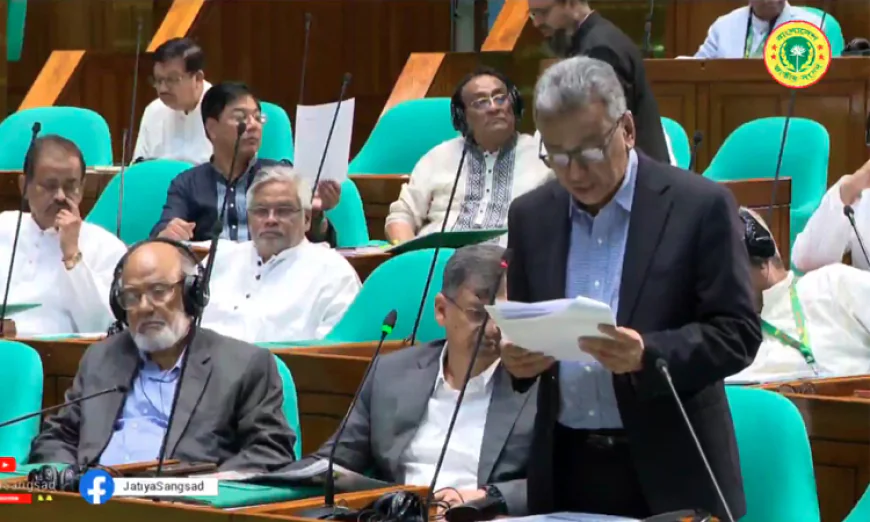
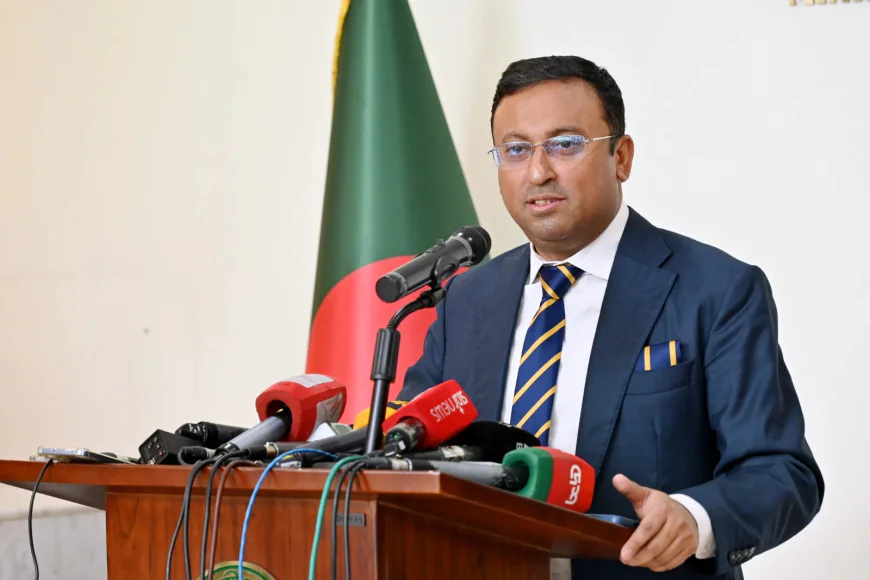
Finance Minister Amir Khosru Mahmud Chowdhury today told the Jatiya Sangsad that the government is firmly committed to transforming Bangladesh’s economy into an advancing, inclusive and sustainable one, while fulfilling its election pledges, achieving a trillion-dollar economy by 2034 and tackling emerging global challenges, including the ongoing war in the Middle East. Presenting a comprehensive statement in the House today under Section 300 of the Rules of Procedure, the finance minister said the government assumed office with a strong public mandate and immediately initiated steps to stabilize the economy, restore institutional strength and ensure equitable development for all citizens.
“The people have placed their trust in us, and our responsibility is to deliver on that trust by building an advancing, inclusive and sustainable economy for Bangladesh,” he told the House. The Finance Minister said the Bangladesh Nationalist Party (BNP) has long served as a platform for fulfilling the expectations of the people under the leadership of Shaheed President Ziaur Rahman. He said BNP introduced multiparty democracy in this country and initiated the journey towards economic emancipation.
Later, he said uncompromising leader Begum Khaleda Zia infused life (dynamism) into a fragile economy by developing the garment industry, expanding Bangladesh’s presence in the global labor market, and fostering the growth of labour market in the middle class, thereby initiating a long-term path of economic growth. “Through the introduction of the VAT system, modernization of the tariff and import structure, and pro-private investment policies, she (Khaleda Zia) strengthened the foundation of the economy,” he said.
Carrying forward that legacy and experience, Khosru said, “We’re now firmly committed to steering Bangladesh’s economy toward an advancing, inclusive, and sustainable path. We want to achieve this based on transparency, integrity, and accountability. Listing the current status of the country’s economy amid the global geopolitical uncertainties, he said the government inherited a fragile economic structure marked by structural weaknesses, high inflation, external sector pressure, slow investment, institutional erosion and governance challenges, which require urgent and coordinated reforms.
Highlighting the government’s development vision, the finance minister said the main objective is to ensure economic democratization and deregulation so that the benefits of growth reach every citizen. “Our goal is not only higher growth, but also a progressive, inclusive and sustainable economy built on transparency, accountability and good governance,” he told the House.
He said the government has already started implementing key election pledges to improve livelihoods and strengthen economic resilience. As part of social protection and inclusive development, the government has begun distributing 50 lakh family cards and plans to gradually bring all families under the programme, while farmer cards are being introduced for genuine farmers, fishermen and livestock producers.
The minister said agricultural loans up to Tk 10,000 have already been waived, while targeted support is being extended to rural producers to enhance productivity and income. To generate employments, the government has undertaken a plan to create one crore jobs through ICT expansion, modernization of transport and communication infrastructure, blue economy development, eco-tourism and regional creative hubs.
He said the government is also working to introduce the “Created in Bangladesh” brand in the global market to strengthen export competitiveness and diversify economic opportunities. Focusing on fiscal reforms, the finance minister said the government is prioritizing revenue transparency and automation to improve tax collection and reduce dependence on borrowings. He said the government aims to raise the tax-GDP ratio to 10 percent in the medium term and 15 percent by 2034 through ensuring visible public benefits and efficient public spending.
“We want people to see the benefits of their taxes through improved services, governance and infrastructure,” he added. The minister said efficient debt management, development of the domestic bond market and coordination between deficit financing sources will help maintain fiscal sustainability and reduce long-term risks. He said the government is strengthening macro-fiscal planning through a dynamic macro-fiscal model to support medium-term budgeting and ensure credible projections for achieving a trillion-dollar economy by 2034.
On financial sector reforms, the finance minister said steps have been taken to restore discipline in the banking system and strengthen the legal framework of the central bank. He said commercial bank management is being improved, capital shortages are being addressed and strict measures are being taken to restore confidence in the financial sector.
The government is also focusing on developing the capital market by ensuring the independence of the securities regulator, preventing market manipulation and introducing corporate bonds, Sukuk and green bonds to diversify investment sources, he added. The finance minister said strengthening SMEs, improving the business climate and ensuring easy access to credit will help boost investment, production and employment, creating a sustainable growth cycle. He also emphasized increased spending on education, health and social protection to ensure inclusive human development.
Referring to the ongoing war in the Middle East, the minister said the conflict has created new uncertainty in global energy markets, supply chains and international trade, posing a major challenge for Bangladesh. He said international oil and LNG prices have more than doubled, forcing the government to provide an additional Tk 36,000 crore in subsidies for power and energy during March-June of the current fiscal year.
“This will increase budgetary pressure and require around three billion US dollars in additional import payments, affecting foreign exchange reserves,” he said. To address the situation, Khosru said the government has adopted several energy-saving and financial measures, including reducing office hours, encouraging daylight use, limiting electricity consumption, closing markets earlier, securing alternative fuel sources and ensuring timely subsidies for uninterrupted energy supply.
The minister said the government is also seeking additional budget support from development partners to maintain balance of payments stability and manage fiscal pressure. Despite the global crisis, the government has decided to keep energy prices unchanged to reduce the burden on citizens, he added. Khosru said Bangladesh, as an import-dependent economy, cannot remain isolated from global geopolitical developments, but the government is determined to overcome these challenges through prudent policies and efficient management.
The finance minister said the upcoming national budget for 2026-27 will focus on stability, transparency and inclusive growth while addressing inherited economic challenges. He expressed hope that the people would consider the limitations inherited from the past and support the government’s reform efforts. Khosru reiterated that the government remains committed to ensuring good governance, restoring institutional strength and putting the economy on a strong and sustainable path for future generations.



 Sponsored by