

















Proposed Law to Give Enforced Disappearance Victims Direct Access to Justice: Home Ministern
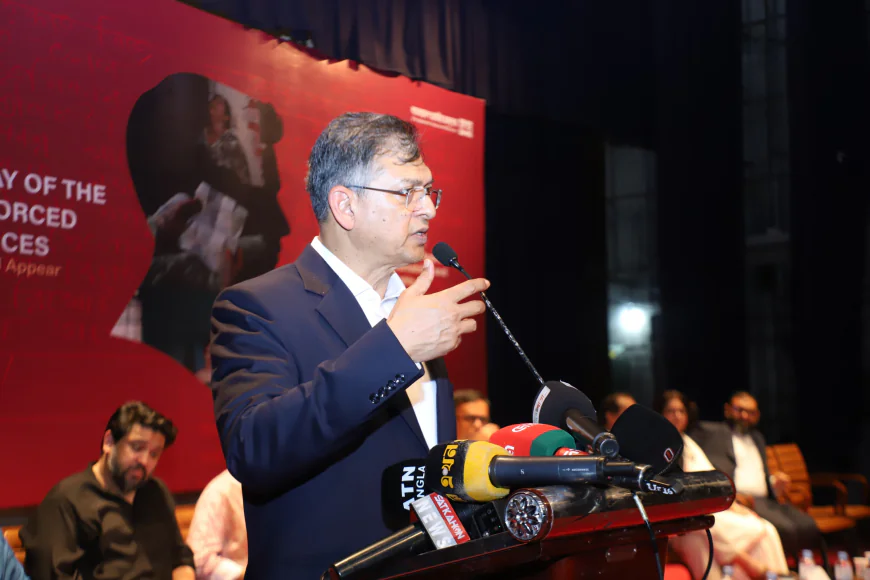
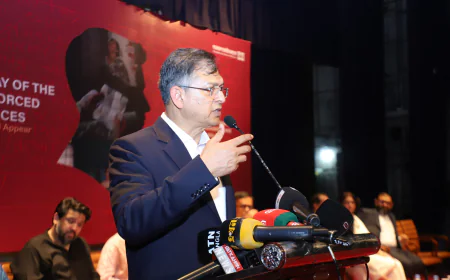
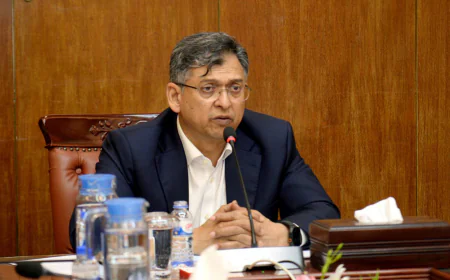
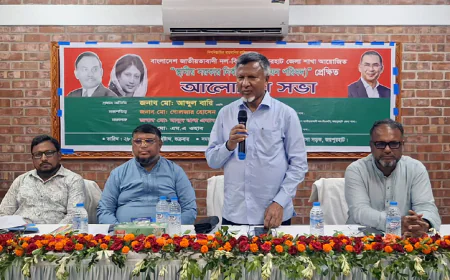
Bangladesh's Home Minister Salahuddin Ahmed said on Saturday that a proposed law on enforced disappearances would make it easier for victims and their families to seek justice directly through the courts. The proposed Enforced Disappearance Prevention and Remedy Act 2026 would allow victims to pursue legal remedies without going through lengthy and complicated procedures, the minister said. He was speaking at a panel discussion titled "To Make the Disappeared Appear: Law, Justice, Accountability and Human Rights", organized by human rights group Mayer Dak at the Bangladesh National Museum in Dhaka to mark the International Day of the Victims of Enforced Disappearances.
The bill was placed before parliament on Aug. 27 and is currently being examined by a parliamentary committee, the minister said, adding that recommendations could still be incorporated. Under the proposed law, punishment for enforced disappearance would range from life imprisonment to the death penalty depending on the nature and severity of the offense. The legislation also includes provisions allowing the legal heirs of a person who remains missing for five years to obtain property rights with court approval. It further provides for state compensation if those responsible fail to compensate victims or their families.
No Evidence of State Involvement in Miraj Sheikh Case Addressing the alleged disappearance of Miraj Sheikh in Mongla, Bagerhat, Ahmed said an impartial investigation had found no evidence of involvement by any government security force. He said criminal groups operating in the Sundarbans and coastal areas had been weakened by joint security operations, including "Operation Mangrove" and "Operation Sundarban". The minister said there was information suggesting internal conflict among criminal groups over the Miraj Sheikh case. However, he added that the government was prepared to establish an independent and impartial commission of inquiry if necessary to ensure transparency.
Minister Recalls His Own Disappearance Ahmed also spoke about his own experience of enforced disappearance, saying he had been held for a prolonged period in a dark, damp room measuring about 5 by 10 feet without ventilation. He said he was subjected to physical and mental torture and denied adequate medical treatment despite suffering from various health complications. According to the minister, he was later blindfolded and taken to Shillong, India, where he spent nine and a half years fighting a legal case over alleged violation of the international border.
He said an Indian court eventually acquitted him of all charges. The minister expressed gratitude to the people and students of Bangladesh for what he described as the country's liberation through the anti-fascist July Mass Uprising. New Elite Force Proposed The minister said the government was working to make the country's law-enforcement agencies more professional, with greater emphasis on accountability and a "reward and punishment" policy.
He also said the Cabinet had approved legislation to abolish the Rapid Action Battalion (RAB) and establish a new elite force, the Special Response Battalion (SRB), with a focus on accountability and transparency. The event was chaired by Sanjida Islam Tuli, a member of parliament and coordinator of Mayer Dak. State Minister for Cultural Affairs Ali Newaz Mahmud Khaiyam attended as a special guest.
Other speakers included lawmakers Humam Quader Chowdhury and Mir Ahmed Bin Quasem, Supreme Court lawyer Sara Hossain, human rights activist Nur Khan Liton, photographer Shahidul Alam and Netra News Executive Editor Nazmul Ahsan. A one-minute silence and prayer were observed at the beginning of the event in memory of victims of enforced disappearance, killing and torture. A seven-day photography exhibition on enforced disappearance and torture was also inaugurated at the Bangladesh National Museum. The exhibition will run from Aug. 29 to Sept. 5, 2026.