





















BB Issues Unified EDF Circular, Adopts SOFR-Based Export Finance Pricing
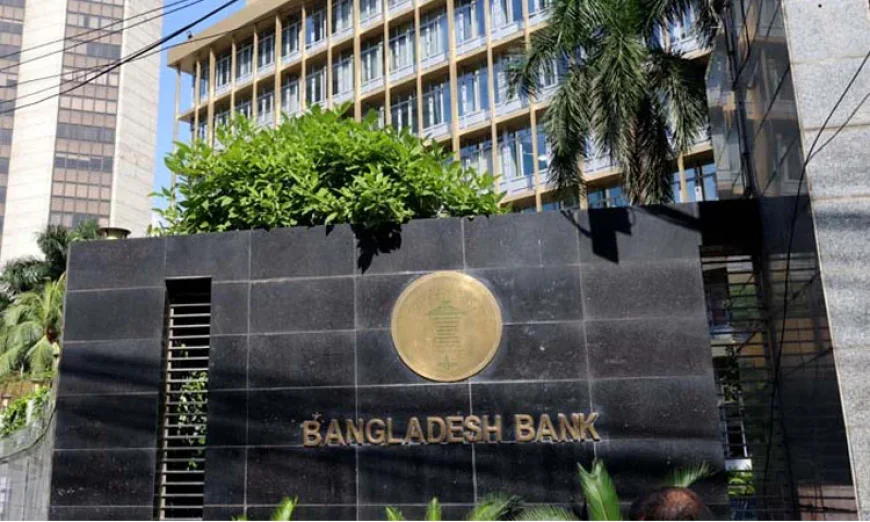
Bangladesh Bank (BB) on Thursday issued a comprehensive Master Circular for the Export Development Fund (EDF), consolidating all previous instructions into a single regulatory framework to simplify export financing, enhance transparency and align the facility with a SOFR-based interest rate regime.
The circular, which takes immediate effect, replaces FE Circular No. 45 of 2017 along with all subsequent directives related to the EDF.
Under the revised framework, the EDF will continue to provide foreign currency financing to manufacturer-exporters for importing raw materials and other production inputs through Authorized Dealers (ADs).
The fund will be administered by the Forex Reserve and Treasury Management Department-1 (FRTMD-1) at Bangladesh Bank's head office.
In a significant change, the central bank has allowed Authorized Dealers to finance eligible imports from their own foreign currency resources using up to 50 percent of their Non-Resident Foreign Currency Deposit (NFCD) balances.
The circular also enables Islamic banks to access the EDF through deal-to-deal Restricted Mudaraba Agreements, ensuring Shariah-compliant financing.
Bangladesh Bank introduced a new pricing mechanism linked to the six-month Secured Overnight Financing Rate (SOFR). Under the framework, the central bank will refinance ADs at the six-month SOFR plus 0.5 percent per annum, while banks may lend to manufacturer-exporters at the six-month SOFR plus 1.5 percent.
Banks will also be allowed to charge an additional one percent annually to cover the period between import payments and receipt of EDF refinancing from the central bank.
To discourage repayment delays, Bangladesh Bank will impose penal interest at four percentage points above the prevailing lending rate on overdue EDF loans. Islamic banks will be required to pay equivalent compensation in accordance with Shariah principles.
The Master Circular also revises exporters' maximum borrowing limits under the EDF based on membership of recognised trade associations.
The ceiling has been set at US$20 million each for member mills of the Bangladesh Garment Manufacturers and Exporters Association (BGMEA) and Bangladesh Textile Mills Association (BTMA), US$15 million for members of the Bangladesh Knitwear Manufacturers and Exporters Association (BKMEA) and Bangladesh Linen, Fabrics, Accessories and Allied Products Manufacturers and Exporters Association (FLAXA), US$10 million for several other export sectors and US$5 million for members of the Bangladesh Fruits, Vegetables and Allied Products Exporters Association (BFFEA).
Smaller sector-specific limits ranging between US$1 million and US$2 million have also been prescribed.
For bulk imports, financing will be capped at the importer's import performance over the previous 12 months or US$500,000, whichever is lower.
To streamline operations, the circular requires Authorized Dealers to submit EDF loan applications through a standardised Form-A along with electronic calculation worksheets. Banks must also verify the eligibility of deemed exporters before seeking refinancing from Bangladesh Bank.
The repayment tenure for EDF loans remains 180 days, although Bangladesh Bank may extend it to a maximum of 270 days in justified cases.
Applications for extension must be submitted at least 10 days before loan maturity, be signed by an official not below the rank of Deputy Managing Director (DMD), and include the relevant Bill of Entry.
The central bank has also tightened compliance requirements.
Exporters who fail to repatriate export proceeds within the statutory 120-day period will become ineligible for further EDF financing. Manufacturer-exporters whose previous EDF liabilities were settled through funded facilities will also remain ineligible until the overdue export proceeds are realised or formally exempted.
In addition, Authorized Dealers that fail to repay EDF loans within the stipulated timeframe will be barred from obtaining further EDF refinancing until all overdue liabilities are cleared.
According to Bangladesh Bank, the Master Circular is intended to simplify the regulatory framework, ensure uniform implementation across the banking sector and strengthen export financing in support of Bangladesh's external trade.



 Sponsored by