














DSE to compensate 97pc of affected investors up to Tk5 lakh

The Dhaka Stock Exchange (DSE) has decided to fully compensate around 97 percent of investors affected by defaults of five brokerage houses, with payments of up to Tk5 lakh per investor from the Investors Protection Fund (IPF).
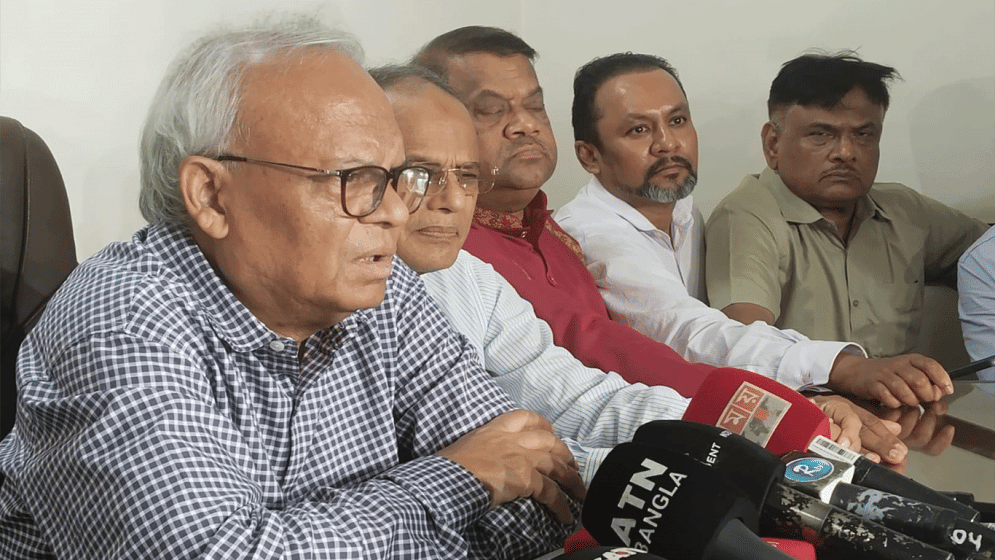
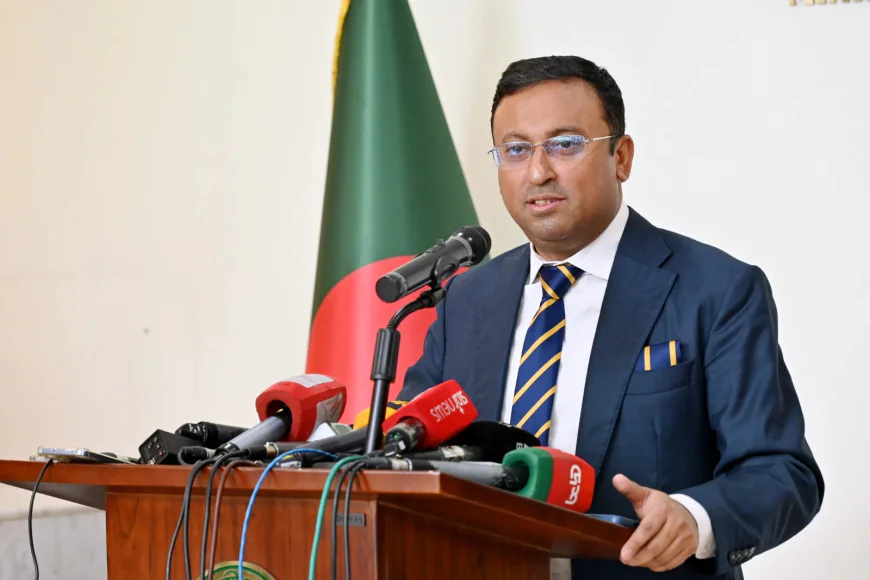
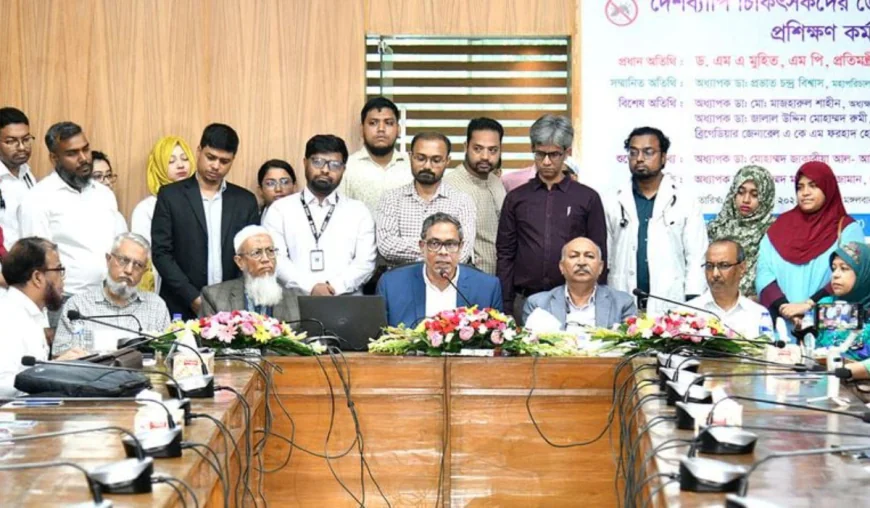
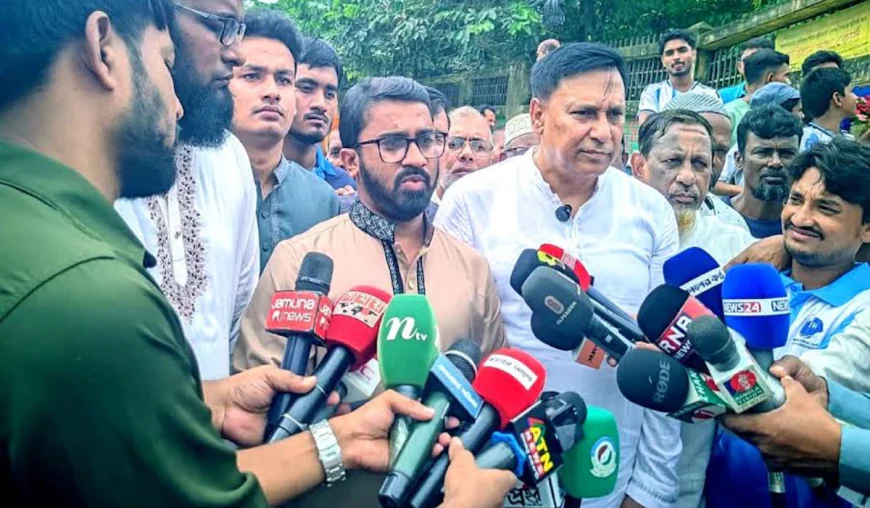
The compensation payments will begin on September 28, DSE Chairman Maminul Islam told a press conference here today.
Of the 17,925 investors affected by the defaults, 17,332 will receive their full eligible amount under the new arrangement, he said.
“The initiative is a milestone for our capital market and an important chapter in restoring the confidence of ordinary investors,” Maminul said.
He said around Tk37.60 crore has so far been paid to affected investors by the concerned brokerage houses and the IPF.
Under the new decision, the IPF will pay up to Tk5 lakh to each eligible investor from September 28. The remaining 593 investors will also be covered through necessary measures to recover their funds, he added.
The DSE chairman said legal action against the defaulting brokerage houses would be strengthened to recover the remaining funds.
“If necessary, steps would be taken to recover money through the sale of shares held by the companies and personal assets of their directors. Future IPF funds may also be considered for payments if required,” he added.
Maminul said many retired teachers, judges and bankers had invested their savings in the capital market and faced financial and family difficulties after being unable to recover their money due to the defaults.
He said the moral support of the present government and cooperation from the Bangladesh Securities and Exchange Commission (BSEC) had played an important role in implementing the initiative.
Of the five defaulting brokerage houses, four are facing cases filed with the Anti-Corruption Commission (ACC), while a court case is pending against another, he said.
“Strengthening monitoring and surveillance over brokerage houses is also being undertaken to prevent recurrence of such incidents,” Maminul said.
He said the DSE was also taking a number of measures to develop the capital market. Companies applying for direct listing or IPO by March 2027 will receive a 50 percent waiver on listing fees, with a target of bringing at least 10 blue-chip companies to the market through direct listing or IPO by 2027.
The companies may include state-owned, multinational and domestic firms, he said, adding that coordinated efforts by the government, regulator, stock exchanges and merchant banks would be required to achieve the target.
Maminul said listing fees for bonds had been reduced significantly and initiatives had been taken to issue sovereign bonds. Greater involvement of international investment banks in Bangladesh's capital market could also have a positive impact on corporate bonds and foreign investment, he added.
IPF Chairman Nasrin Begum said the fund was established to provide protection, within the prescribed limit, to investors affected by defaults.
She said every claim was being settled after verification of claims, examination of necessary documents, determination of eligibility and consideration of the applicable compensation limit.
“At present, the maximum compensation limit for an investor under the IPF provisions is Tk5 lakh,” she said.
Nasrin said the compensation was neither a grant nor charity, but a settlement process governed by laws and regulations. She said transparency, accountability and necessary safeguards were being ensured in the use of IPF funds.
DSE Managing Director Nuzhat Anwar said the DSE had undertaken several technology-based initiatives for capital market development, including a script trading platform targeted for launch by December 2026.
Work is also underway to establish a separate platform for open-end mutual funds, which is expected to be launched by mid-November, she said.
The platform will enable investors to access information on mutual funds and conduct transactions online, she added.
Nuzhat said work was also progressing to develop the bond market, with various issuance-related fees already reduced by around 80 percent.
She said a new matching engine project aimed at improving the DSE's technological infrastructure was also progressing, with the system targeted to go live in January 2028.
The DSE is also working to strengthen its disaster recovery system and other IT infrastructure, she added.



 Sponsored by