




































Menzies pledges additional $2m for Dhaka training academy
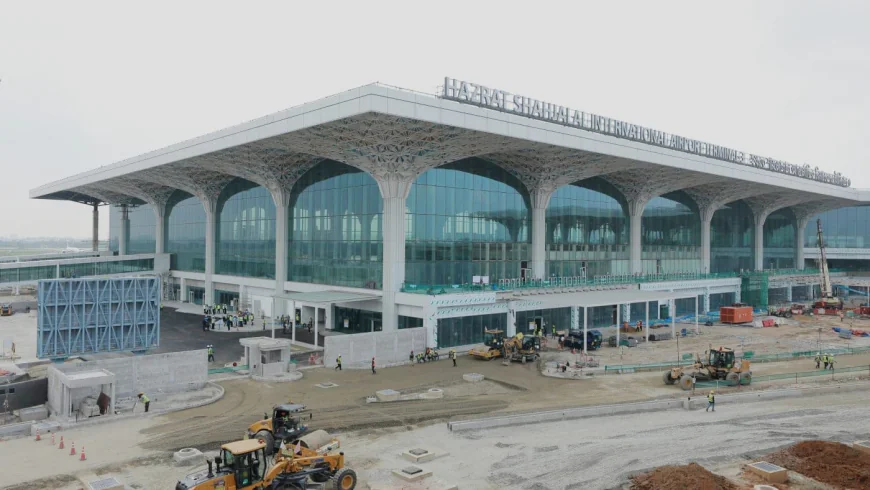
UK-headquartered Menzies Aviation has pledged an additional US$2 million to establish an aviation training academy in Dhaka, taking its proposed investment in Bangladesh beyond US$14 million as it competes for a ground-handling contract at Hazrat Shahjalal International Airport's (HSIA) Third Terminal.
The fresh commitment, exclusively earmarked for the academy, comes on top of the company's previously proposed US$12 million investment in ground-handling equipment, technology and operational infrastructure.
The proposed academy aims to train an additional 1,000 aviation professionals annually, while Menzies' broader operations are projected to generate more than 1,000 direct jobs and approximately 4,500 indirect employment opportunities.
Significantly, Menzies intends to attract trainees from across South Asia, positioning Dhaka as a potential regional centre for aviation training and technical expertise.
The proposed academy could emerge as a key differentiator in the contest for the second passenger ground-handling operator at the Third Terminal, where Switzerland's Swissport, Türkiye's Çelebi Aviation and UAE-based dnata are among the other major international contenders.
Menzies Aviation's Senior Vice President of Operations John Henderson said the company plans to establish a dedicated academy to develop aviation professionals capable of meeting international operational standards.
"We are planning to establish a training academy in Dhaka that would ensure all graduates are trained to Menzies' international standards, enabling Bangladeshis to operate anywhere in our international network. We provide lifelong career pathways, not just jobs," he said.
The academy would provide specialised training in aircraft ground handling, baggage management, aviation security, ground support equipment operations and safety procedures.
Menzies also plans to collaborate with Bangladeshi universities and aviation training institutions to develop professional qualifications, internships and career opportunities.
Henderson said the company's established operational model would enable newly recruited personnel to be trained to international standards within three months.
"We have a tried and tested start-up plan and would envisage that employees can be recruited and trained to international standards within three months," he said.
The proposed academy could address a longstanding shortage of internationally trained aviation personnel while reducing dependence on foreign technical expertise.
Its ambition to attract trainees from neighbouring countries could also help Bangladesh emerge as a regional aviation skills hub, complementing the government's broader aspirations to develop Dhaka into an international aviation gateway.
Menzies estimates that Bangladeshi nationals would account for approximately 99 percent of its proposed workforce.
Operating at approximately 350 airports across 65 countries, the company handles around 1.6 million aircraft turnarounds and 2.4 million tonnes of cargo annually, according to figures provided by its executives.
Beyond workforce development, Menzies has proposed introducing digital baggage tracking, real-time operational monitoring and advanced ground support equipment management systems at the Third Terminal.
The company says its technology and operational procedures could ensure delivery of the first bags from wide-body aircraft within 10 to 15 minutes, with baggage delivery completed within 40 minutes.
These commitments are particularly relevant as Bangladesh seeks to improve passenger services, aircraft turnaround efficiency and operational standards at its newly constructed terminal.
The appointment of a second ground handler alongside Biman Bangladesh Airlines is expected to introduce competition into a sector historically dominated by the national carrier.
However, aviation industry observers have emphasised that the selection should be based on proven operational capability, financial strength, technology, safety standards and long-term benefits to Bangladesh.
Former Civil Aviation Authority of Bangladesh Chairman Air Vice Marshal (retd.) Muhammad Mafidur Rahman has stressed the importance of engaging experienced operators capable of managing sophisticated airport facilities.
Aviation analyst ATM Nazrul has similarly advocated a merit-based selection process prioritising operational expertise and financial value.
For Menzies, the additional US$2 million academy investment adds a longer-term skills development component to its commercial proposal, potentially distinguishing it from competitors focused primarily on ground-handling operations.
For Bangladesh, the proposed initiative offers the prospect of creating skilled employment, developing internationally qualified aviation professionals and attracting trainees from the wider South Asian market.






 Sponsored by