



















Rethinking primary education
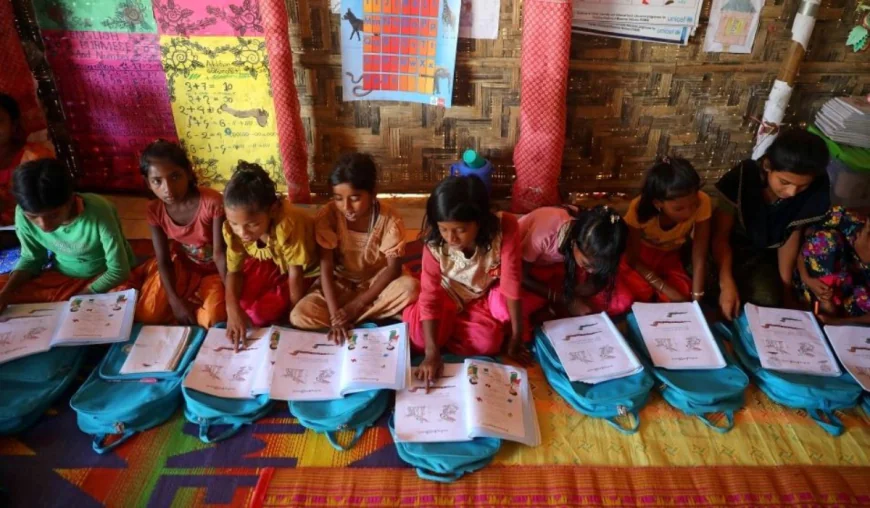
LEARNING should be akin to learning how to ride a bicycle; once a person learns, they continue to ride for the sheer joy of it. Similarly, the process of education should be such that students derive genuine pleasure from it.
In this context, the teacher’s role is to help students discover that joy. However, the state of education in our country has become such that a student is effectively confined to a wheelchair, moving only when pushed from behind and otherwise remaining stationary.
These inconsistencies are responsible for the dismal state of the country’s education system. Over the past two decades, the education system in Bangladesh has frequently been a subject of debate and concern. We often speak of emulating the educational systems of Europe, America, Canada or Australia. Yet, such systems were not built overnight; they evolved through planning, research, training and practical experience. An effective education system is not defined merely by a modern syllabus.
Building a robust system requires adequate infrastructure, responsible teachers and parents, and a student-friendly environment. The quality of education largely depends on teachers. A teacher is not merely an instructor but also a guide and a character builder.
Therefore, the teacher recruitment process must be rigorous, transparent and merit-based. Selection should not rely solely on academic certificates or exam results; a candidate’s subject knowledge, presentation skills, ethics and patience should also be evaluated. As teaching methods, technology and students’ psychological needs change, teachers must regularly update their knowledge and skills in modern teaching methods, classroom management, technology use, student mental health, research and assessment.
The learning environment is equally important. If schools are unsafe, unsanitary, chaotic or uninspiring, the quality of education will suffer. Many schools still lack quality furniture, libraries, safe drinking water and hygienic sanitation facilities. In some places, students are crammed into classrooms, while others lack safe playgrounds or an environment that allows children to move freely.
Primary education should be enjoyable, easy to grasp and capable of stimulating curiosity. Textbooks should therefore use simple language and engaging, colourful illustrations. From grades one to three, the focus should primarily be on language proficiency, sentence construction, reading fluency and basic social behaviour. Values such as cleanliness, discipline, environmental awareness, traffic rules and mutual respect can be instilled through practice from an early age.
Children should be encouraged to develop an interest in learning rather than being subjected to excessive examinations or competition. Those who follow their lessons and maintain discipline should be encouraged, while those who fall behind should be supported patiently rather than punished. In the fourth and fifth grades, alongside curriculum-based assessments, students can develop a sense of responsibility through punctuality, adherence to school rules, group activities and accountability for their own behaviour.
ahsdhkjashdaA major issue in our current education system is that many students study primarily to achieve good examination results but struggle to apply that knowledge in real-life situations. Overreliance on examinations, coaching centres and rote learning from notes can discourage creative thinking and problem-solving. Some unscrupulous teachers also engage in private tutoring and coaching, placing additional pressure on parents.
We must gradually move away from this trend. Students should be given opportunities to participate in activities beyond their textbooks, such as debates, science fairs, cultural events, sports, volunteer work, tree plantation drives and group projects. Such activities can foster leadership, cooperation, self-confidence and social responsibility. Above all, the current government needs to give greater consideration to the education system.
This does not necessarily mean emulating the educational models of Europe or America; rather, the system should be student-friendly and designed to benefit both the nation and its people. If we truly aspire to build an advanced, enlightened and knowledge-based Bangladesh, we must move away from an exam-centric competitive model and instead establish an education system grounded in the joy of learning, humanity, creativity and responsibility. Ultimately, a nation’s greatest asset is an educated society comprising conscious and humane individuals.


 Sponsored by