








Behind the Smile: Political Ambition, Diplomatic Irony and the Art of Controversy
Keep smilng, Humayun Bhai!
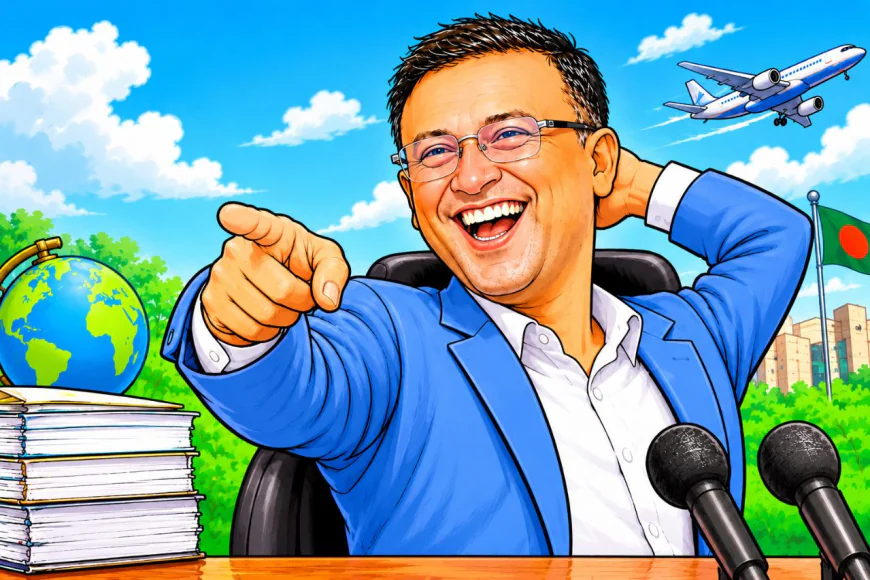
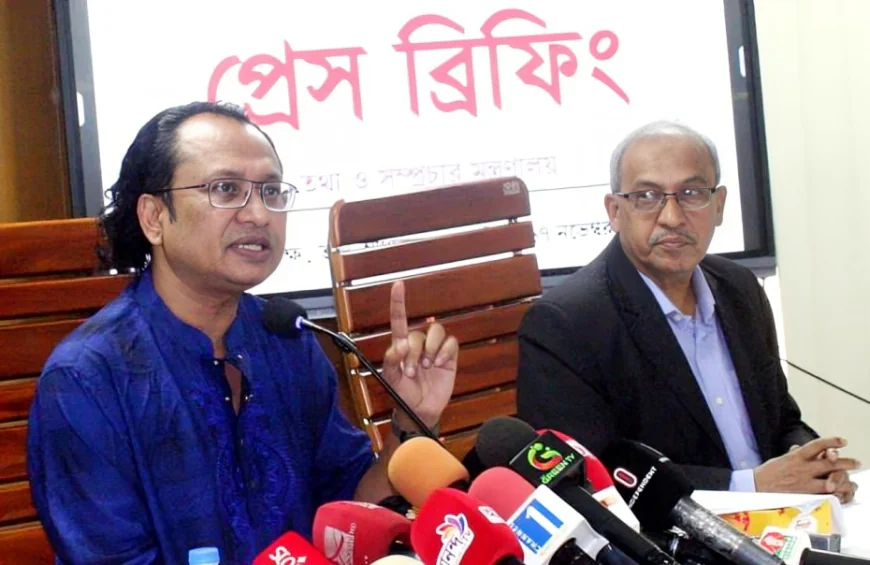
He laughs when journalists ask questions at press briefings. He laughs when colleagues at the ministry seek clarification on serious matters. Even during discussions on sensitive political issues with senior party leaders, he rarely seems to abandon his trademark smile.
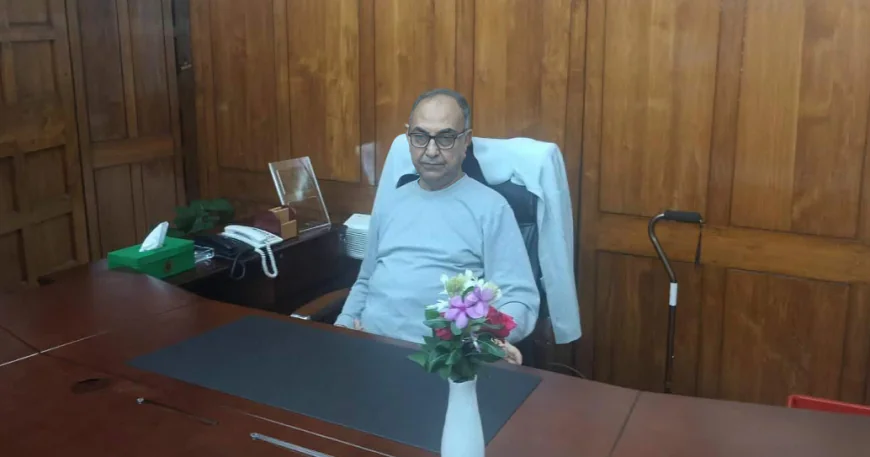
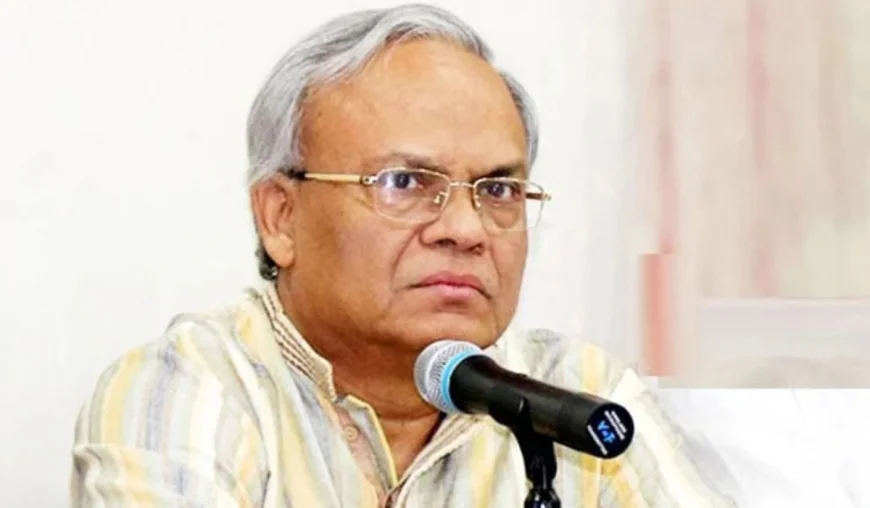
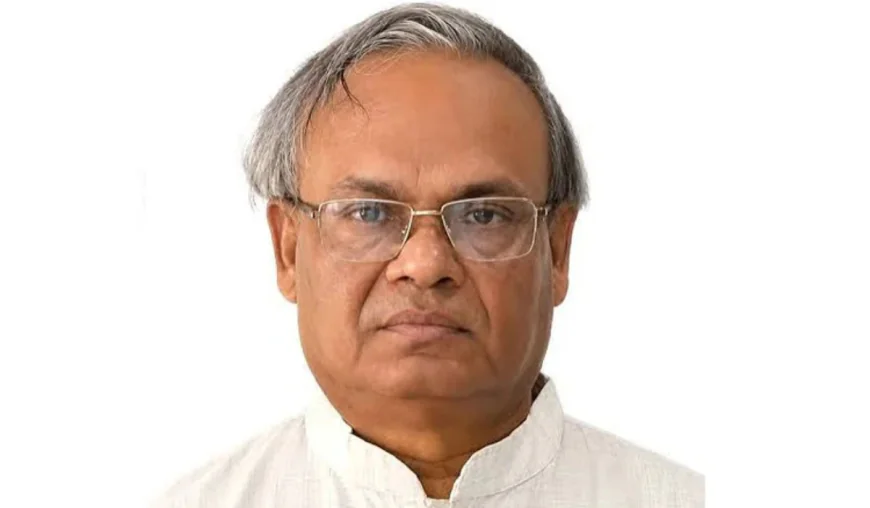
But this is no ordinary smile. Sometimes it is a crooked, almost mischievous grin; sometimes it carries a hint of condescension; and at other times, it radiates an unmistakable air of steely confidence. His much-talked-about smile has become a subject of conversation not merely at home but beyond Bangladesh's borders. He is Humayun Kabir, Bangladesh's State Minister for Foreign Affairs. Whenever he steps into the public spotlight, one thing seems almost certain: Mr. Humayun always smiling.
A few days ago, a senior journalist friend from the United States called me. His opening remark was rather unusual. "Brother, don't you people notice Humayun's smile? I hardly see anyone writing about it. Whenever I see him laughing like that, my blood boils. How can someone flash his teeth so shamelessly, whatever the situation?"
His words were blunt, perhaps exaggerated, but they captured a sentiment that is increasingly evident in certain circles. While Humayun's smile provokes irritation and even resentment among some, it also entertains others and stimulates a certain sense of humor. Whatever the reaction, his controversial smile has already managed to win over a few influential admirers.
Yet the smile itself is only part of the story. Some of Humayun Kabir's sharp-edged, occasionally unrestrained remarks have also triggered debate within diplomatic circles, raising questions about diplomatic etiquette and political communication.
During the previous Awami League government, a handful of ministers made similarly undiplomatic remarks about US diplomats. Their comments, delivered in various tones and gestures, were hardly appreciated by the international community. At one point, even the present Prime Minister, Tarique Rahman, was labeled a "terrorist" by a minister. Such language did little to enhance Bangladesh's international image.
Ironically, some of those very ministers are now reportedly waiting weeks for appointments with diplomats. Why, then, should the country risk repeating the same mistakes under a different political dispensation, this time through Humayun Brother?
The question is not simply about his facial expressions or personal mannerisms. It is about the message those gestures and remarks convey to foreign diplomats. Do they interpret his smile as confidence, sarcasm, indifference or a calculated diplomatic posture? In international relations, even a smile can communicate something far beyond what words are intended to say.
There are also whispers of behind-the-scenes negotiations with neighbouring India over certain bilateral issues. Against that backdrop, some of Humayun's earlier comments about India have resurfaced. In a pointed jibe at Bangladesh's perceived dependence on India, he once remarked: "If you have breakfast, lunch and dinner in India, when will you ever sit down to enjoy the food of your own country?"
On another occasion, he observed that "India is just another country like any other." His remarks concerning former Prime Minister Sheikh Hasina and her possible return to Bangladesh were equally provocative. Responding to questions about her passport, he reportedly said: "Is she coming to visit her in-laws' house in Rangpur that she needs a passport?"
He also declared: "Bangladesh does not issue passports to terrorists; it seeks their extradition."
Such statements inevitably invite a broader question: What message is Bangladesh conveying to the international community by using such terminology? Does it risk creating an unintended impression about the country's own security environment? Diplomatic language demands precision, particularly when dealing with sensitive international issues.
Humayun's response to reports concerning his alleged dual citizenship was no less controversial. Instead of offering a straightforward clarification, he reportedly turned his sarcasm towards journalists, asking, "Who is so troubled by this?" He also remarked: "I am a citizen, while you are a netizen."
It was a clever play on words, perhaps, but it did little to put the underlying questions to rest. In a remarkably short period, this ambitious politician has established himself as an influential figure within both the BNP and the government. Entrusted with one of the country's most strategically important ministries, he now occupies a position where every word, gesture and public appearance carries diplomatic significance.
Despite his growing political prominence, his tenure has yet to demonstrate any major diplomatic breakthrough. But he has certainly demonstrated an unusual ability to deflect uncomfortable questions from journalists. Faced with awkward inquiries, he often responds with a dismissive smile or a counter-question. And when the exchange is over, he frequently walks away wearing the smile of a man who believes he has won the argument.
Perhaps that, too, is an achievement of its own.
Humayun Kabir's political journey began in Britain, where he was involved in Labour Party politics. However, questions and differing accounts remain about the nature of his position, involvement and role within the party.
He was born in Habashpur village, Umarpur Union, Osmani Nagar Upazila of Sylhet. At just two and a half years of age, he moved to the United Kingdom with his family. Britain became his home, where he grew up, received his education and developed his worldview within British society and its political culture.
His eventual entry into Bangladesh's political mainstream, however, was not an overnight development. It was a journey shaped by personal networking, political ambition and a series of introductions that would eventually change the course of his career.
Let me conclude with a little-known account shared by a former senior leader of the UK BNP. He first met Humayun Kabir at an event in London. Both being from Sylhet, they exchanged mobile phone numbers and developed an acquaintance. Thereafter, Humayun would frequently call him, expressing an interest in meeting. However, owing to his busy schedule, the senior BNP leader could not initially make time for him.
Eventually, he invited Humayun to his office. During their conversation, Humayun expressed his desire to become involved in BNP politics and sought the senior leader's assistance in finding a way into the party. The latter assured him of his full cooperation.
A few days later, Ashik Islam, former Assistant Press Secretary to BNP Chairperson and former Prime Minister Begum Khaleda Zia, who was also associated with the communications machinery of Hawa Bhaban, and Saleh Shibli, now serving as Press Secretary to the Prime Minister's Office, visited the senior leader's office.
He introduced Humayun Kabir to them and requested that they consider whether he could be entrusted with a suitable role or responsibility. In due course, Ashik Islam and Saleh Shibli took Humayun to meet the present Prime Minister, Tarique Rahman. It was reportedly through that meeting that Humayun Kabir formally embarked on his political journey within the BNP.
From that point onwards, his political trajectory gathered momentum. He steadily moved into positions of greater influence, leaving little room for a backward glance. Was it his political networking, strategic instincts, personal charm, intellectual abilities or that ever-present smile that helped him climb the ladder so rapidly? Perhaps it was a combination of all these qualities.
One thing is certain: Humayun Kabir has mastered the art of remaining noticed, even when he says very little. And as he continues to navigate the corridors of power and the complexities of international diplomacy, his smile is likely to remain a subject of fascination, controversy and conversation.
So, keep smiling, Humayun Brother! But remember, in diplomacy, a smile may win a moment; only wisdom, restraint and results can win lasting respect.


 Sponsored by