































Home Ministry Launches Digital Repatriation Data Management System
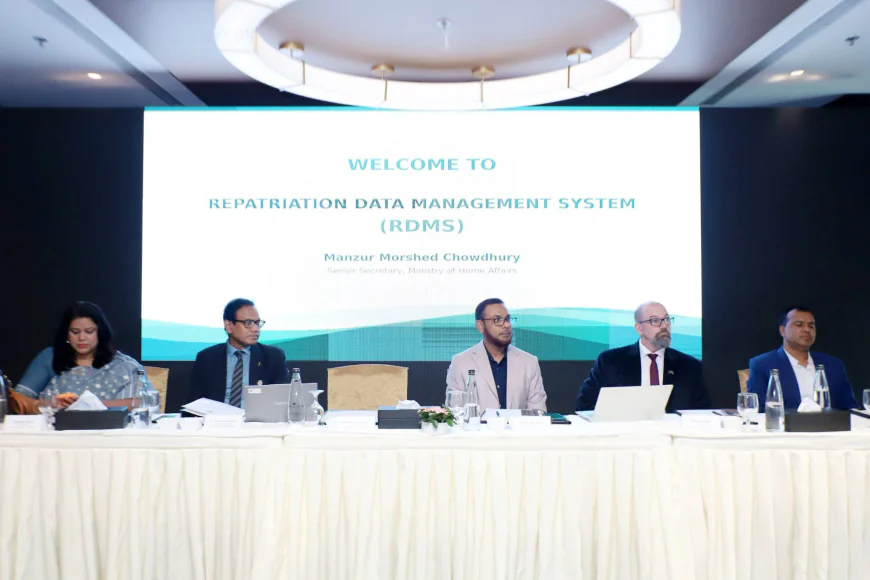
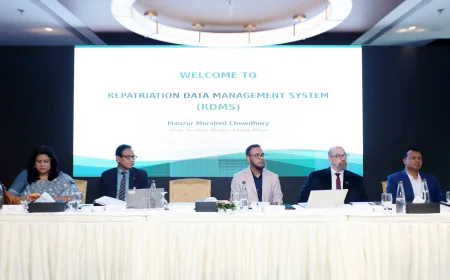
The Ministry of Home Affairs has launched a Repatriation Data Management System (RDMS) to make the process of bringing Bangladeshi nationals home from abroad more efficient, coordinated and transparent, particularly those affected by human trafficking and irregular migration. The digital platform was launched on Sunday morning at a ceremony held at the Board Room of Hotel InterContinental in Dhaka.
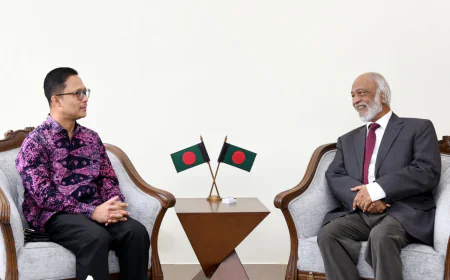
The event was organized by the Ministry of Home Affairs in collaboration with Justice and Care Bangladesh and chaired by Dr Ziauddin Ahmed, Additional Secretary (Political and Immigration) of the ministry. Special Branch chief and Additional Inspector General of Police Sardar Nurul Amin, Special Branch DIG and SCO Jahangir Hossain, and Australian High Commission Counselor Ruben Gray were among the special guests at the event.
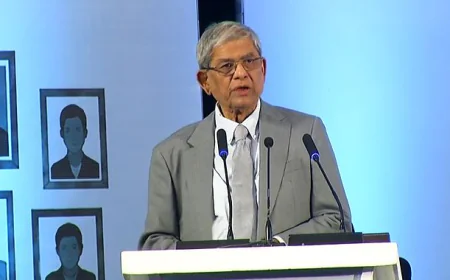
Rebecca Khan, Joint Secretary of the Political-1 Wing of the Ministry of Home Affairs, delivered the welcome address, while Justice and Care Bangladesh Country Director Tariqul Islam outlined the objectives and key features of the RDMS. In his remarks, Dr Ziauddin Ahmed underlined the importance of integrating the RDMS into the ministry's broader referral and data management framework to strengthen efforts to prevent human trafficking and accelerate the reintegration of rescued individuals.
He said the RDMS has already been linked with the National Identity Card (NID) database to facilitate the secure and comprehensive management of information on returnees and survivors. Work is also underway to integrate the platform with birth and death registration systems and passport services to help ensure accurate identification of children. The ministry said the RDMS is designed as a centralized digital platform for managing repatriation-related information and improving coordination among government agencies involved in bringing trafficking and irregular migration victims back to Bangladesh.
The repatriation process often involves several agencies and multiple stages, including nationality verification, police record checks, preparation of travel and other necessary documents, and communication with authorities in the countries concerned. Much of this work has traditionally relied on paper-based documents and official correspondence, which can contribute to delays. According to a presentation at the launch, the RDMS will allow repatriation cases to be centrally recorded and managed, while facilitating faster nationality and police verification and more efficient information sharing among relevant agencies. It will also support real-time monitoring of case progress and the preparation of reports.
Through the system, Bangladeshi missions abroad and other relevant agencies will be able to submit repatriation requests through a more structured and coordinated process. The platform is also designed to ensure the secure handling and management of personal and sensitive information. The Ministry of Home Affairs said the launch of the RDMS reflects the government's commitment to strengthening information management, improving inter-agency coordination and making the repatriation process faster and more effective.
The system is expected to contribute to a safer, more coordinated and dignified repatriation process for Bangladeshi nationals returning home from abroad. The RDMS was developed by the Ministry of Home Affairs with technical assistance from Justice and Care Bangladesh, while the Australian Government supported its development and subsequent upgrades. Representatives from the embassies and high commissions of several countries, including the United States, India and Thailand, attended the launch, along with officials from the Ministry of Home Affairs, Ministry of Foreign Affairs, Bangladesh Police and other relevant government agencies.
The Ministry of Home Affairs also expressed its appreciation to the Bangladesh Police Special Branch, Justice and Care Bangladesh, the Australian Government and other stakeholders for their contributions to the development and strengthening of the RDMS.