



















Social resistance formed to curb drugs in a Rajshahi slum
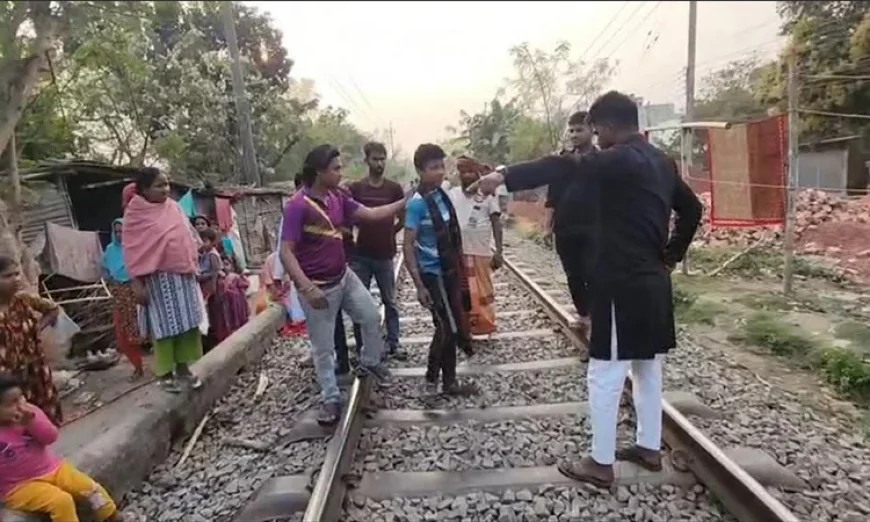
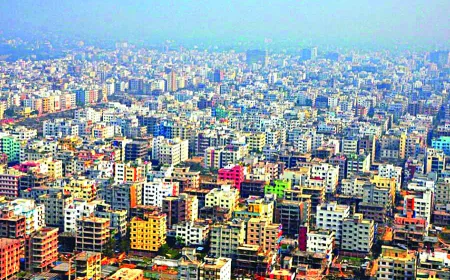
The Bhadra slum is located beside the railway tracks, where drug trading had been thriving. When residents informed the police station, they were told it was the responsibility of the Railway Police. The Railway Police, in turn, shifted the responsibility to the Metropolitan Police. As no law enforcement agency effectively intervened, the number of drug dealers in the area continued to grow. In this situation, local residents have built a social resistance to stop drug trafficking in the slum.
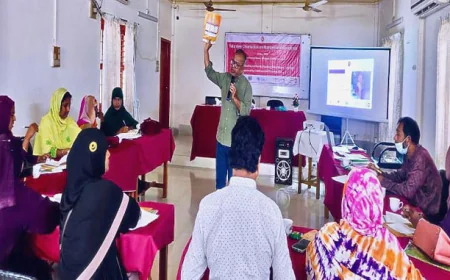
The slum is situated in the Bhadra area of Rajshahi city and is commonly known as Bhadra Slum. Nearly 200 families live there along the railway tracks. Among them, seven to eight families had long been involved in selling marijuana, yaba, and tapentadol tablets. Due to police inaction, several new individuals had also started selling drugs. In response, residents initiated a social resistance movement, which police have viewed positively. Locals said the residents unanimously agreed to eliminate drugs from the slum. They decided not to allow anyone to sell drugs there and to prevent outside buyers from entering the area.
To implement the plan, on Monday (February 23), residents conducted searches of those known to be involved in drug dealing. Drugs were found in their possession and were publicly burned. The same evening after iftar, a group of youths had gathered at a house for drug use. Residents raided the location. Although the youths attempted to flee, they were caught and warned. The drugs and drug paraphernalia found there were also burned. During the operation, an Assistant Sub-Inspector (ASI) of the Railway Security Force, Sarfaraz Nawaz, was found at the gathering. He was also warned and released.
The following morning and until noon, residents continued searching suspected drug dealers, including house searches. Two individuals, Fuad and Moyna Begum, were caught with drugs and later warned. Drug dealers and users have since become alarmed by the residents' actions. After learning about the community initiative, members of the district office of the Department of Narcotics Control conducted a drive in the slum on Wednesday. During the drive, three alleged dealers - Moyna Begum, Abdullah, and Fuad - were detained with some marijuana. Helal Uddin, prosecutor of the district office of the Department of Narcotics Control, said, "Through a mobile court, the three were sentenced and sent to jail.
The social resistance formed by residents to eliminate drugs from this slum is commendable." It is learned that those participating in the anti-drug activities in Bhadra Slum include local conscious citizens Md. Rubel and Md. Zia; city Jubo Dal member Biplob Rahman Naim; ward Jubo Dal member Chan Mia Nayan; ward Swechchhasebak Dal convener Hamidul Islam; local residents Abu Sayeed, Shawon Ali, Md. Akkash, Md. Ashik, and other senior community members.
Biplob Rahman Naim said that both the local police and the Railway Police avoid responsibility by referring to each other and do not conduct drives. "The slum had become a haven for drugs. So, everyone in the area decided together to build this resistance. Because of our actions, drug dealers are now fearful. We monitored the area again on Wednesday and did not see anyone selling drugs. No outsiders came to buy drugs either. Our resistance will continue." When asked, Officer-in-Charge (OC) Faisal Bin Ahsan of Rajshahi Railway Police Station said, "The slum does not actually fall under our jurisdiction.
We are responsible for a 10-foot area on both sides of the railway tracks where the stones are laid. The adjacent areas are not under us. So we do not go there." Monirul Islam, Officer-in-Charge of Chandrima Police Station under Rajshahi Metropolitan Police, said, "It is not correct to say that we do not conduct drives when we receive information. We do carry out operations. Nevertheless, the resistance formed by residents is good. Social resistance is indeed necessary against drugs."