





























State-owned Eastern Refinery resumes production after 26 days
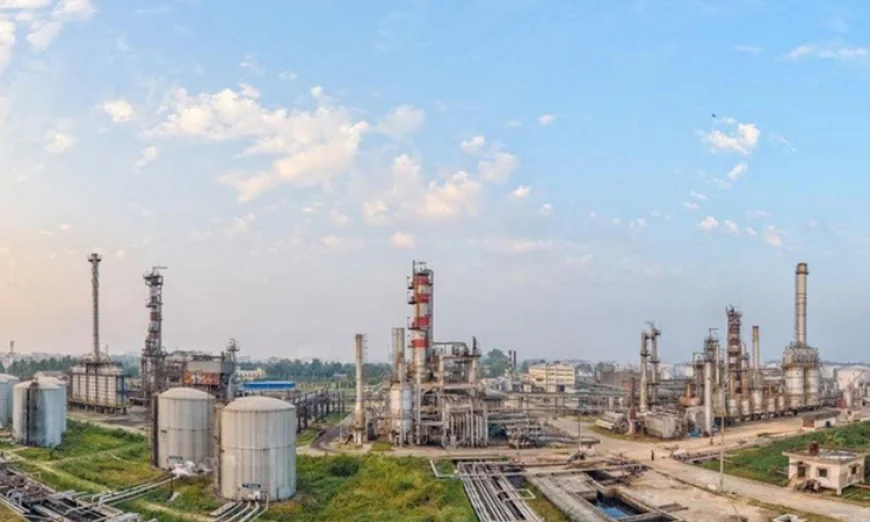
The main plant of the only state-owned oil refinery Eastern Refinery Limited (ERL) reopened today after being temporarily closed for 26 days due to depleted crude oil reserves. ERL Managing Director Engineer Sharif Hasnat confirmed that production resumed at 8:00 am after the refinery received a fresh supply of crude oil. The last shipment of crude oil had arrived on February 18, before the escalation of the Middle East conflict. Due to the shortage of crude oil, ERL temporarily shut down its distillation unit on April 12.
The refinery resumed operations after receiving the new supply. A vessel named MT Ninemia brought 100,000 tonnes of crude oil to the Kutubdia Channel, bypassing the Strait of Hormuz route disruption. Due to the large size of the vessel, the crude oil is being transferred to smaller tankers through lightering operations before being delivered to the refinery in Patenga. Commodore Mahmudul Malek confirmed the safe arrival of the vessel carrying the crude oil needed for refinery operations.
After completion of customs and survey formalities, the process of transporting the crude oil to Eastern Refinery through lighter vessels has begun. Another tanker named MT Fossil has been dispatched to collect another 100,000 tonnes of crude oil from Fujairah in the United Arab Emirates. The tanker is expected to arrive at the port on May 9 and will begin loading on May 10.
Additionally, Bangladesh Petroleum Corporation (BPC) has 100,000 tonnes of crude oil on board the vessel 'Nordics Pollux', which is currently stranded in Ras Tanura port in eastern Saudi Arabia due to disruptions in shipping through the Strait of Hormuz. The state-owned Eastern Refinery processes around 1.5 million tonnes of crude oil annually, meeting approximately 20 percent of the country's annual fuel demand of 7.2 million tonnes.
Bangladesh still depends heavily on imported fuel to meet domestic demand, while a small portion is supplied from local gas condensate processing. Diesel remains the country's most demanded fuel, followed by furnace oil, petrol, octane, kerosene and jet fuel used in aviation operations. In the fiscal year 2024-2025, BPC sold 6,835,341 tonnes of fuel.