
























Cloth produced from silk yarn sold at own showroom in Rajshahi
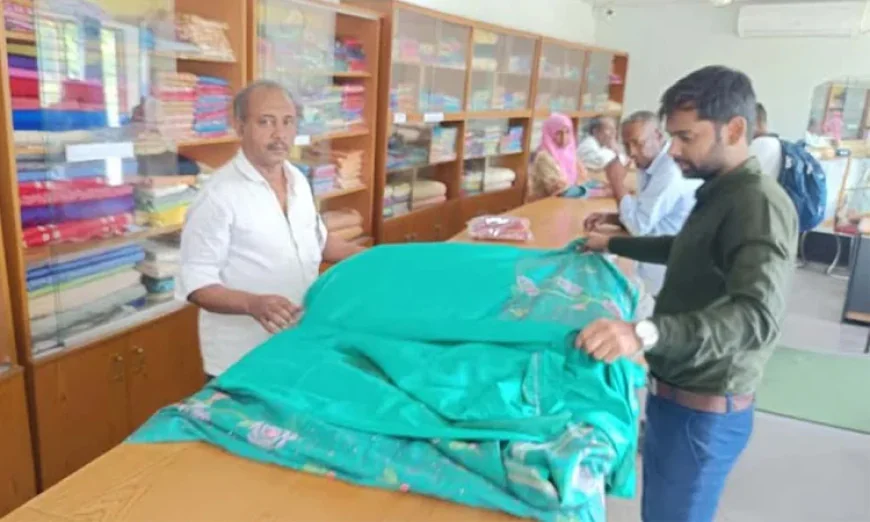
Cloth made from silk yarn is now being sold at the Rajshahi Silk Factory's showroom. Renowned for its elegance, silk remains a top choice for festive occasions, drawing buyers from across the country during the Eid season. Silk holds special prestige in the world of fabrics across the country. For this reason, Rajshahi is often called the "Silk City," and even a train named Silk City runs on this route. When silk fabric is produced by a government factory, its appeal becomes even greater. As demand grows, so do sales.
The demand is not limited to Rajshahi; it now extends nationwide. Fabrics are produced directly at the Rajshahi Silk Factory and sold through its own showroom. Many traders purchase fabrics from here, and buyers even come from Dhaka and Chattogram to collect them. The proverb "A worm that eats forest leaves gives golden money" is one of the most popular sayings associated with silk. The journey of Rajshahi silk began in 1952 under government supervision, making it the first such initiative in Bangladesh.
The Rajshahi Silk Factory is a state-owned establishment founded in 1961. After 1978, it came under the Bangladesh Sericulture Development Board. However, the factory faced financial losses and was shut down on November 30, 2002. After 16 years, it was reopened experimentally at the end of 2017. Once reopened, 42 looms were repaired. Currently, 41 workers and weavers are producing fabric on 19 looms. The previously closed showroom has also been reopened, where garments produced by the government factory are now being sold.
Silk yarn is extracted from silkworm cocoons. The Bangladesh Sericulture Development Board produces these cocoons every year through sericulture farming. Cocoons produced by farmers are purchased and processed into yarn at mini-filature centers. Since the factory resumed operations, 57,366 meters of fabric have been produced by January 2026. On average, around 7,000 meters of fabric are produced annually. The factory's showroom sells garments worth about 300,000 to 350,000 taka each month.
A visit to the Rajshahi Silk Factory shows workers spending busy days. First, yarn is extracted from the cocoons. The yarn is then woven into cloth on looms. Afterward, the fabric is dyed in various colors and printed with different designs. Once the sizes are finalized, the products are sent to the showroom for sale. The factory currently produces around 250 meters of cloth each month. The Sericulture Board's showroom is located right next to the factory. The factory complex is built on a large area beside the railway station in the Shiroil area of Rajshahi city. At the showroom, garments are sold at different prices. Garad sarees are sold for 8,500 taka. Tie fabric costs 1,520 taka per yard. 2/2 grey cloth is sold at 750 taka per yard. Printed sarees are priced at 5,500 taka. Women's two-piece outfits cost 3,890 taka. Ornas are sold for 1,925 taka, while scarves or hijabs cost 960 taka each.
Fabric is also sold by the yard, from which shirts, punjabis, and women's one-piece garments can be made. Stripe Super Balaka is sold at 1,000 taka per yard, Super Balaka at 950 taka, Dupion Satin (tie-dye) at 900 taka per yard, Dupion Satin at 850 taka, 2/4 grey cloth at 950 taka, and Motka cloth at 938 taka per yard. In 2005, the price of one kilogram of silk yarn was 1,000 taka. Now it has risen to about 7,500 taka per kilogram.
Currently, after meeting its own needs, the Sericulture Development Board sells domestic silk yarn to private factory owners at around 3,500 taka per kilogram. Several government projects are underway to develop the silk sector. To meet yarn demand, mulberry trees are planted every year. Within a few years, silk yarn production is expected to increase significantly, enabling the country to produce silk entirely from domestic yarn. Rajshahi silk has also been recognized as a Geographical Indication (GI) product of the country. With customer demand and government patronage, traditional Rajshahi silk can be promoted and expanded further.
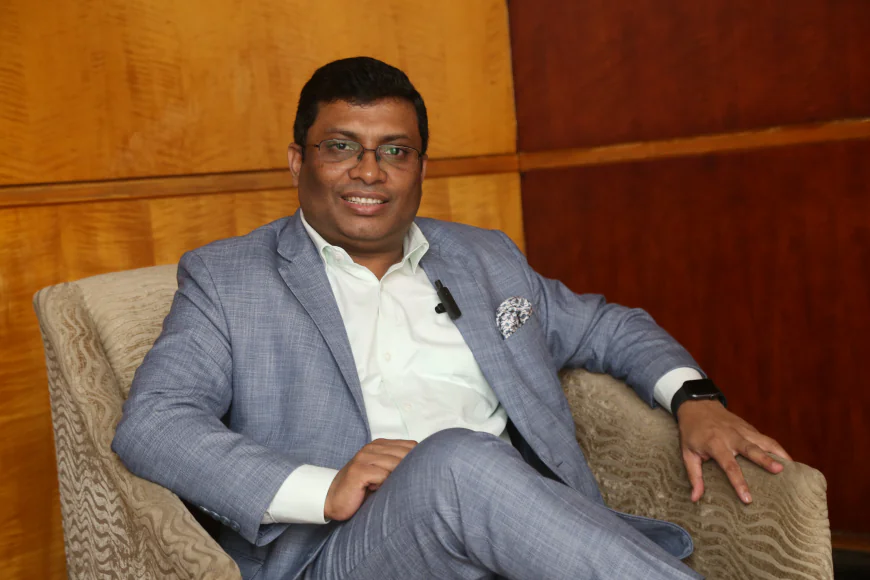
Saidul Islam Tutul, Operation In-Charge of the Rajshahi Silk Factory, said that fabric production is currently ongoing on 19 looms, though these looms are quite old, which makes production slow. Nevertheless, they manage to produce five to ten yards of cloth daily despite various obstacles. He added that the factory produces 100 percent pure silk fabric.
Tarikul Islam, Deputy Director of the Rajshahi Sericulture Development Board, said that the silk industry is gradually developing, with new projects being introduced. A 150-million-taka "Green Leaf" project, once implemented, will further boost the sector. Several new parent breeds have already been developed, and the board now has 114 varieties. The number of mulberry varieties has also increased from 73 to 84. He further said that there are plans to modernize the factory, for which proposals have already been submitted. Plans are also underway to expand mulberry cultivation by increasing land area. The goal is to spread 100 percent silk products across the country and reestablish Rajshahi silk as a well-known national brand.



 Sponsored by