























Dhaka airport’s third terminal agreement to be signed tomorrow

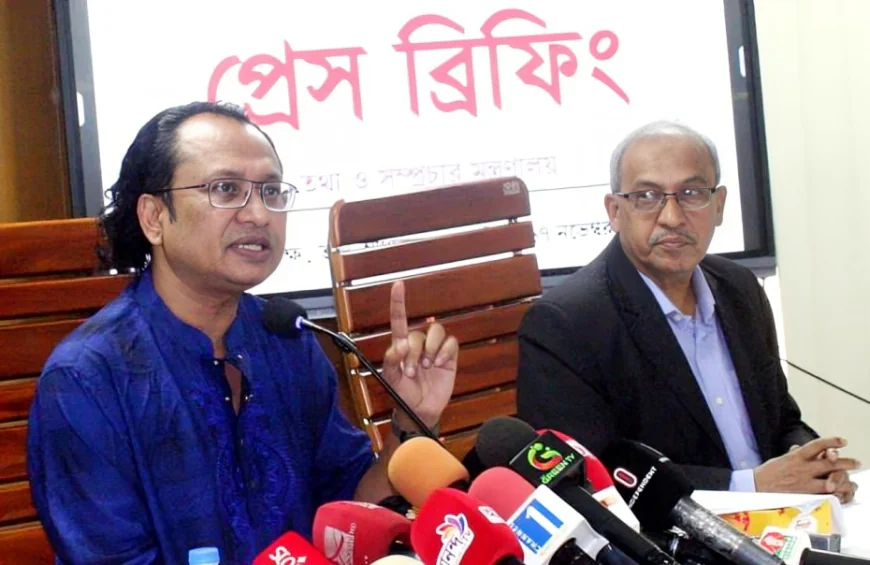
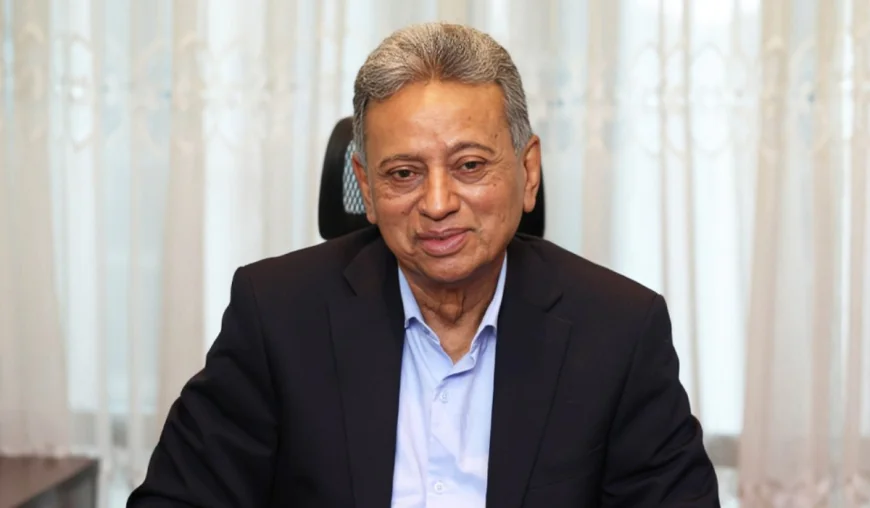
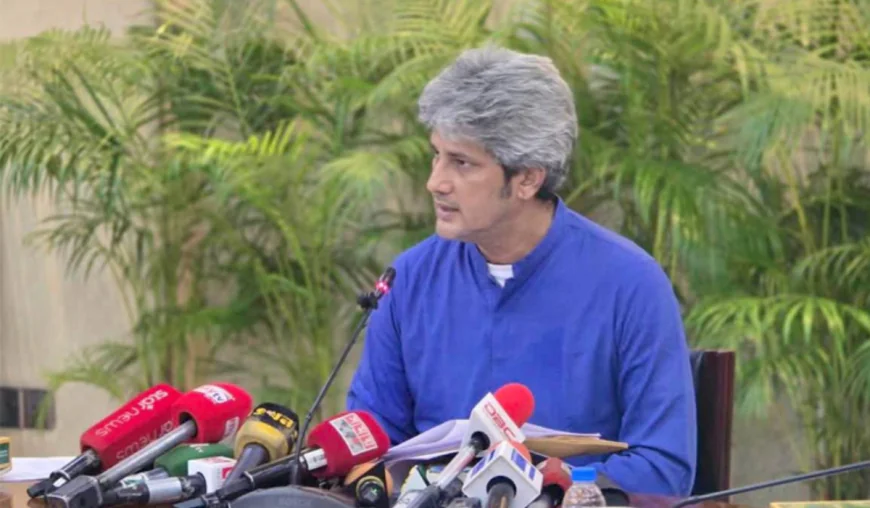
Civil Aviation Authority of Bangladesh (CAAB) Chairman Air Vice Marshal Md Mostafa Mahmud Siddiq made the announcement at a press conference at the authority's headquarters auditorium in Dhaka on Sunday (November 29).
The CAAB chairman said the agreement would be signed following lengthy negotiations, reviews, technical and financial assessments and the completion of necessary formalities. He said the deal had been prepared with particular emphasis on protecting national interests, ensuring airport security and providing international-standard passenger services.
He said the concession agreement would run for 15 years. Preparations are underway to begin partial operations at the third terminal on December 16, marking Victory Day, with an initial four flights.
Flight operations will gradually increase, with full operations targeted within 14 months of the terminal's handover. CAAB will continue regular oversight to ensure compliance with international operating and maintenance standards and the quality of passenger services.
Siddiq said the terminal's advanced technology and passenger-friendly facilities would help strengthen Bangladesh's aviation capacity, expand international air connectivity and promote tourism, trade and investment.
He also stressed the importance of the media in the successful launch and development of the terminal, seeking cooperation through objective reporting, constructive suggestions and greater public awareness.
Officials at the press conference said the third terminal was intended to meet long-standing public expectations for modern airport facilities, improved passenger services and safer, more comfortable air travel.
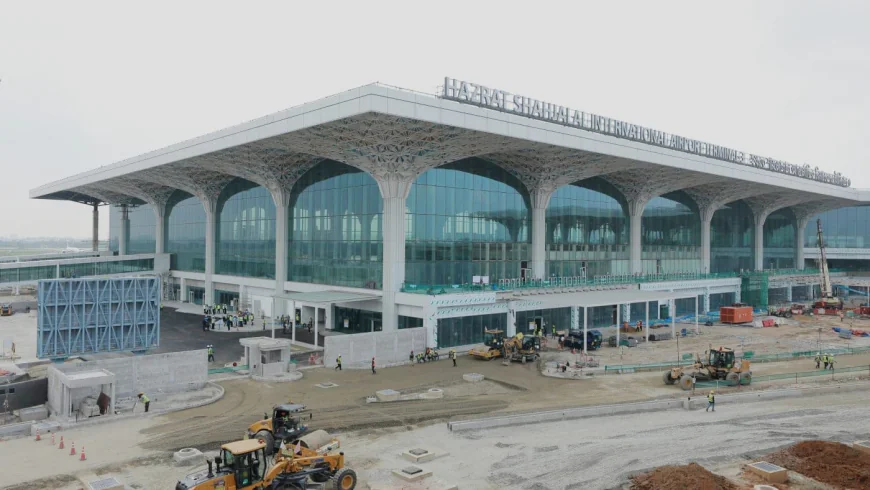
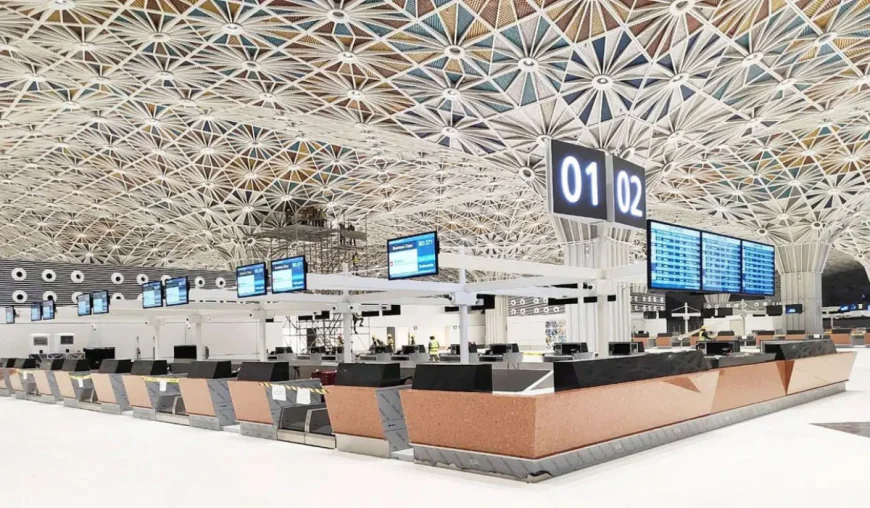
Covering 2,30,000 square metres, the terminal is equipped with advanced technology and modern passenger facilities. According to the briefing, the development is expected to increase the airport's annual passenger-handling capacity to around 24 million.
The terminal has 127 check-in counters, including self-check-in facilities, and 129 passport control counters, comprising 114 manual and 15 automated counters. It also has eight visa-on-arrival counters, 10 transit and transfer counters and 16 airline ticket counters.
For arriving passengers, there are 16 baggage conveyor belts. The terminal also has 12 contact boarding positions and 25 remote aircraft parking bays.
Security facilities include 99 baggage X-ray screening machines, 22 body scanners, 55 walk-through metal detectors and 39 explosive detection devices.
Moving walkways, escalators and lifts have been installed to facilitate passenger movement, while a multistorey parking facility can accommodate 1,230 vehicles.
To expand international cargo-handling capacity, a 27,000-square-metre import cargo terminal and a 36,000-square-metre export cargo terminal have been built.
The new facilities have a combined annual cargo-handling capacity of 8,20,411 tonnes, comprising 2,73,470 tonnes of imports and 5,46,941 tonnes of exports. According to CAAB, the facilities are expected to increase cargo-handling capacity fourfold.
Officials said these facilities would help improve passenger services, airport security, operational efficiency and international passenger and cargo-handling capacity.
The concession agreement with the Japanese consortium is intended to ensure effective use of the infrastructure, international-standard operations, proper maintenance and sustainable passenger services.
Both sides have reached a final understanding on the agreement, and the necessary legal vetting has been completed.
The agreement includes specific provisions on the concession period, operational timetable, division of responsibilities, revenue sharing, ground and cargo handling, and passenger service standards. Officials said the terms were designed to protect national and financial interests while ensuring transparency and accountability.
Under the proposed agreement, the 15-year concession period will begin when all scheduled international flights at Hazrat Shahjalal International Airport have been transferred to the third terminal.
The concession-covered areas will be handed over to the operator within 15 days of signing the agreement.
The operator will be required to handle at least 25 percent of scheduled international flights within eight months of the handover. Operations will then be expanded gradually, with all scheduled international passenger and cargo-handling activities targeted for transfer to the new facilities within 14 months.
The Japanese consortium will operate, repair and maintain the third terminal, the multistorey parking facility and the new import and export cargo terminals at its own expense.
Once fully operational, all scheduled international passenger flights will be handled through the third terminal, while international cargo operations will move to the new cargo facilities.
CAAB will be able to use the existing Terminals 1 and 2 for domestic flights, Hajj flights and other non-scheduled services.
The operator will also be responsible for purchasing, installing and commissioning additional equipment needed to expand passenger-handling capacity during the concession period. It will undertake the necessary upgrades to the mechanical, electrical, water supply, and related infrastructure.
However, key airport control and security functions will remain under CAAB.
The authority will retain responsibility for runways, taxiways, aprons, air traffic control, aviation safety, security screening, firefighting and rescue operations.
Immigration, customs, health screening and other government functions will remain under the relevant Bangladesh government agencies.
Under the agreement, the consortium will receive embarkation fees for international departing passengers using the third terminal, fees for passenger boarding bridge services and non-aeronautical revenue from shops, lounges, the multistorey parking facility and advertising.
The agreement also sets out revenue-sharing arrangements between CAAB and the operator.
From the specified commencement date, the operator will pay CAAB 13.5 percent of gross revenue from passenger and cargo operations on a monthly basis.
CAAB's share will subsequently rise to 27 percent from either the scheduled date for achieving full operational capacity or the actual date it is achieved, whichever comes first.
For ground handling, another international operator will be introduced alongside Biman Bangladesh Airlines at the third terminal.
Ground-handling companies and self-handling operators will pay royalties to the terminal operator. Biman Bangladesh Airlines will also pay the operator a royalty in US dollars for each tonne of cargo handled.
The agreement includes minimum service standards and key performance indicators to ensure the quality of passenger services.
The operator will be responsible for maintaining cleanliness, adequate lighting, functioning lifts and escalators, efficient check-in services, timely baggage delivery, cargo handling, parking facilities and other passenger services.
Specific baggage delivery deadlines have been set to reduce waiting times for arriving passengers.
The first bag must reach the conveyor belt within 15 minutes of an aircraft coming to a stop. The deadline for delivering the final bag is 42.5 minutes for narrow-body aircraft and 47.5 minutes for wide-body aircraft.
Standards have also been set for average waiting times at check-in counters, with limits of five or 10 minutes for business-class passengers and 20 or 30 minutes for economy-class passengers.
The agreement also requires critical technological systems, including baggage handling, common passenger processing, automated self-check-in and flight information display systems, to maintain operational availability of 95 or 98 percent, depending on the applicable standard.
Financial compensation provisions have been included to hold the operator accountable for repeated failures to meet service standards and key performance indicators.
Depending on the nature and frequency of such failures, the operator may be required to pay predetermined compensation ranging from $5,000 to $35,000 for each violation.
Overall, the concession agreement focuses on international-standard passenger services, modern airport management, proper infrastructure maintenance, revenue generation for CAAB and accountability of the operating consortium.
Officials said successful implementation of the agreement would help strengthen Bangladesh's aviation capacity and expand international air connectivity.
Comments 0
Log in to join the discussion
Sign in or create a free account to read and write comments on this story.
No comments yet. Be the first to comment.





 Sponsored by