

































Cyber Security Law Will Not Become Repressive: Home Minister
The government will ensure the proposed Cyber Security (Amendment) Act, 2026 does not become repressive and that no journalist or media outlet falls victim to misuse, Home Minister Salahuddin Ahmed said Monday.
He said the law would be finalised only after extensive consultations with stakeholders, including journalists, media representatives, IT experts and other professionals.
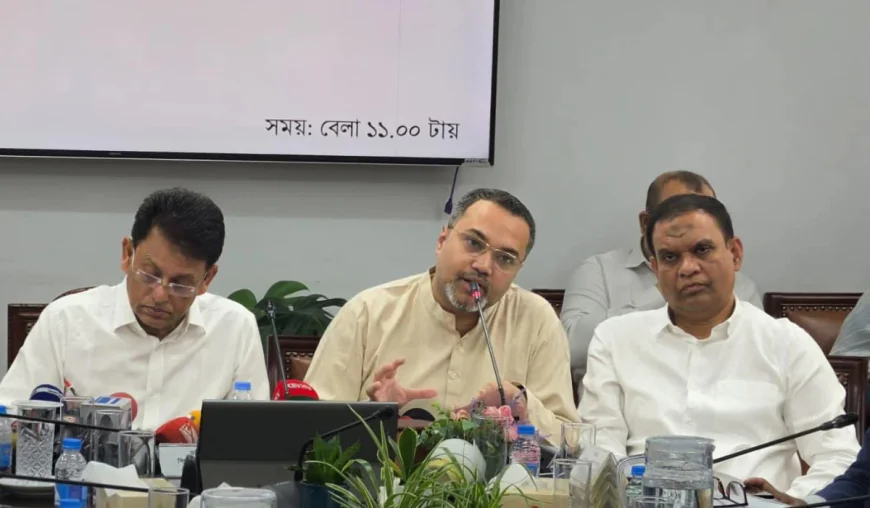
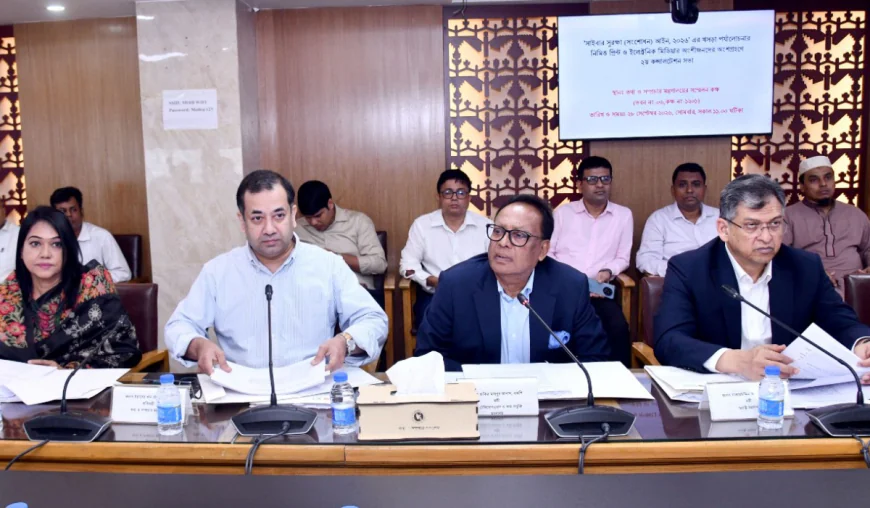
The minister made the remarks at a press briefing following a consultation meeting with stakeholders from print and electronic media on reviewing the draft act. The meeting was held at the conference room of the Ministry of Information and Broadcasting at Bangladesh Secretariat in Dhaka.
Briefing journalists, Salahuddin Ahmed said the draft bill prepared for amending the Cyber Security Act had previously been placed before the Cabinet.
The Cabinet had instructed authorities to hold extensive consultations with IT experts working in cyberspace and all relevant stakeholders before finalising the legislation, he said.
In line with that directive, the draft bill was published on the website to seek opinions from all sections of society so that the law does not become a tool of repression,the minister said.
He added that various organisations, human rights groups, students and cyberspace users had already submitted opinions, which had been compiled.
Media protection under review
The minister said Monday's meeting was the government's second consultation with editors, representatives of leading print and electronic media outlets, prominent journalists, newspaper organisations and professional associations.
The first meeting with editors was held Sept 10, when participants were asked to submit specific written recommendations either at the next meeting or through the government website.
Many participants presented summaries of their views today and pledged to submit recommendations in writing,he said.
During the meeting, The Daily Star Editor Mahfuz Anam proposed that more time be given for detailed consultations among media and cybersecurity experts to ensure media are not adversely affected under the proposed legislation.
He also called for appropriate saving clauses or protective provisions to safeguard journalists and media organisations.
The government has accepted the proposal with appreciation,the home minister said, adding, "We did not intend to make this law targeting the media, and we do not want that. Our main objective is to ensure no journalist becomes a victim of misuse of the law."
Prior court approval proposed before arrest
The minister said an important proposal had emerged to make prior court approval mandatory before taking legal action against or arresting any journalist working for newspapers, print, electronic or online media.
"The government considers this proposal appropriate and reasonable," he said.
According to the minister, formal recommendations are expected from stakeholders within the next 15 days, after which the provision will be considered for inclusion in the bill.
He also said a specific time limit would be incorporated for resolving cases or appeals so individuals do not remain entangled in legal proceedings indefinitely.
Coordinated consultation process
The government has also decided to establish a coordinated mechanism for finalising the draft legislation.
The Principal Information Officer has been designated as focal point for overall coordination, the minister said.
The Ministry of Posts, Telecommunications and Information Technology and the Ministry of Information and Broadcasting will jointly coordinate the process.
Representatives of the Editors Guild, the Electronic Media Association and a special panel of cyber experts formed by the IT ministry will participate.
Stakeholders are expected to submit specific recommendations within the next 7 to 15 days. After 15 days, representatives of relevant ministries and committee members will meet jointly to review recommendations and take further decisions.
Draft to be republished for public opinion
Salahuddin Ahmed said the revised draft would again be published on the government website before being placed before the Cabinet, allowing public and stakeholders another opportunity to submit views.
Acceptable recommendations will also be incorporated into the draft,he said.
Following public consultation, the draft will undergo a final review at an inter-ministerial meeting before being placed before the Cabinet for approval.
If approved, the bill will be placed before Parliament.
However, the minister said the government would not seek to rush the legislation through Parliament.
He said parliamentary discussions would involve both government and opposition, while views expressed through seminars and symposiums outside Parliament would also be considered.
Focus on cybercrime and social harmony
Describing objectives, the home minister said the government wanted to establish a balanced legal framework capable of protecting the country and society -particularly young people-from cybercrimes and other criminal activities spreading rapidly in cyberspace.
He said the proposed law would also seek to protect social and religious harmony, family bonds and the country's cultural values while remaining consistent with international standards.
The government, he emphasised, wants to develop a cybersecurity law that protects citizens and society without becoming an instrument of repression.





 Sponsored by