


















Farmers to get solar irrigation pumps within five years: PM
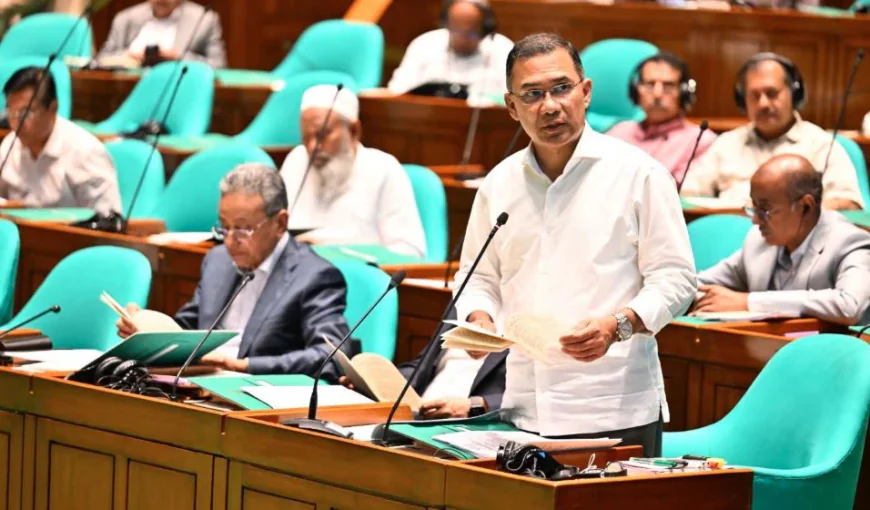
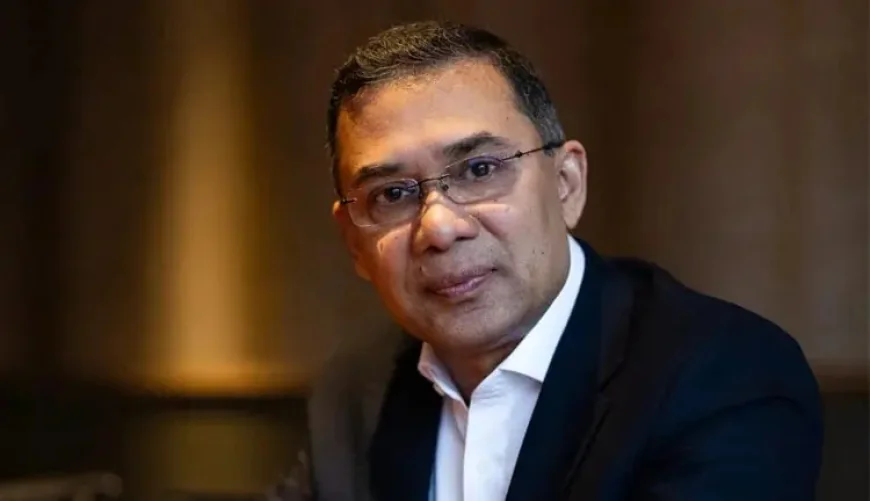
Prime Minister Tarique Rahman today said the government plans to replace diesel-powered irrigation pumps with solar-powered ones for farmers across the country within the next five years.
“Wherever water pumps are currently operated by diesel, we will gradually convert all of them to solar power within the next five years, InshaAllah,” he said while replying to a supplementary question from Meherpur-1 lawmaker Md. Tajuddin Khan during the question-answer session in parliament this afternoon.
Replying to the question whether the government had any plan to provide farmers with solar power free of cost instead of diesel-run engines for irrigation, the Prime Minister also outlined the government’s plans to expand renewable energy, solar power plants and other alternative energy sources.
He said the government, considering the country’s growing electricity demand, has identified renewable energy as a priority sector to reduce dependence on imported fuels.
“A National Renewable Energy Development Strategy for 2026-2030 has already been formulated. Under the strategy, targets have been set to generate at least 20 percent of total electricity from renewable sources by 2030 and at least 30 percent by 2040,” he said.
Considering the potential and feasibility, he said, targets have been set to generate 5,500 megawatts from rooftop solar power, 4,500MW from ground-mounted solar power and 450-550MW from other technologies, including wind, waste-to-energy, hydropower, floating solar and agrivoltaics, by 2030.
The Prime Minister said the government has already provided conditional exemption from customs duty, regulatory duty, supplementary duty, advance tax and the additional 2 percent advance income tax on essential products required for solar power installations, including solar panels, inverters, batteries and structures.
“Most recently, on September 1, the maximum cost of rooftop solar power generation, including batteries, was set at Tk 8 per unit,” he said.
He said a notification had also been issued fixing the price of electricity at Tk 10.50 per unit, considering a 20 percent profit on generation costs and an 11.25 percent premium as part of special incentives.
“Under the notification, people who install rooftop solar power systems by February 28, 2027, in accordance with the Net Metering Guidelines 2025 and supply surplus electricity to the national grid after meeting their own needs, will be entitled to Tk 10.50 per unit for the electricity supplied to the national grid for the next three years, until February 28, 2030,” he said.
The Prime Minister said the government has already formulated a number of policies and guidelines to promote renewable energy, including the “Guidelines for Development of Renewable Energy Projects using Land Owned by Government Agencies under PPP Modality, 2026 and the “Policy for Enhancement of Private Participation in the Renewable Energy-based Power Generation, 2025”.
Other measures include the Renewable Energy Policy 2025, Net Metering Guideline 2025, National Rooftop Solar Programme 2025, a business model for electricity generation from waste, the Onshore Wind Guideline and the Guideline on Carbon Credit Processing.
Replying to a supplementary question from lawmaker Nipun Roy Chowdhury, the Prime Minister said two types of batteries are generally used for storing solar power — lead-acid batteries and lithium batteries.
“Lithium batteries are more environment-friendly, and the government is encouraging their use,” he said, adding that the government would provide all necessary support to industries that set up facilities to manufacture lithium batteries.
He said lead-acid batteries use acid, which is highly harmful to the environment, and the government wants to discourage their use. “It has been explicitly stipulated that lithium batteries must be used in rooftop solar systems,” he said.
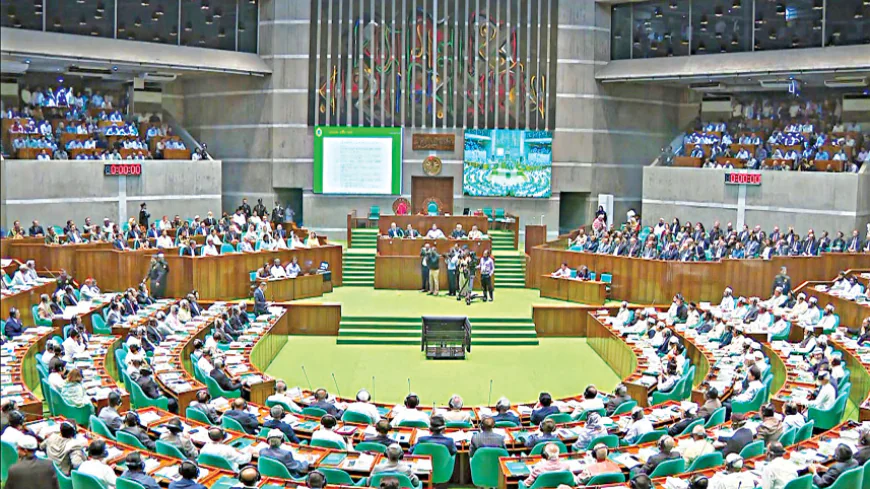
The parliamentary session began at 3:30pm with Speaker Hafiz Uddin Ahmad Bir Bikram in the chair. As per the day’s agenda, the first half-hour was allocated for the Prime Minister’s question-answer session.




 Sponsored by