












France backs Bangladesh’s democratic transition and LDC graduation: Envoy
France today reaffirmed its support for Bangladesh's democratic transition and upcoming graduation from the Least Developed Country (LDC) category, expressing readiness to further deepen bilateral cooperation across political, economic and strategic fronts.
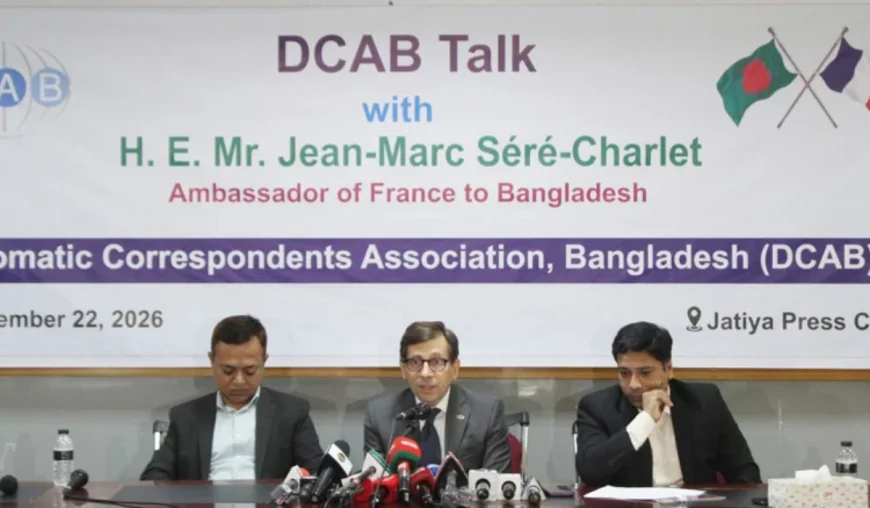
"French diplomacy actively supports Bangladesh in its major transitions, whether it involves the political reforms being implemented by the government or its upcoming graduation from the category of Least Developed Countries," French Ambassador to Bangladesh Jean-Marc Séré-Charlet said.
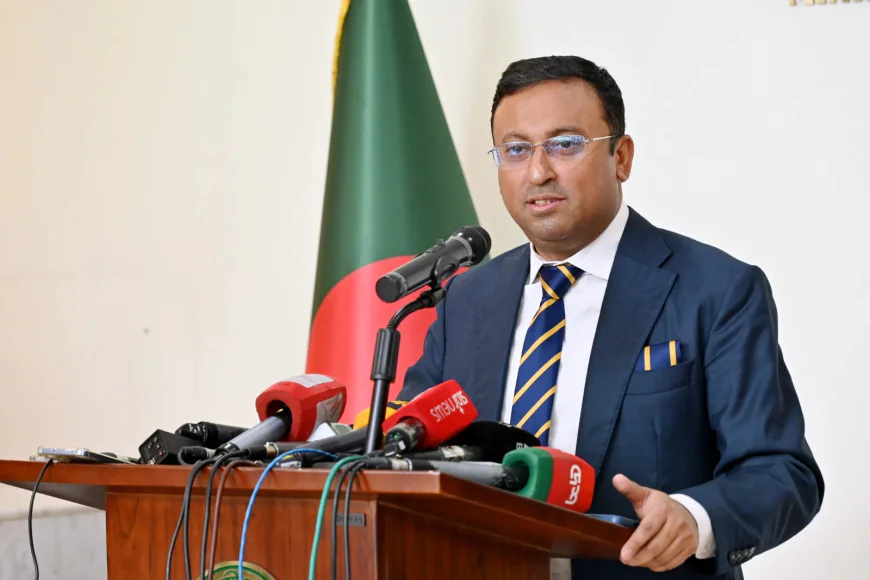
He made the remarks while addressing the "DCAB Talk", a flagship programme of the Diplomatic Correspondents Association, Bangladesh (DCAB), here today.
Describing France as a "long-standing, reliable, predictable and benevolent partner" of Bangladesh, Séré-Charlet said the two countries share a commitment to cooperation rather than confrontation, multilateralism and global peace.
The ambassador said there remained significant potential to take Bangladesh-France relations to a new level as both countries navigate a rapidly changing international environment.
"For all these reasons, we are ready to strengthen our engagement with Bangladesh," he said, adding that countries sharing common values and objectives should cooperate more closely and proactively.
"I believe that Franco-Bangladeshi relations have great potential," the envoy said.
Highlighting the economic dimension of the relationship, Séré-Charlet said bilateral trade between Bangladesh and France now exceeds 4.5 billion euros, representing significant growth over the past decade.
He said the trade relationship, however, remains structurally imbalanced in Bangladesh's favour as French imports from Bangladesh considerably exceed its exports to the country.
Nearly 95 percent of French imports from Bangladesh are textiles, particularly clothing and apparel, he said.
The ambassador said French economic engagement in Bangladesh is supported by major industrial groups operating in transportation, energy and resilient urban development.
At the same time, he identified pharmaceuticals, food processing and digital technologies as emerging areas offering opportunities to diversify economic relations between the two countries.
Regarding the Airbus issue, the envoy said that France expects that
Bangladesh will engage in a long-term partnership with Europeans in the civil aviation field.
“I can assure you that negotiations (of purchasing aircraft between Biman and Airbus) are still going on and going very well,” the envoy added.
Séré-Charlet also highlighted France's strategic engagement with Bangladesh within the wider Indo-Pacific region, describing France as the only European Union member state that is also a major Indo-Pacific power, with around two million French citizens living in the region.
He said France seeks to promote a multilateral approach that would allow partners such as Bangladesh to maintain their strategic autonomy amid intensifying global geopolitical competition.
Paris wants its South Asian partners, including Bangladesh, to have the ability to pursue their own interests without being compelled to choose between competing major powers, he said.
The ambassador also identified maritime security and stability in the Indian Ocean as another important area for cooperation.
He stressed the importance of freedom of navigation and adherence to international maritime law, noting that the northern Indian Ocean remains a crucial maritime route for global trade.
France, with a major maritime presence in the Indo-Pacific, is interested in strengthening partnerships to address non-traditional security challenges including illegal fishing, piracy and trafficking, he said.
Climate change represents another major pillar of Bangladesh-France cooperation, the envoy said, noting France's role in international climate diplomacy and the adoption of the Paris Agreement in 2015.
Given Bangladesh's acute vulnerability to climate change, he said France is seeking stronger cooperation in climate adaptation, resilient infrastructure and disaster-risk management.
More than 80 percent of the funding provided by the French Development Agency (AFD), he said, is tagged for climate resilience and biodiversity preservation.
The two countries are consequently strengthening their dialogue on sustainable infrastructure and green adaptation initiatives, he added.
The ambassador also highlighted France's feminist foreign policy and its emphasis on gender equality, women's rights, education, eliminating gender-based violence, political participation and women's economic empowerment.
He said France's feminist foreign policy strategy for 2025-2030 has also expanded its focus to areas including feminist climate action, digital rights and economic policies supporting gender equality.
Placing bilateral ties against the wider international backdrop, Séré-Charlet said the world is passing through a period of profound change characterised by increasing geopolitical confrontation, conflicts and uncertainty.
Against such a backdrop, he said France and Bangladesh share an interest in defending dialogue, cooperation, multilateralism and peaceful international relations.
He referred to European integration as an example of countries seeking to build peace and prosperity through dialogue and cooperation despite the complexity of such a process.
The ambassador also reiterated France's position on the Middle East and recalled Paris's recognition of the State of Palestine on September 22, 2025, during the 80th UN General Assembly.
He said the decision was aimed at helping revitalise the Middle East peace process by supporting the legitimate rights of the Palestinian people while reaffirming France's commitment to Israel's security.
Turning again to Bangladesh-France ties, Séré-Charlet said political transition, LDC graduation, climate resilience, economic diversification and strategic autonomy offer substantial scope for deeper cooperation between Dhaka and Paris.
France's latest expression of support comes as the two countries seek to broaden their longstanding partnership beyond traditional development cooperation.
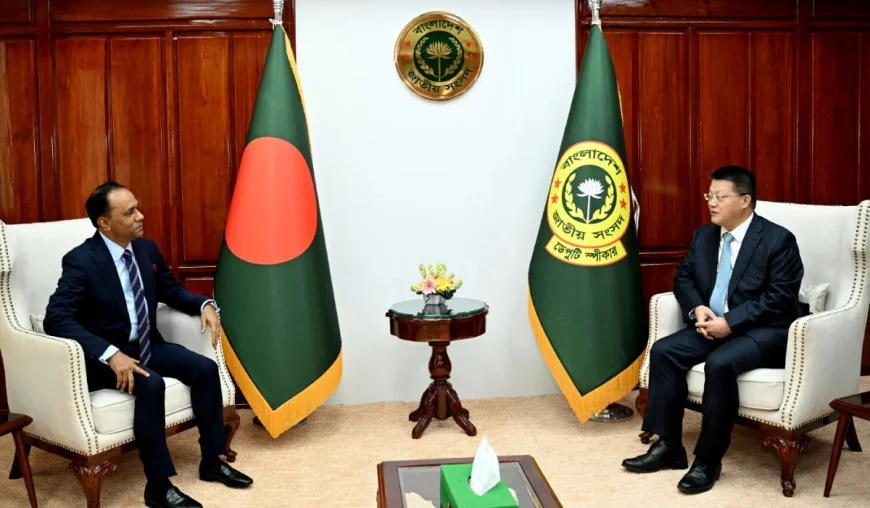
During a meeting with State Minister for Foreign Affairs Humaiun Kobir on September 17, the two sides also discussed expanding cooperation in trade and investment, defence, aviation, education, culture and human capital development.
The discussions also covered climate change and multilateral engagement, while Bangladesh encouraged greater French investment in infrastructure, renewable energy, space, technology and pharmaceuticals.
Séré-Charlet said France wants countries committed to peaceful international relations to become more proactive in demonstrating that cooperation and multilateral engagement can deliver tangible results.
Against that backdrop, he said Paris stands ready to deepen its engagement with Dhaka across political, economic, development and strategic fields as Bangladesh moves through its democratic and economic transitions.
DCAB president AKM Moinuddin and General secretary Emrul Kayesh also spoke on the occasion.

 Sponsored by