






















Women Empowerment in South Asia: Progress, Paradox, and the Path Forward

Women empowerment in South Asia stands as one of the most defining yet contradictory narratives of our time. Across countries like Bangladesh, India, Pakistan, Nepal, and Sri Lanka, measurable progress is evident in education, political representation, and workforce participation. Yet, beneath these visible achievements lies a persistent struggle against deeply embedded social norms that continue to limit true equality.
South Asia has, without doubt, produced some of the world’s most prominent female political leaders. Figures such as Sheikh Hasina, Indira Gandhi, and Benazir Bhutto have shattered traditional barriers, proving that women can lead nations with strength and strategic vision. However, these high-profile examples often create an illusion of widespread empowerment, overshadowing the everyday realities faced by millions of women who remain excluded from meaningful participation in decision-making processes.
Education has emerged as a powerful catalyst for change. In Bangladesh, increased female enrollment in schools has contributed to greater awareness, confidence, and aspiration among young women. This transformation has begun to challenge long-standing cultural norms. However, education alone has not been sufficient to dismantle systemic patriarchy. Many educated women still encounter societal pressure that restricts their career choices, mobility, and personal autonomy, with early marriage and family expectations continuing to shape their futures.
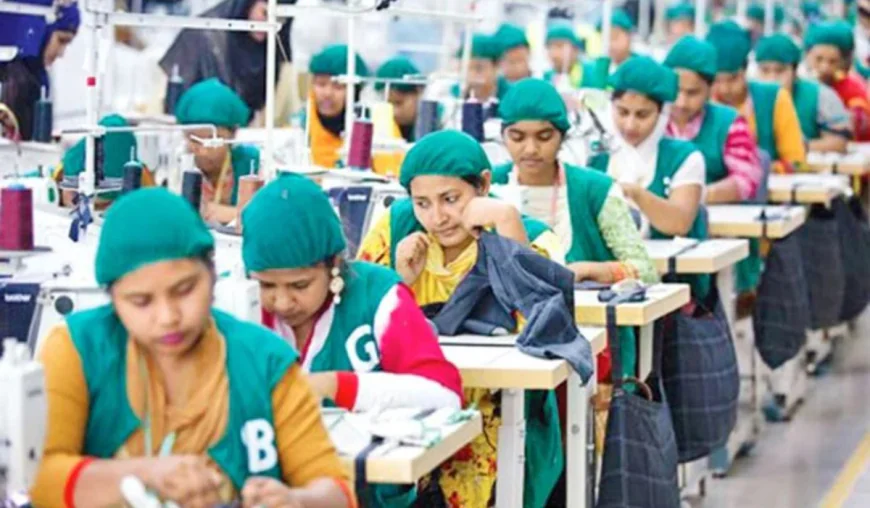
Economic participation offers another dimension of this complex landscape. The expansion of industries such as ready-made garments has enabled millions of women, particularly in Bangladesh, to enter the workforce and achieve a degree of financial independence. Yet, this empowerment often remains limited in scope. Low wages, job insecurity, and inadequate working conditions reveal that economic inclusion does not automatically translate into dignity or long-term advancement. In many cases, empowerment becomes conditional rather than transformative.
Perhaps the most significant barrier to genuine empowerment lies within societal attitudes. Across South Asia, women are still frequently defined by their roles within the family rather than as independent individuals. Issues such as gender-based violence, workplace harassment, and unequal access to justice continue to undermine progress. While legal frameworks have been established in many countries, weak enforcement and social stigma often prevent women from seeking or obtaining justice.
The region also reflects a stark contrast between urban and rural realities. In metropolitan areas, women are increasingly visible as entrepreneurs, professionals, and public figures. Meanwhile, in rural communities, many still struggle for basic rights, including access to education, healthcare, and freedom of movement. This uneven progress has resulted in a fragmented model of empowerment—one that benefits a segment of society while leaving a significant portion behind.
True empowerment cannot be measured solely by statistics or symbolic achievements. It requires a fundamental cultural transformation—one that redefines gender roles, promotes equal opportunities, and ensures that rights are not only recognized but also protected. Importantly, this transformation must involve men as active participants in fostering equality, rather than passive observers.
South Asia is not lacking in potential; it is grappling with inconsistency. The journey toward women empowerment in the region is neither linear nor uniform. It is shaped by an ongoing tension between tradition and modernity. Until societies are willing to confront these contradictions with honesty and commitment, empowerment will remain more aspirational than actual.
The future of South Asia depends on its ability to move beyond symbolic progress and embrace substantive change. Women empowerment must not be treated merely as a development agenda—it must be recognized as an essential foundation for justice, stability, and sustainable growth.


 Sponsored by