

































Asian markets advance on strong export growth

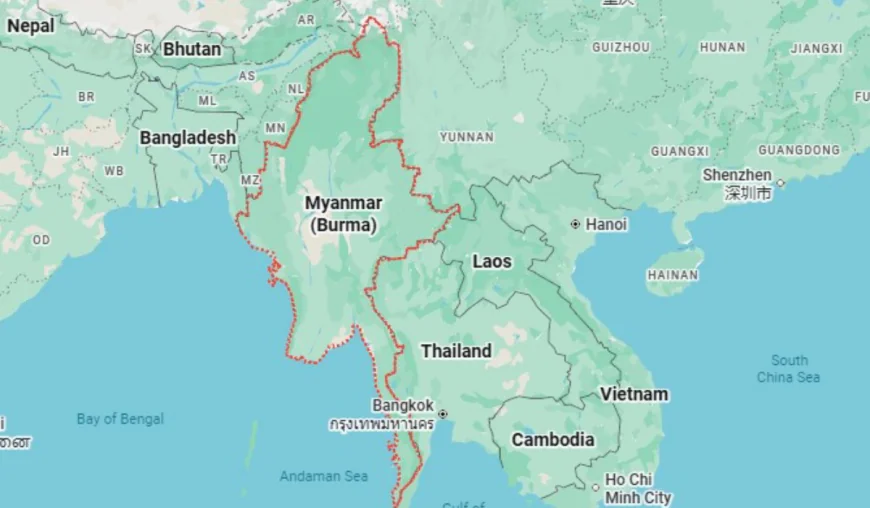
Bangladesh's exports to several major Asian markets recorded year-on-year growth in the first quarter of the current fiscal year, signalling scope for further market diversification beyond traditional destinations in the United States (US) and Europe.
According to the Export Promotion Bureau (EPB), exports to China increased by 9.33 percent to US$225.41 million during July-September of fiscal year 2026-27, compared with US$206.18 million in the corresponding period of the previous fiscal year.
Exports to the Republic of Korea rose by 7.29 percent to US$134.55 million from US$125.41 million, while shipments to India increased by 5.44 percent to US$510 million from US$483.71 million.
Japan also remained a major Asian destination for Bangladeshi products, with exports reaching US$399.11 million during the quarter, marginally higher than US$396.11 million a year earlier.
The figures come against the backdrop of an overall increase in Bangladesh's merchandise exports. The country's total export earnings reached US$13.09 billion in July-September, up 6.34 percent from US$12.31 billion in the same period a year earlier, according to the EPB data.
The growth in several Asian destinations highlights the potential for Bangladesh to diversify its export markets, strengthen regional trade links and expand participation in Asian supply chains.
However, sustaining the growth will require efforts to identify products with competitive advantages, meet destination-market standards, improve logistics and facilitate access to buyers and distributors.
Talking to the Export Promotion Bureau (EPB), Vice Chairman Muhammad Hasan Arif said Bangladesh needs to strengthen its presence in Asian markets by assessing product-wise performance, buyer demand and opportunities to diversify exports beyond the traditional export basket.
"China offers a large market and opportunities to explore new product categories, while India provides geographical proximity and potential for stronger cross-border commercial links," he said.
Regarding China, Hasan Arif said the EPB is emphasising product diversification to take advantage of the country's huge consumer market and growing demand.
Several Bangladeshi companies participated in the 10th China-South Asia Expo and the 30th China Kunming Import-Export Fair 2026 with EPB support, he added.
He said such participation provides exporters with opportunities to showcase Bangladeshi products, meet potential buyers and understand changing market demand.
Regarding India, the EPB Vice Chairman said the neighbouring country has huge potential for Bangladesh because of its geographical proximity and large consumer market.
"India is our neighbouring country. So, there is huge scope to expand exports in the Indian market. We are trying to resolve the barriers," he said.
He said tariff and non-tariff barriers remain major challenges to increasing Bangladesh's exports to India and stressed the need to address these obstacles.
Regarding South Korea, Hasan Arif said Bangladesh has opportunities to expand exports through product diversification and stronger business links.
Besides readymade garments, he identified potential in leather goods, footwear, jute products, home textiles, pharmaceuticals and processed food.
On Japan, he said there is also significant scope to increase exports, particularly of leather goods, footwear, jute-based products, home textiles, processed food, pharmaceuticals and light engineering products.
He stressed that quality, compliance, timely delivery and understanding market requirements are essential for success in both markets.
The EPB Vice Chairman said the bureau is facilitating exporters through trade fairs, business delegations, market exploration and promotional activities to help diversify Bangladesh's export destinations and products.






 Sponsored by