


























Call to cut wasteful electricity and energy use in Rajshahi
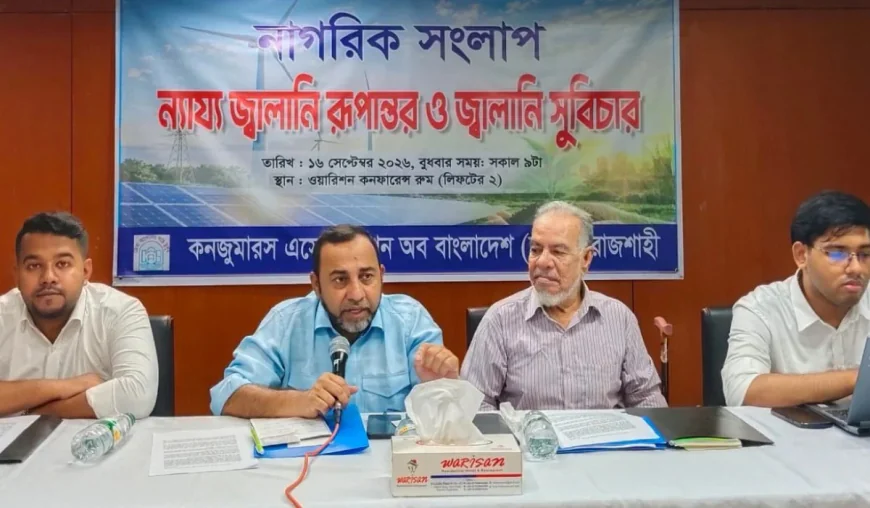
Speakers at a discussion here today unequivocally called for protecting public interest by reducing wasteful spending in electricity and energy in Rajshahi.
According to them, to ensure energy justice, along with reducing costs and increasing transparency and accountability, public interest must be placed at the center of power and energy policy.
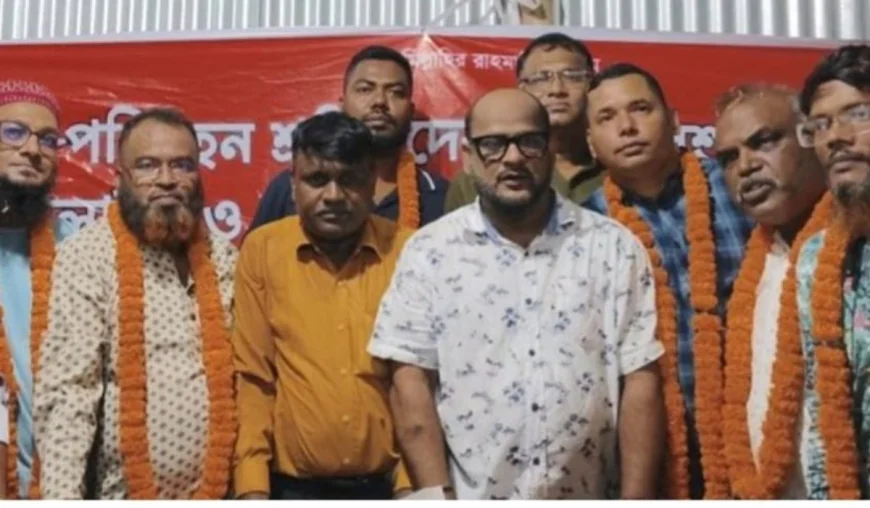
Speakers said this at a day-long citizen dialogue titled "CAB-Proposed Just Energy Transition Policy and Energy Justice" held at the conference hall of Hotel Warishan in Rajshahi. Rajshahi District chapter of the Consumers Association of Bangladesh (CAB) organised the dialogue.
CAB Rajshahi District President Kazi Gias presided over the dialogue that was moderated by its General Secretary Golam Mostafa Mamun.
The keynote paper was presented by CAB Coordinator Engineer MAM Golam Kibria. CAB Central Adviser Engineer AKM Khademul Islam Fikson and CAB Project Manager Marufa Koli also spoke.
The speakers said the burden of non-transparent contracts, excessive costs and inefficiency in the power and energy sector is ultimately falling on consumers.
In a "cost-plus-profit" based system, there is no pressure to reduce costs, so the more the cost increases, the more the opportunity for profit increases.
Experts claim that over the last decade and a half, irregularities and inefficiency in this sector have increased due to non-competitive contracts, legal provisions for indemnity, and weakness of the regulatory body.
Speakers at the dialogue said that the crisis in the power and energy sector is now not just a supply crisis, but has turned into a financial and institutional crisis as well.
It used to be said, "There are poles, but no electricity'; now, even though there are power plants, in many cases there is no fuel for production. As a result, power plants have to pay capacity charges even without producing electricity. The financial liability for this ultimately has to be borne by the state and the consumers."
CAB has put forward a 12-point proposal in the government's five-year plan to reduce costs and reduce the pressure of price hikes on consumers.
These include making government electricity and energy services profit-free to save about Taka 45,000 crore per year, stopping excess LNG imports, increasing domestic gas production, and quickly connecting electricity from the Rooppur Nuclear Power Plant to the grid.
In addition, CAB has proposed increasing solar power generation capacity by 10,000 megawatts, reducing electricity demand by 15 percent by increasing energy efficiency, and phasing out liquid fuel-based power plants.
According to the organisation's estimates, if these initiatives are implemented, about Taka 52,000 crore can be saved per year in electricity generation.
The speakers emphasized stopping waste and unnecessary expenditure in the energy sector, increasing efficiency and transparency, eradicating energy crimes, and increasing national capacity.
In their opinion, the power and energy sector needs to be managed on the basis of public interest, energy justice and long-term energy security by reducing import dependency.





 Sponsored by