

































Govt plans policy support and export diversification to revive tea industry
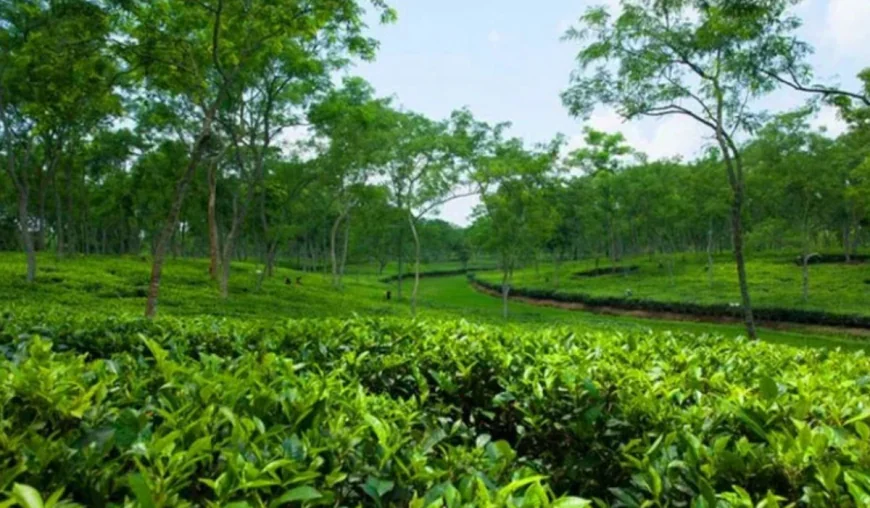
The government plans comprehensive financial, technological and policy reforms, higher productivity, solar power investment and export diversification, to restore the economic viability of Bangladesh’s tea sector, which faces ageing plantations, rising costs and mounting loan defaults.
The plans emerged at the first meeting of the Monitoring and Advisory Committee on Tea Industry Development, chaired by Commerce Minister Khandakar Abdul Muktadir at the Ministry of Commerce last month.
The meeting called for a long-term development strategy, garden-specific action plans and coordinated support from relevant ministries and financial institutions to make the industry profitable and sustainable.
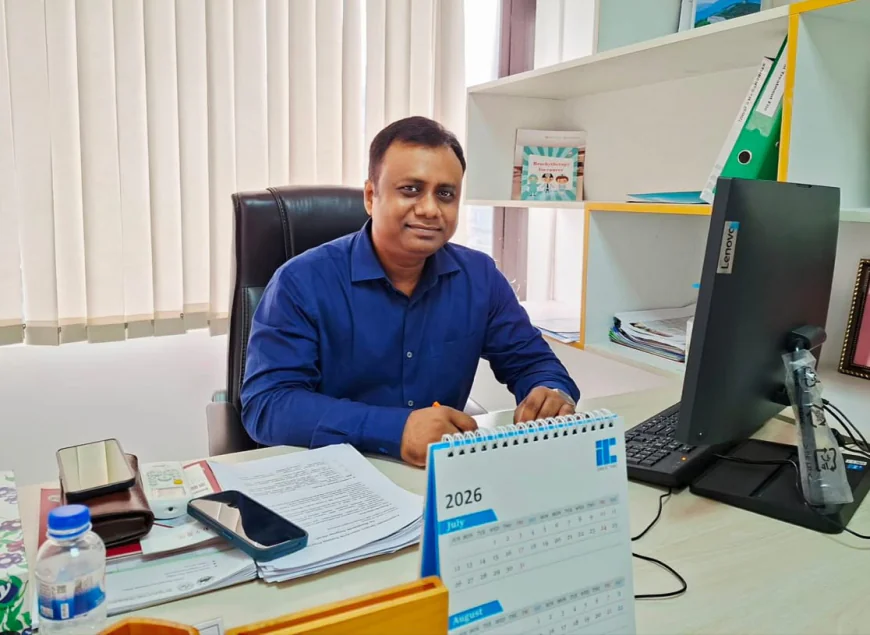
Bangladesh Tea Board Chairman Major General Md. Mesbah Uddin Ahmed said the committee discussed all major areas of the tea sector at its first meeting.
He said domestic production currently meets around 97 percent of Bangladesh’s tea demand, while the remaining three percent of production goes to exports.
“The Tea Board is prioritising higher production and better quality to meet domestic demand first and then expand exports,” he said.
The government is also strengthening communication with foreign embassies, consulates and export communities to explore overseas markets, he added.
Mesbah Uddin Ahmed said local producers were diversifying their products through green, orthodox, white and CTC black tea, while companies were developing different brands through blending.
The Bangladesh Tea Research Institute (BTRI) is conducting research to improve the sector, and stakeholders are receiving regular training on production methods, blending and export development, he said.
Sector’s production and structural challenges
According to the committee’s meeting report, Bangladesh has 172 tea gardens covering 283,896 acres of land.
Of the total area, 178,691 acres are classified as cultivable, while 159,059 acres remain under cultivation, including nurseries. Another 124,837 acres serve other purposes, and 16,928 acres remain available for future planting.
The report’s land-use figures indicate that tea cultivation and other land uses overlap with broader plantation management requirements and need careful assessment before alternative investments.
Bangladesh produced 94.93 million kgs of tea in 2025, including 20.23 million kgs in the northern region. The national average yield stood at 1,552 kg per hectare.
However, many tea gardens have ageing plants, some of which are 50 to 60 years old or older. Low replantation rates, rising labour and input costs, and comparatively lower yields than those in India, Sri Lanka and Kenya have weakened producers’ competitiveness.
Commerce Minister Khandakar Abdul Muktadir in that meeting said the government would take all necessary measures, including a long-term plan, to restore the sector’s economic viability.
He stressed that the industry must move beyond dependence on loans and become a sustainable contributor to the national economy through revenue, taxes and VAT.
Loan restructuring and affordable financing
The committee identified financial distress as a major obstacle to investment and production.
Bangladesh Bank data cited in the report showed that tea-sector loans disbursed totalled Tk 4,173.99 crore, while recoveries stood at Tk 3,133.06 crore. Outstanding loans amounted to Tk 1,826.09 crore.
The report recorded Tk 1,516.91 crore in classified loans, Tk 214.41 crore in bad loans and Tk 517.93 crore in rescheduled loans.
The committee discussed rescheduling classified loans to ease repayment pressure on viable tea-garden owners and allowing eligible businesses to access fresh credit.
The meeting also discussed a revolving fund carrying a proposed interest rate of six percent to support tea production and investment.
Separately, Bangladesh Bank has been processing a proposal to allocate Tk 2,050 crore from its existing Tk 18,000-crore revolving refinancing scheme for cottage, micro, small and medium enterprises.
The proposed allocation would carry an annual interest rate of up to seven percent at the borrower level, subject to approval by the central bank’s board.
The two financing proposals represent separate initiatives and have not been presented as approved facilities.
The committee also discussed reducing interest rates on tea-production loans from 13.75 percent to four percent, matching the concessional rate available for selected crops, including pulses, oilseeds, spices and maize.
Recognising tea as an agricultural product
The committee also discussed recognising tea as an agricultural product to help producer access concessional agricultural credit.
The Tea Board supported the proposal, while the Agriculture Ministry noted that about 60 percent of tea-sector activities—including planting, pruning, maintenance and plucking—fall under agriculture. The remaining 40 percent involves industrial processing.
The Industry Ministry, however, opposed the proposal in its current form, citing the National Industrial Policy 2022, which classifies tea processing as an industrial activity.
Solar power and alternative income
The committee proposed allowing tea companies to partner with private investors to develop commercial solar power plants on unused land unsuitable for tea cultivation, subject to approval from the Land Ministry. Solar panels could also be installed on the roofs of existing tea-garden infrastructure.
The proposal follows a government decision taken at a meeting chaired by the prime minister on July 26, 2026, which called for tea companies to explore joint investments with private investors.
The National Renewable Energy Development Strategy 2026-2030 targets a 20-percent share of renewable energy in electricity generation by 2030 and envisage 4,500 megawatts of large-scale, land-based solar power capacity.
However, the committee stressed the need to protect biodiversity and the environment, particularly in tea-growing areas and haor regions.
Participants at the September meeting also proposed alternative afforestation, agricultural activities and other income-generating initiatives through clustering or net metering, without changing the core characteristics of tea gardens.
Export diversification and market protection
Bangladesh exported 1.64 million kg of tea in 2025, while imports stood at 5,000 kg, according to the committee report.
The Tea Board’s assessment said that domestic production meets around 97 percent of demand underlines the importance of improving productivity while expanding overseas sales.
The export of tea in the last fiscal year (FY26) totalled $3.3 million while the export figures in the first quarter (July-September) of current fiscal year (FY27) reached $0.78 million.
The committee identified limited production of orthodox and specialty teas, weak branding and packaging, inadequate marketing and limited access to international certification as barriers to export growth.
It called for investment in modern processing, quality control, product development and internationally recognised certification, including Rainforest Alliance certification, to improve access to higher-value markets.
Coordinated implementation
The committee stressed that the tea gardens must improve their management efficiency alongside strengthening their own financial capacity rather than rely solely on government incentives, revolving funds and loans.
The authorities said they would review garden-specific action plans and consider banking and policy support based on individual gardens’ needs.
The proposed reforms require coordinated action by the Commerce Ministry, Bangladesh Bank, Finance Ministry, Agriculture Ministry, Industry Ministry, Land Ministry and Bangladesh Tea Board.
Their implementation, subject to regulatory approval and available resources, could help raise yields, improve financial stability, diversify income and strengthen Bangladesh’s position in domestic and international tea market.





 Sponsored by