































Speakers call for Barendra climate crisis to be included in COP31 agenda
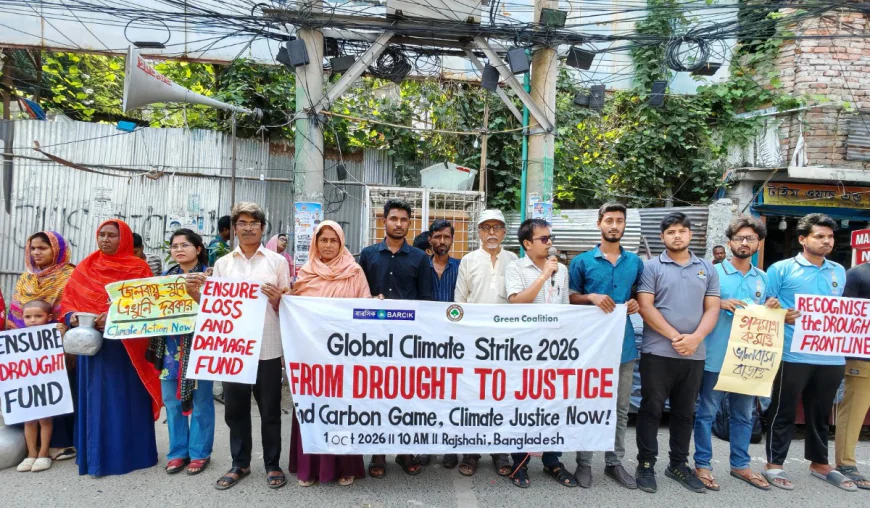
Speakers at a Global Climate Strike in Rajshahi today demanded that the climate crisis facing the Barendra region be given priority in national and global climate discussions, including at the upcoming COP-31.
Held under the slogan "From Drought to Justice - From Barendra to the Global Climate Conference," the programme highlighted people's demands concerning water, food, heat, nature, livelihoods and climate justice.
The strike was jointly organised at Saheb Bazar Zero Point in Rajshahi city by the Barendra Youth Forum, an alliance of youth, environmental, social and cultural organisations in the Barendra region, the Green Coalition and development research organisation BARCIK.
Farmers, women, youths, teachers, students, researchers, workers, members of marginalised communities, environmental activists and local community representatives took part in the programme.
Speakers said prolonged drought, heatwaves, growing pressure on groundwater, risks to agriculture and food security, the degradation of rivers, canals, ponds and wetlands, biodiversity loss and threats to livelihoods in Barendra are interconnected.
They called for a long-term and integrated climate adaptation framework instead of isolated projects to address the crises. They also stressed the urgent need to ensure climate compensation for countries affected by climate change.
Mahbub Siddiqui, president of the Green Coalition's Barendra region, said the region once had abundant ponds, small rivers, canals and creeks, but many of them had been destroyed.
He said the water crisis had been aggravated by excessive groundwater extraction, while inadequate water recharge was further intensifying the situation.
"Effective initiatives must be taken to address these problems by creating a separate fund for the Barendra region from the global climate fund," he said.
BARCIK Regional Coordinator Shahidul Islam said the impacts of the climate crisis were visible from the North Pole to the South Pole.
"In Barendra, its real impacts are evident in drought, water scarcity and the livelihoods of farmers. Therefore, alongside climate justice, it is urgent to ensure the rights to water, food and livelihoods," he said.
Atikur Rahman, president of the Barendra Youth Forum, said the region's drought, water crisis, heatwaves and livelihood risks were not isolated local problems but were directly linked to global discussions on climate adaptation and justice.
"Therefore, the realities of Barendra must be effectively incorporated into the discussions on climate finance, adaptation, and Loss and Damage at COP-31," he said. Jewel Kibria, associate professor of the Department of Bengali at Rajshahi College, said nature would ultimately respond to the damage caused to it.
He said countries that had contributed most to climate change should bear responsibility for the consequences faced by vulnerable countries. "Bangladesh is also not outside this risk. If immediate steps are not taken to address the risks, the crisis will become even more difficult," he said.




 Sponsored by