

























New pay scale comes into effect from July 1
The government today approved the National Pay Scale-2026, with the new salary structure taking effect from July 1 this year.
The new pay scale will take effect from July 1, 2026, with the minimum basic salary for Grade 20 is Taka 20,000 and the maximum for Grade 1 Taka 156,000.
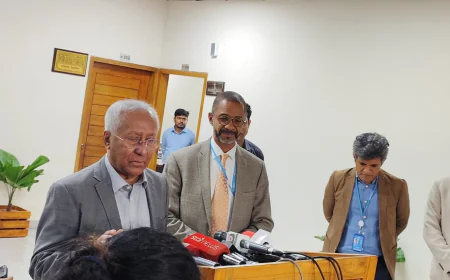
The pay scale was given in a bid to make the salaries, allowances and other financial benefits of the public servants more rational and time befitting, Cabinet Secretary Dr Nasimul Gani said at a press briefing at the PID conference room this evening.
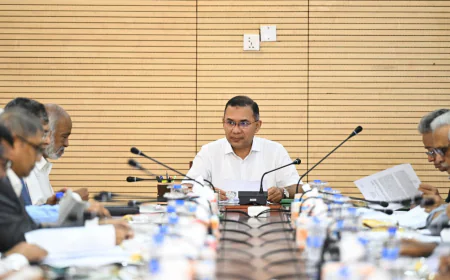
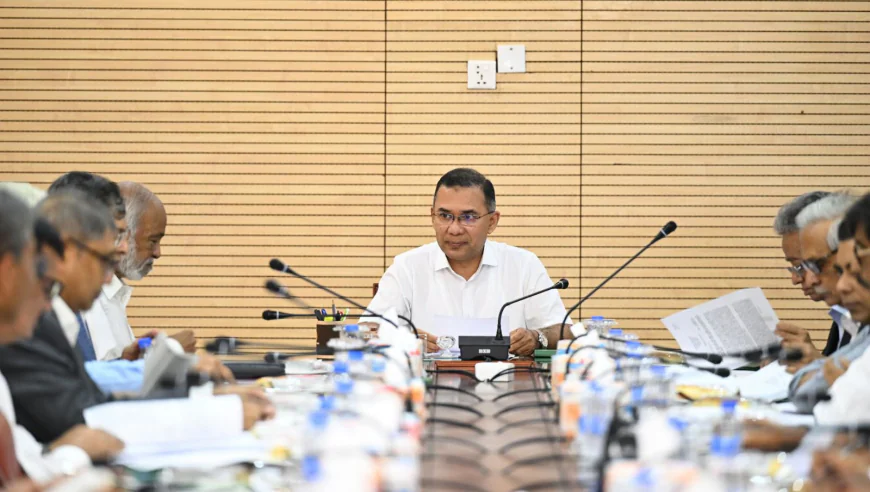
The new pay scale was given approval today at a meeting of the cabinet at Cabinet Division conference room with Prime Minister Tarique Rahman in the chair.
The cabinet also approved the Joint Services Instructions 2026 for the armed forces in line with the new pay structure. Both will take effect from July 1, 2026.
Nasimul Gani said, “The National Pay Scale-2026 has been approved after reviewing the report of the secretary-level committee formed on the basis of the reports of the National Pay Commission-2025 and the Armed Forces Pay Committee-2025.”
He said the cabinet approved the new pay structure considering the government's financial capacity, the country's overall economic situation, inflation, cost of living, living standards of government employees and the need for a balanced and rational salary structure.
The new pay scale, being implemented after 12 years, will be introduced in three phases, according to a decision taken at the highest level of the government.
According to the implementation plan, 30 percent of the basic pay under the new scale may be made effective from July 1 this year, another 35 percent at the beginning of the next year and the remaining portion in July of the subsequent fiscal year.
Various allowances may be implemented from January of that fiscal year, as recommended.
The interim government formed the 23-member 9th National Pay Commission on July 27, 2025, nearly a decade after the formation of the 8th Pay Commission.
The commission, headed by former finance secretary Zakir Ahmed Khan, submitted its report to then Chief Adviser Professor Muhammad Yunus on January 21 this year.
The Cabinet Secretary said the ratio between the salaries of the lowest and highest grades had been reduced to 1:1.78 from the existing 1:1.945 in consideration of fairness.
As a result, the basic salary of the lowest grade will increase by 142 percent, while that of the highest grade will increase by 100 percent.
According to the government's election manifesto, the government is committed to introducing a “one grade, one pension” system for military and civilian personnel.
As implementation of the system at this stage involves a huge financial burden and data on civilian employees who retired before 2019 are unavailable, the government has decided to implement it gradually by 2030.
As an interim measure, the government has decided to significantly increase net pensions on a slab basis, considering the living standards and financial security of retired pensioners.
Under the decision, net pensions will increase by 100 percent for those receiving Tk 9,000 or less per month, 75 percent for those receiving Tk 9,001 to Tk 20,000, 65 percent for Tk 20,001 to Tk 30,000, 60 percent for Tk 30,001 to Tk 40,000 and 55 percent for Tk 40,001 or above.
As a result, pensioners who retired long ago and currently receive relatively low net pensions will receive proportionately higher increases.
The Cabinet Division's press release said the government had also decided, for the first time, to introduce a disability allowance for government employees having children with special needs.
Under the decision, an employee will receive Tk 3,000 per month for each child with special needs.
The government has also decided to expand the coverage of mobile allowances considering internet and digital communication costs. Previously, the allowance was applicable only to Grade 5 employees. Under the National Pay Scale-2026, employees of all grades will be entitled to the mobile allowance.
Around 24 lakh military and civilian employees and 9.25 lakh retired employees and other eligible beneficiaries will benefit from implementation of the new pay scale.
The government will incur an estimated additional annual expenditure of Tk 1,05,580 crore, which has been provided for in the budgets of the respective fiscal years under the Medium-Term Budget Framework.
The government believes the new pay scale will play an important role in enhancing the financial security and motivation of public servants and building a skilled, dynamic and people-friendly public administration.
The Finance Division will issue the necessary gazettes, orders and instructions for smooth implementation of the National Pay Scale 2026. These will specify the detailed provisions on pay fixation, allowances, pensions and other post-retirement benefits.
The concerned ministries, divisions, directorates, offices and agencies will receive instructions to take necessary measures for proper implementation of the approved pay scale.