



































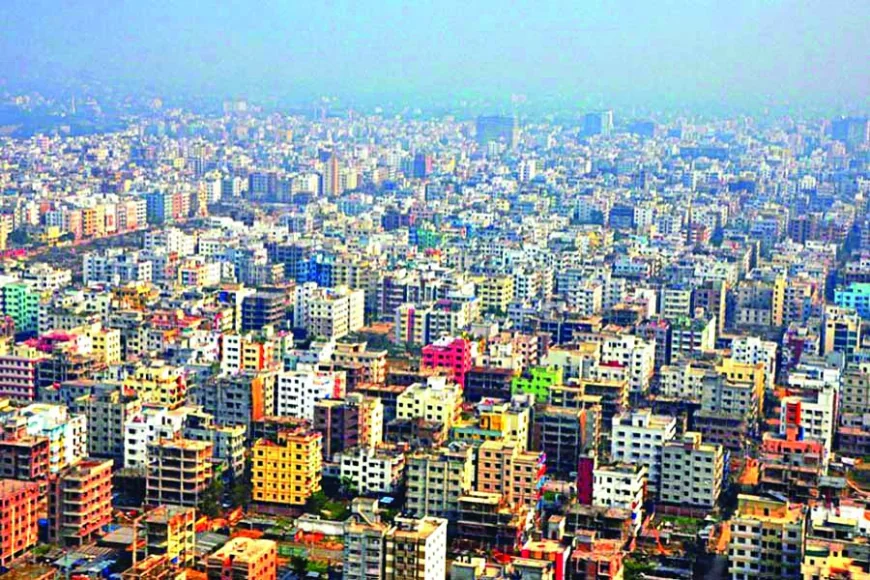

RDH plans rooftop solar installations on 400 buildings
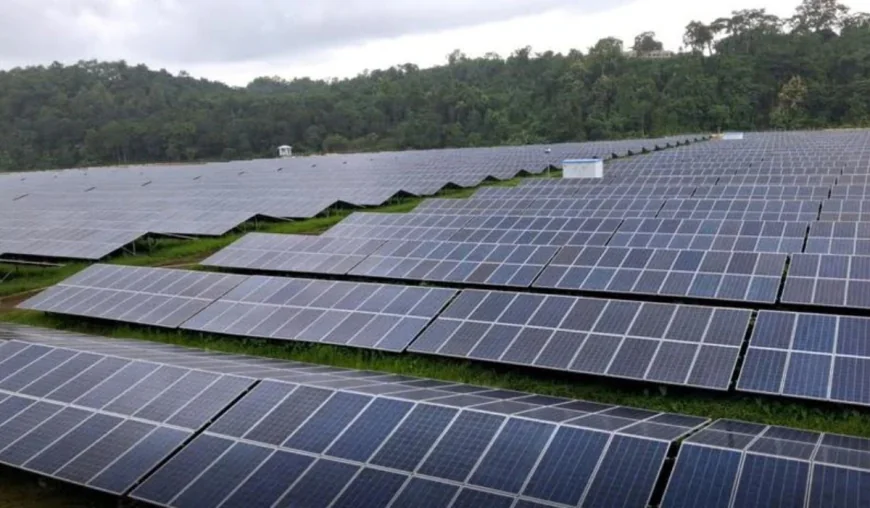
To increase the use of renewable energy in government facilities, an initiative has been launched to install solar power panels on the rooftops of more than 400 buildings belonging to the Roads and Highways Department (RHD).
The solar panels with capacity of 5,144 kilowatts (kW) will be installed in these establishments and other unused spaces under the department in phases from the current fiscal to 2029-30 fiscal year.
Through this initiative, the department aims to reduce electricity costs for government offices, decrease dependence on the national grid, lower carbon emissions, and contribute to achieving the nation's renewable energy targets, RHD Chief Engineer Md. Moniruzzaman said.
RHD officials said solar power systems with a combined capacity of 410 kW have already been installed at different RHD facilities, generating about 25,000 units of electricity per month.
The RHD chief engineer mentioned that for the current fiscal 2026-27, steps have been taken to invite tenders for the installation of solar power systems with a capacity of 284 kW.
Additionally, he said, preparations are underway to install further systems with a capacity of 960 kW, while this initiative will be expanded in phases to increase the use of solar power across public facilities.
According to the RHD's roadmap, the targets for solar power capacity installation are as follows: 1,244 kW in the 2026-27 fiscal year, 1,200 kW in 2027-28, 1,200 kW in 2028-29, and 1,500 kW in the 2029-30 fiscal year. The cumulative target for the four fiscal years is 5,144 kilowatts.
The initiative involves utilising not only the rooftops of different departmental buildings but also unused open spaces for solar power generation. Plans are currently underway to develop projects for establishing megawatt-scale solar power plants in these locations.
Moniruzzaman said installing solar panels on the rooftops of government buildings allows for electricity generation without the need for additional land.
He said if the electricity generated during the day is consumed within the respective offices, the dependence on the national grid will decrease, which will lead to cost savings on electricity and enhance efficiency in energy management.
He further emphasised that the use of solar power is crucial for reducing dependence on fossil fuels and lowering carbon emissions.
Consequently, the RHD has devised a plan to identify and utilise all its facilities that offer potential for solar power generation.
The officials said the department views the installation of solar power systems on government building rooftops not merely as a means to generate electricity, but as a comprehensive initiative aimed at reducing energy costs, maximising the utility of existing infrastructure, and promoting green energy.
Experts consider this RHD initiative to be well-aligned with the nation's broader goals for expanding renewable energy.
Muzaffar Ahmed, Chairman of the Sustainable and Renewable Energy Development Authority (SREDA), said Bangladesh is actively transitioning away from fossil fuels toward clean energy sources, such as solar and wind power.
In particular, increasing the use of solar energy will contribute to achieving the country's 'net-zero' climate goal by 2050, he said. The role of the RHD in this endeavor is truly commendable, he added.
According to policy information released by SREDA, the Renewable Energy Policy 2025 sets targets for renewable energy to account for 20 percent of total electricity generation by 2030 and 30 percent by 2040.
Achieving these goals requires a focus on expanding rooftop solar power, large-scale solar power plants, and other renewable energy sources. In this context, it is significant to utilise the buildings and unused land belonging to large government entities like RHD for solar power generation.
By installing solar panels in phases on the rooftops of the department's various offices, engineering facilities and other buildings, a portion of its required electricity could be generated. This would help meet some of the daytime electricity demand at these offices and reduce the load on the national grid.
However, the success of this initiative will depend on the effective operation and maintenance of the installed solar power systems, the efficient use of the electricity generated, and proper grid integration.
Furthermore, regularly evaluating data - such as the amount of electricity generated at each facility, the portion consumed on-site, and the resulting cost savings will make it easier to assess the project's overall effectiveness.






 Sponsored by