





































Right to birth, death registration is one of basics of state management
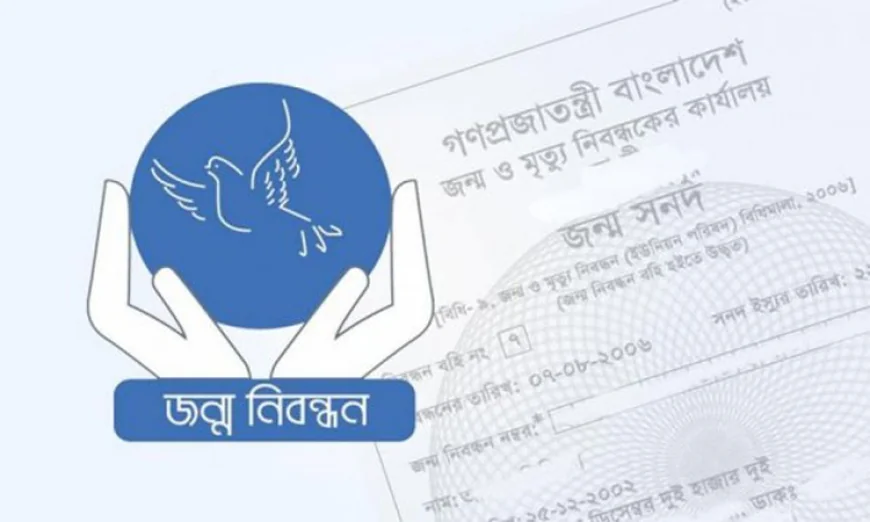
Birth and death registration is not just a personal matter, but it serves as one of the basics of civil rights, planning and state management. The Birth and Death Registration Act was enacted in 2004 in the country with subsequent amendments and consolidation. According to the act, it is mandatory for a person to register his or her birth or death. According to the Birth and Death Registration Act, in the case of a person's born, death or permanent residency in the city corporation area, an officer or councilor authorised by the mayor or administrator of the concerned corporation will act as the registrar for the time and jurisdiction determined by the mayor or administrator of the concerned corporation.
In the case of a person's born, death or permanent residency in the municipality area, the mayor or administrator or any authorised officer or councilor of the concerned municipality will act as the registrar. In the case of a person's born, death or permanently residing in the Union Parishad (UP) area, the Chairman of the Union Parishad concerned or any authorised officer or member designated by the government shall act as the registrar. In the case of a person's born, death or permanently residing in cantonment area, the Executive Officer of the Cantonment Board concerned or any authorised officer shall act as the registrar. In the case of a Bangladeshis' born, death abroad or residing abroad until a specified time or date as notified by the government in the official gazette, an officer authorised by the Ambassador of the Bangladesh Embassy shall act as the registrar.
Meanwhile, the law states that more than one person cannot act as registrar at the same time in the same area for the registration of births and deaths. And according to the Section 5 of this Act, the registrar shall register all persons in the birth and death registration book, regardless of race, religion, caste, group, or gender. If the birth or death of a person is not registered within the specified time as per Section 7 of the Act, the registrar may issue a notice directing the parents, sons, daughters or guardians of the person concerned or any designated person to provide the information on the birth and death. Under the Section 8 of this Act, the parents or guardians of a child or the designated person shall be bound to provide the information on the birth to the registrar within 45 days of the birth of the child.
Again, the son or daughter or guardian or designated person of the deceased shall be bound to provide the information on the death to the registrar within 45 days of the death. According to Section 10 of the Act, the name of a child shall be determined before the registration of the birth. However, if the name of a child is not determined, the birth of that child may be registered and in that case, his name shall be furnished within 45 days after the registration.
According to the Section 11 of this Act, the registrar shall, on the application of any person, issue a birth or death certificate of the registered person at the prescribed fee and in the prescribed manner. According to the Section 14, the registrar shall maintain the registration book in the prescribed manner and form and the registration book shall be considered as a permanent record. According to Section 15, if any incorrect information is written in the registration book or birth or death certificate, an application can be made to the concerned registrar along with the prescribed fee for correction.
Meanwhile, if any birth or death certificate is issued due to providing incorrect information or false declaration, the registrar shall cancel the concerned birth or death certificate on the basis of an application of any person along with the prescribed fee for cancellation and shall sign the relevant part of the registration book accordingly. According to Section 18 of this Act, in the case of proving the age, birth and death details of a person, the birth or death certificate issued under this Act in any office or court or school-college or government and private institution shall be considered as evidence. Meanwhile, a person violating any provision of this act or the rules shall be punishable with a fine not exceeding Taka 5,000.
And if any person provides false information for the registration of birth or death or give any written statement or declaration which he/she knows or believes to be false, then that person shall be punishable with a fine not exceeding Taka 5,000 or with imprisonment for a term not exceeding one year or with both. On the other hand, if any registrar registers a birth or death despite being aware of the false information, written statement or declaration, then the registrar concerned shall be punishable with a fine not exceeding Taka 5,000 or with imprisonment for a term not exceeding one year or with both, unless he/she is able to prove that the said offence was committed without his knowledge or that he made every effort to prevent the said offence. The aggrieved person or the registrar may file a case with a magistrate court for failure to discharge duties under Section 22 of this Act.






 Sponsored by